North Korea Commissions 5,000-Ton Nuclear Destroyer — SkimNews

Get the Geopolitics newsletter
Daily geopolitics — wars, elections, sanctions, the diplomatic moves that move markets. Free.
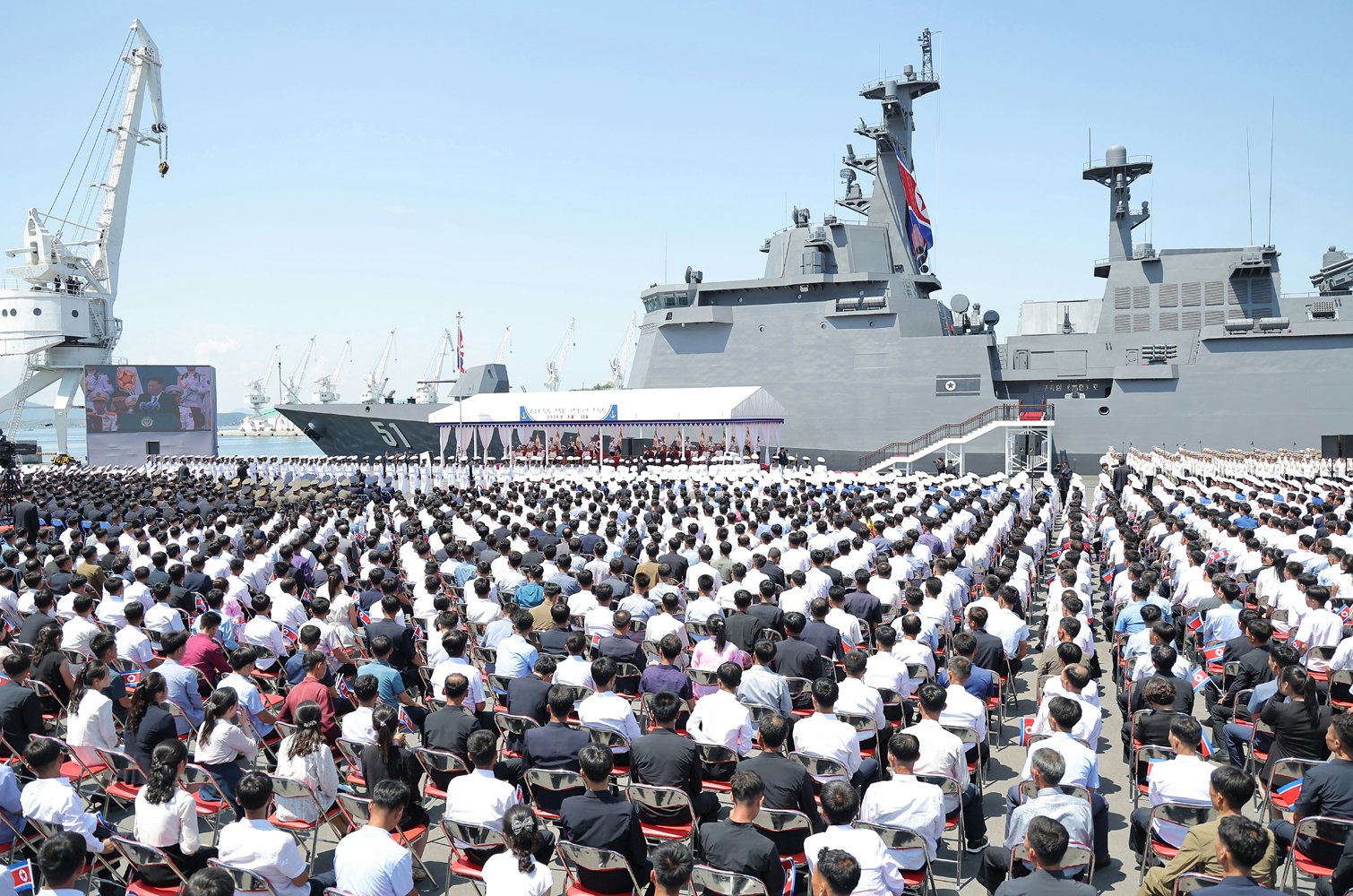
- Kim Jong Un commissioned the 5,000-ton Choe Hyon on June 23, 2026, declaring the KPAN had entered a "new era" after "over 70 years" of naval stagnation — North Korea's largest domestically produced warship.
- The Choe Hyon fields 88 VLS cells for cruise and surface-to-air missiles, with the regime claiming the vessel can launch "strategic" nuclear-tipped cruise missiles, adding a naval vector to Pyongyang's nuclear threats against U.S., South Korean, and Japanese targets.
- The five-year plan unveiled at the 9th Workers' Party Congress in February 2026 calls for two Choe Hyon-class ships per year, targeting at least 12 large surface combatants by the early 2030s.
- The Kang Kon, the second Choe Hyon-class destroyer, capsized during a failed side launch in May 2025 but was raised and relaunched within 22 days; nuclear-capable cruise missiles were tested from its deck on July 3.
- The Choe Hyon's CIWS resemble Chinese Type 730 rotary cannons and Russian Pantsir-M systems, suggesting possible Chinese and Russian transfer of terminal defense technology for an arm of Pyongyang's nuclear capabilities.
- In June 2026, Kim Jong Un ordered a new 10,000-ton guided missile cruiser and additional naval bases, with shipyards at Chongjin and Nampho being expanded to support the production quota.
Why it matters: North Korea's construction turnaround — from 12+ years for Amnok-class corvettes to roughly 2.5 years for the Choe Hyon — combined with a stated goal of 12 large surface combatants by the early 2030s raises the cost of deterrence for the US, South Korea, and Japan. Each new hull adds another nuclear-capable firing platform that the source argues complicates allied missile-defense calculations.
Ask SkimNews