Tesla Q1 Revenue Rises 16% to $22.4B, Misses Estimates — SkimNews
Get the Finance newsletter
Daily finance — markets, central banks, M&A, the prints that move money. Free.
- Tesla earned $477 million in net income on $22.4 billion in revenue in Q1 2026 — a 16% revenue increase and 17% profit jump year-over-year — though revenue fell short of the ~$22.64 billion Wall Street had forecast.
- Tesla will begin preparations in Q2 for its first "large-scale" Optimus factory, with a first-generation line in Fremont designed for 1 million robots per year that will replace the now-discontinued Model S and Model X production lines.
- Gigafactory Texas is slated to host a second-generation Optimus line "being designed for long-term annual production capacity of 10 million robots," and Tesla's earnings deck confirmed it is "continuing" work on the Dojo 3 supercomputer that Musk has called "space-based AI compute."
- Tesla's robotaxi service launched in Dallas and Houston this quarter but appeared "mostly unavailable" due to a lack of vehicles, while the Cybercab autonomous vehicle has been spotted on public roads — "albeit with a steering wheel."
- The Netherlands became the first European country to approve Tesla's Full Self-Driving Supervised system on its roads, and Reuters reported Tesla is developing a new, more affordable electric SUV after canceling a similar plan two years ago.
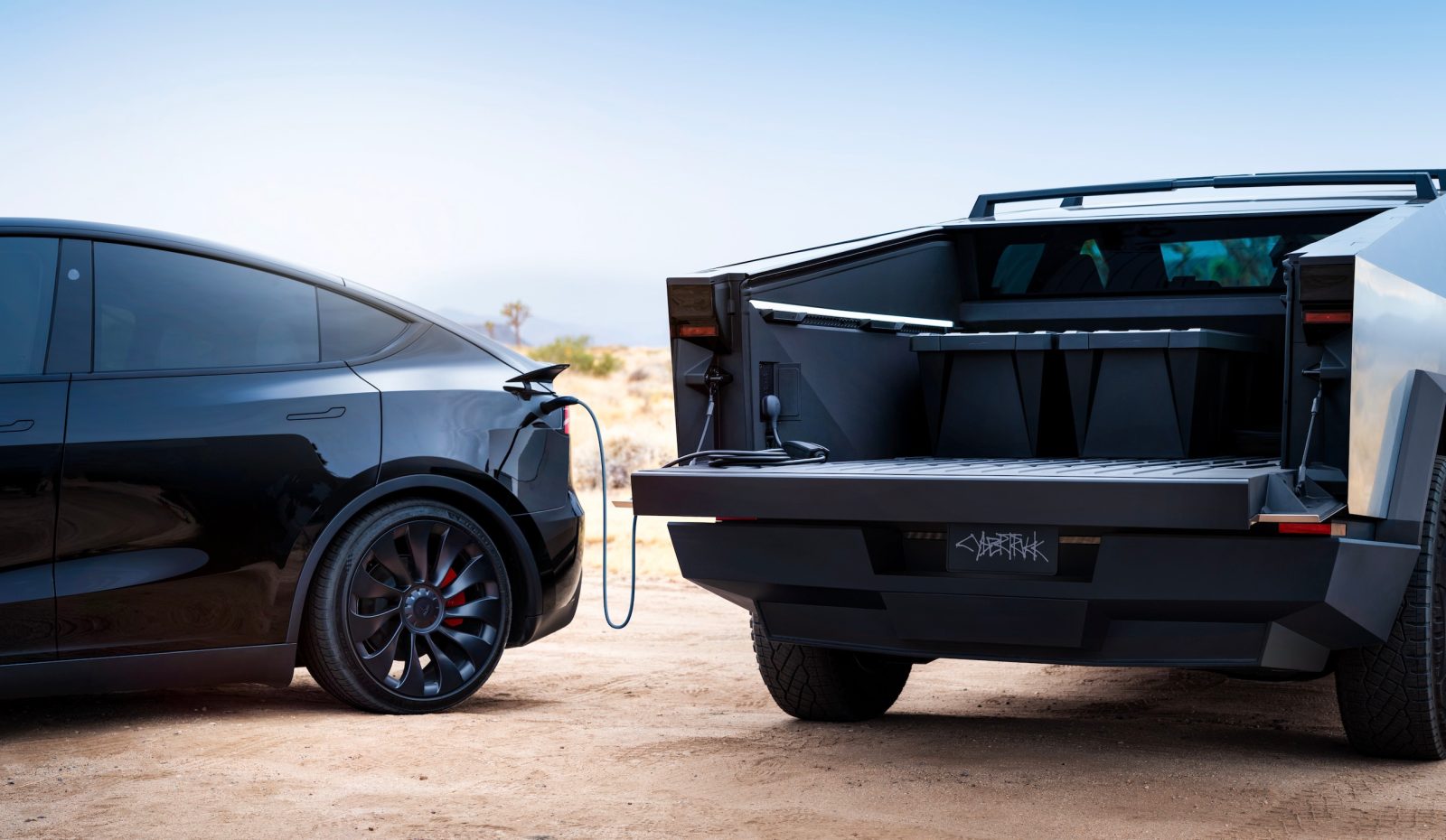
- Tesla's apparent fix for cratering Cybertruck sales was to sell the polarizing electric truck to Elon Musk's own companies, and Q1 2026's 6% year-over-year sales increase is described as a misleading comparison because Q1 2025 was artificially depressed by Model Y "Juniper" refresh shutdowns.
Why it matters: Tesla beat on profit but missed the $22.64 billion revenue consensus, and management used the earnings deck to underscore a strategic reordering: the Model S and X lines are being replaced by an Optimus factory targeting 1 million robots per year in Fremont and 10 million per year in Texas, even though car sales still generate the vast majority of revenue. Investors are being asked to underwrite a company whose next leg of growth sits in products — humanoid robots, space-based AI compute, robotaxis with steering wheels — that have not yet produced material income.
Ask SkimNews