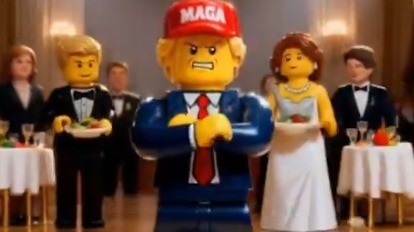
Iran's Lego AI Slop Outpaced White House War Coverage — SkimNews

Get the Tech newsletter
Daily tech — startups, AI labs, chips, the launches that shape the next decade. Free.
- The US and Israel launched a surprise attack on Iran on February 28th, killing thousands including civilians; a Tomahawk missile struck a school in Minab, killing 175 people including schoolchildren, whose mass graves became emblematic of the war's destruction.
- Iran reinstated the internet blackout — originally imposed during protests as the longest in Iranian history — as bombs fell, then pivoted state media from disseminating real footage of carnage to AI-generated 'Lego slop' propaganda by mid-March.
- Explosive Media, the group behind the viral Lego minifigure videos, told The New Yorker and The Associated Press it was a group of friends working voluntarily from inside Iran on personal laptops, while The New Yorker's Narges Bajoghli reports the IRGC funds or operates at least 50 production houses producing content for state media arms.
- Iranian embassies amplified the AI slop internationally — the Tunis embassy posted deepfaked American soldiers with the text 'American soldiers, you're fighting for JEFFREY EPSTEIN,' while The Hague and South Africa missions ran their own AI-generated memes mocking Trump.
- Trump posted on Truth Social that 'The Iranians are better at handling the Fake News Media, and "Public Relations," than they are at fighting!' after Iran's Strait of Hormuz leverage drove gas prices upward and forced a conditional ceasefire whose negotiations began from Iranian demands.
- Researchers Afsaneh Rigot and Mahsa Alimardani concluded the slop resonated with global audiences primed to oppose American power rather than Iranians stuck behind the blackout, with Alimardani reporting that 'international solidarity with the regime has never been higher' after she was thanked in Morocco for Iran's PR work.
Why it matters: Trump's own concession that Iran out-PR'd the White House coincided with a conditional ceasefire whose negotiations began from Iranian demands. Researcher Mahsa Alimardani found that 'international solidarity with the regime has never been higher,' marking a rare moment when a militarily weaker state used social media tactics to compete directly with a superpower's information apparatus.
Ask SkimNews