UK's iconic Jodrell Bank telescope faces axe in science cuts — SkimNews
Get the Health newsletter
Daily health & science — research, biotech, public health, the studies worth knowing. Free.
- UK Research and Innovation (UKRI) has cut Jodrell Bank Observatory's £2.8m annual budget, citing escalating planned research costs for physics and lab operations, with all scientific observations at the site expected to cease on 1 April 2028 without alternative funding.
- Jodrell Bank Observatory faces 28 job losses at its Cheshire site, and its closure would affect nearly 3,000 scientists who rely on its telescope network for research, according to associate director Prof Simon Garrington.
- The UK's astronomy portfolio is also being scaled back: the country will exit research at the James Clark Maxwell Telescope in Hawaii and take a 20% funding cut to its participation in the Vera Rubin Telescope in Chile, which launched last year.
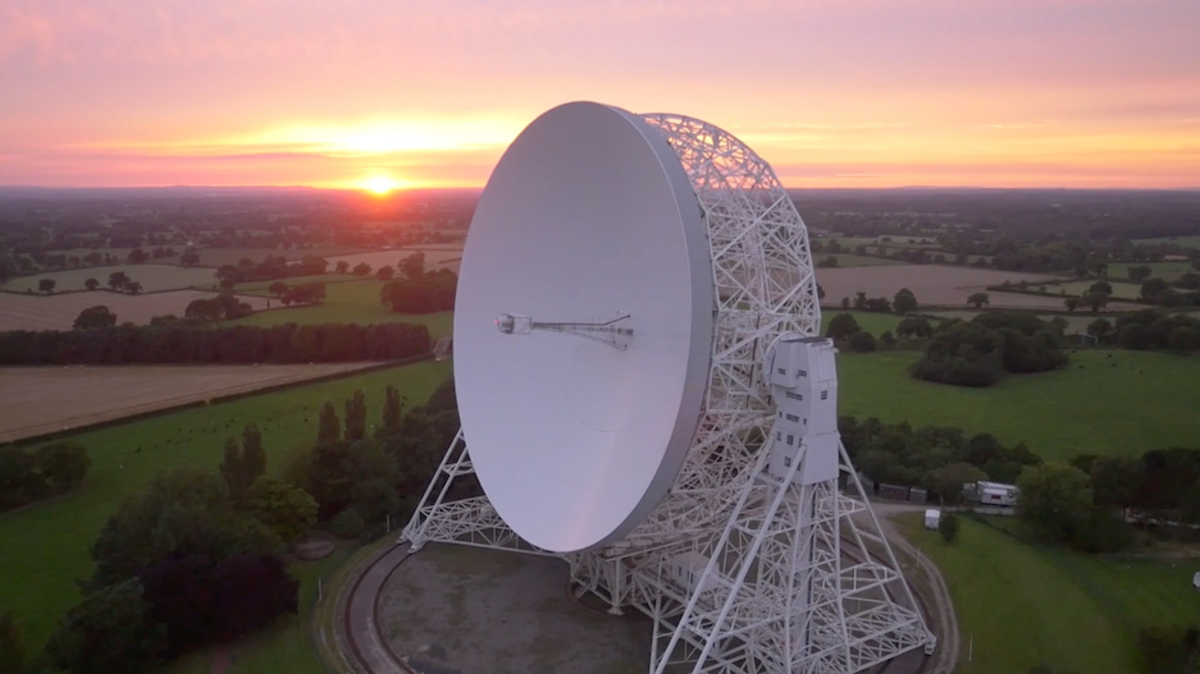
- The Lovell Telescope, the third largest steerable radio telescope in the world, anchors the e-MERLIN network of seven UK telescopes used to study planet formation, galaxy evolution, supermassive black holes, and the dark matter and energy making up 95% of the Universe.
- Scotland's Astronomer Royal Prof Catherine Heymans called the decision "a real act of national self-harm," while Max Planck Institute director Prof Michael Kramer described it as "scientifically, technologically as well as economically short-sighted."
- The cuts come as other nations invest in national observatories ahead of the Square Kilometre Array (SKA) in South Africa and Australia coming online, risking the UK's place in what astronomers expect to be a golden age of radio astronomy.
- Jodrell Bank, established in 1945, pioneered radio astronomy and monitored Soviet missiles during the Cold War, earning UNESCO World Heritage status in 2019 and pop-culture nods in works from Doctor Who to The Hitchhiker's Guide to the Galaxy.
Why it matters: The UK is defunding a UNESCO World Heritage site it pioneered for 70 years just as the global Square Kilometre Array era begins, with 28 jobs immediately at risk and roughly 3,000 downstream scientists losing access to the e-MERLIN network — a withdrawal that scientists say will push British radio astronomy behind international rivals investing heavily for the SKA's 2030s operations.
Ask SkimNews