Iran Holds Dayslong Funeral for Khamenei After U.S.-Israeli Strike — SkimNews

Get the Geopolitics newsletter
Daily geopolitics — wars, elections, sanctions, the diplomatic moves that move markets. Free.
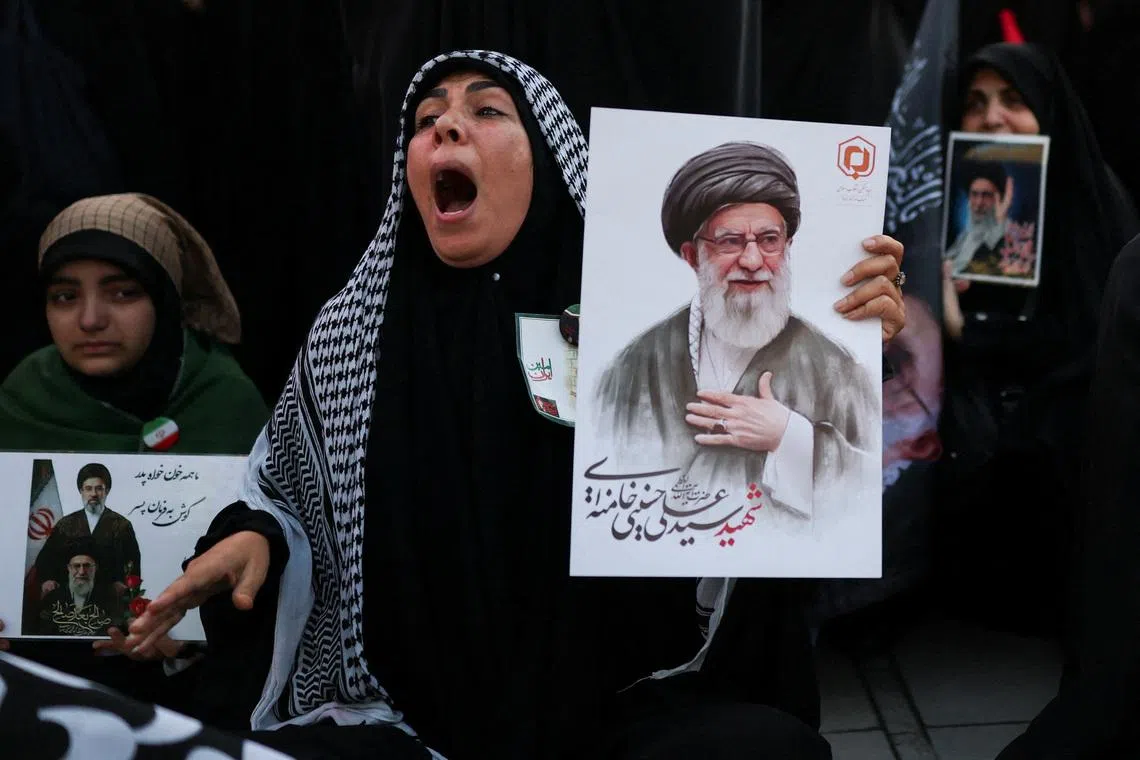
- Ayatollah Ali Khamenei's funeral began at Tehran's Imam Khomeini Grand Mosalla, four months after he was killed on Feb. 28 at the start of the U.S.-Israel war; caskets of four family members killed alongside him were also displayed.
- Crowds at the funeral wept and observed Shia mourning rituals, chanting 'Death to America' beneath signs reading '#KillTrump'; many waved Hezbollah flags, which the source notes have been fighting Israel since the war began.
- A funeral-preparations spokesperson said the months-long delay was due to 'war conditions' and 'the brutal US invasion,' framing the ceremony as a regime display of stability and continued revolutionary popularity.
- Foreign delegations included Russia's former president Dmitry Medvedev, Pakistan's Prime Minister Shehbaz Sharif, Iraq's president, Afghanistan's foreign minister, Hamas, and Saudi Arabia — the latter despite Iran attacking a U.S. base on Saudi soil in March.
- Mojtaba Khamenei, who took over as Supreme Leader in March, has not been seen in public, prompting NPR/NYT-style questions about whether he will attend his father's funeral; Iranian President Masoud Pezeshkian and parliament speaker Mohammad Bagher Ghalibaf were seen praying at the casket.
- Iranians remain divided over the slain leader: a woman whose brother was killed in January protests told NPR 'Even in the Ayatollah's death he still causes us torment,' while the IRGC — which Khamenei expanded — is blamed by HRANA for killing at least 7,000 people during December 2025 antigovernment protests.
- The funeral procession runs through the weekend in Tehran, then moves Monday to Qom and across Iraq to the Shia holy cities of Najaf and Karbala, before Khamenei is buried Thursday in his birthplace of Mashhad, with officials expecting millions of attendees.
Why it matters: The funeral doubles as a regime legitimacy test four months into a war whose opening strike killed the Supreme Leader, with Israeli-Iranian fighting and Hezbollah-Israel clashes still active — yet Iranian public sentiment is fractured, as evidenced by mourners expressing that 'even in the Ayatollah's death he still causes us torment' while millions of others fill Tehran's prayer complex. The conspicuous absence of Mojtaba Khamenei, now Supreme Leader, from public view raises succession questions that NYT and other outlets are flagging as the ceremonial week unfolds.
Ask SkimNews