Tens of Thousands Mourn Khamenei at Tehran Funeral — SkimNews
Get the Geopolitics newsletter
Daily geopolitics — wars, elections, sanctions, the diplomatic moves that move markets. Free.
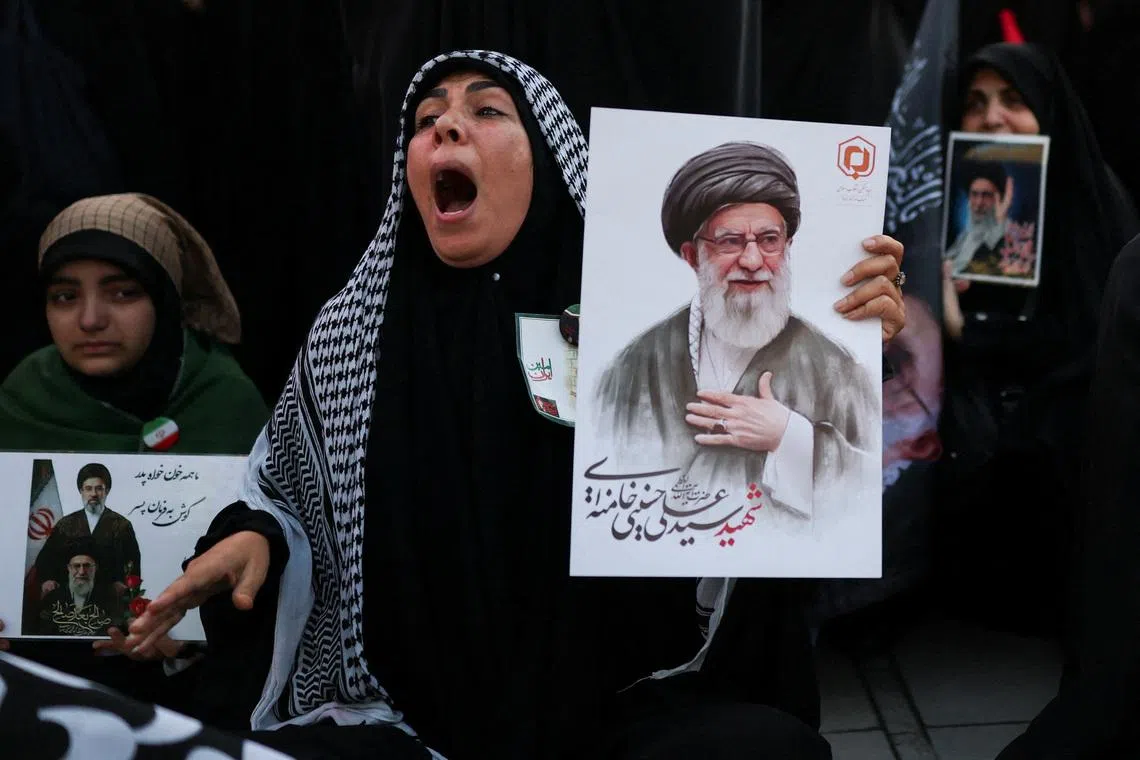
- Tens of thousands of Iranians gathered at Tehran's Imam Khomeini Grand Mosalla on Saturday to view Khamenei's coffin, chanting "Death to America" as Iran's military and security institutions vowed revenge for his death.
- Ayatollah Ali Khamenei was killed on February 28 in the opening U.S.-Israeli airstrikes of the war after ruling Iran for 37 years; the same strike killed his daughter, 14-month-old granddaughter, daughter-in-law, and son-in-law, all displayed on five coffins draped in Iranian flags.
- Mojtaba Khamenei, his son and successor as supreme leader, was wounded in the same strike and has not appeared in any new image since.
- Weeks of U.S. and Israeli airstrikes killed more than 3,000 people in Iran, hitting military, energy, and civilian targets; Iran retaliated against U.S. bases, fired missiles at Israel, struck Gulf Arab energy infrastructure, and choked oil shipping through the Strait of Hormuz — killing at least 13 U.S. troops.
- A shaky ceasefire took hold in early April and an initial halt-fighting agreement was signed in June, though tit-for-tat attacks continue; the funeral was postponed past standard Islamic burial practice to await the truce.
- Authorities are mobilizing transport, food, and lodging to draw millions to processions stretching from central Tehran on Monday to Qom on Tuesday, Iraq's Najaf and Karbala on Wednesday, with burial Thursday in Mashhad near the tomb of Imam Reza.
- Behind the displays of unity, public support for the Islamic Republic "has worn paper thin", according to analysts cited in the article, while hardline leaders empowered by the war are reportedly more willing than Khamenei was to launch direct attacks on adversaries.
Why it matters: The funeral doubles as a legitimacy test for Mojtaba Khamenei — wounded in the same strike and unseen since — and a display of revolutionary unity that analysts say masks public support that has "worn paper thin." The procession through Qom, Najaf, and Karbala, drawing Iran's regional Shi'ite proxy network, signals Tehran intends to project continued control across its sphere despite the war's costs.
Ask SkimNews



