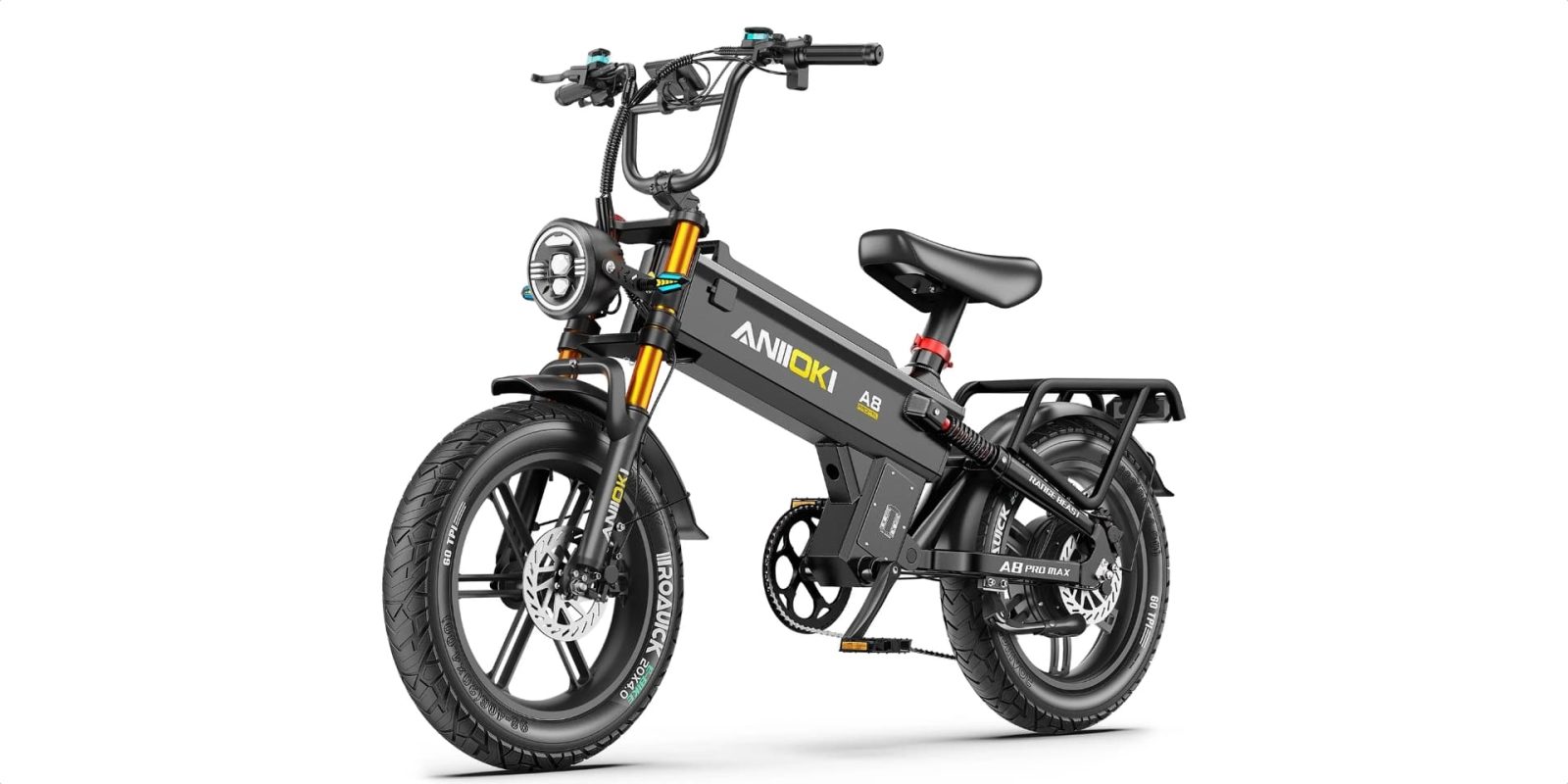
Aniioki's 6,000W A9 hits 60 mph for $2,899
Get the Energy newsletter
Daily energy & climate — solar, EVs, oil, the policy fights and tech bets shaping the transition. Free.
- Aniioki launched the A9 Pro Max Dual Motor 2.0 in three configurations, with peak combined output ranging from 6,000W (entry-level 60V 2.0) to 7,000W (60V 3.0 and 72V flagship) and claimed top speeds of 40–45 mph, 51–55 mph, and 54–60 mph respectively.
- The flagship 72V version pairs dual 3,000W motors with a higher-voltage system to reach 54–60 mph while bumping torque, controller output, and climbing ability over the 60V models.
- Battery options on the 60V bikes run up to 80Ah (4,800 Wh), while the 72V model pushes total capacity past 5 kWh — roughly six times a typical commuter e-bike's pack and beyond many small electric scooters and mini-motorcycles.
- Aniioki priced the A9 Pro Max at $2,899, a notably low figure for hardware with motorcycle-class output, battery capacity, and eight-/six-piston calipers on the flagship.
- Safety and durability specs include a 4 mm aluminum battery enclosure, semi-solid blade cells, a battery management system, CBS paired with 300 mm rotors, and a frame claimed to support riders up to 400 lb.
- Legal status is the sticking point: in most US jurisdictions the bike exceeds the 20–28 mph and ~750W caps of Class 1, 2, and 3 electric-bicycle definitions, making it more accurately categorized as an electric moped or lightweight motorcycle — regardless of the pedals.
- Aniioki claims up to 200 miles of pedal-assist range under ideal conditions, though actual range will hinge on speed, terrain, and how much throttle versus pedaling the rider uses — and the article's own framing suggests most riders will use the throttle.
Why it matters: At $2,899 with 60-mph capability and motorcycle-grade braking, the A9 Pro Max lands squarely in a regulatory gray zone — its pedals buy it a marketing-friendly 'e-bike' label while its specs blow past every US electric-bicycle class, meaning riders, insurers, and trail managers will increasingly have to litigate what counts as a pedaled electric motorcycle.