Central Banks Bring Gold Home as Geopolitical Risks — SkimNews

Get the Finance newsletter
Daily finance — markets, central banks, M&A, the prints that move money. Free.
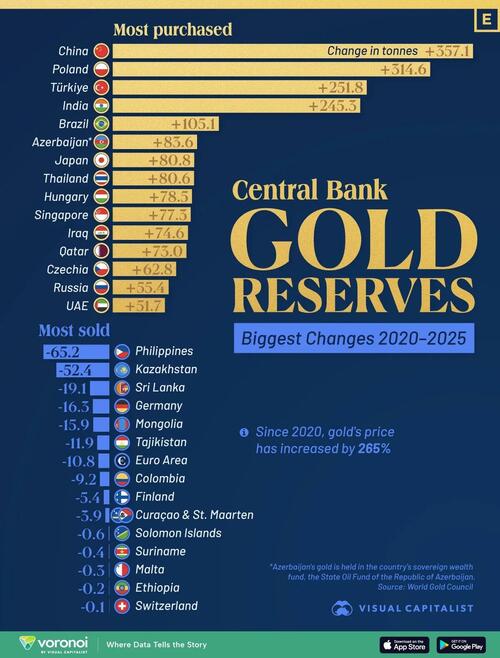
- Central banks have bought an average of 1,000 tonnes of gold annually over the past four years — double the prior decade's average — according to the World Gold Council's annual survey of 74 monetary authorities conducted between February and May.
- Nearly nine in 10 respondents expect global central bank gold reserves to increase over the next year, with 45% expecting their own holdings to grow and only 1% expecting a decline.
- 9% of respondents increased domestic gold storage over the past 12 months (up from 5% a year earlier), and another 10% diversified their overseas storage locations, up from just 2% in the prior survey.
- Russia's invasion of Ukraine and the subsequent freezing of roughly $300 billion in Russian foreign assets accelerated the shift, UBS analyst Giovanni Staunovo said, by raising fears that overseas reserves could be inaccessible during political crises.
- France's central bank has been selling gold held in the U.S. and buying an equivalent amount in Europe without physically moving bullion, according to Staunovo, who noted gold's symbolic significance as a national asset.
- UBS expects central banks to buy 750–1,000 metric tonnes of gold this year, which Staunovo said would provide a stable market foundation and offset softer jewelry and investment demand.
- AJ Bell's Dan Coatsworth framed the shift as basic risk management, noting that central banks, like any investor, benefit from spreading assets across locations rather than concentrating them in hubs like the Bank of England or the Federal Reserve Bank of New York.
Why it matters: With central banks buying 1,000 tonnes per year for four straight years and now actively repatriating bullion, gold demand has a structural buyer base that UBS expects to absorb 750–1,000 tonnes in 2025 alone — and the diversification away from U.S. and U.K. vaults signals that geopolitical risk, not just inflation hedging, is now driving reserve management.
Ask SkimNews