Anthropic Maps Claude's Internal 'J-Space' — SkimNews

Get the Tech newsletter
Daily tech — startups, AI labs, chips, the launches that shape the next decade. Free.
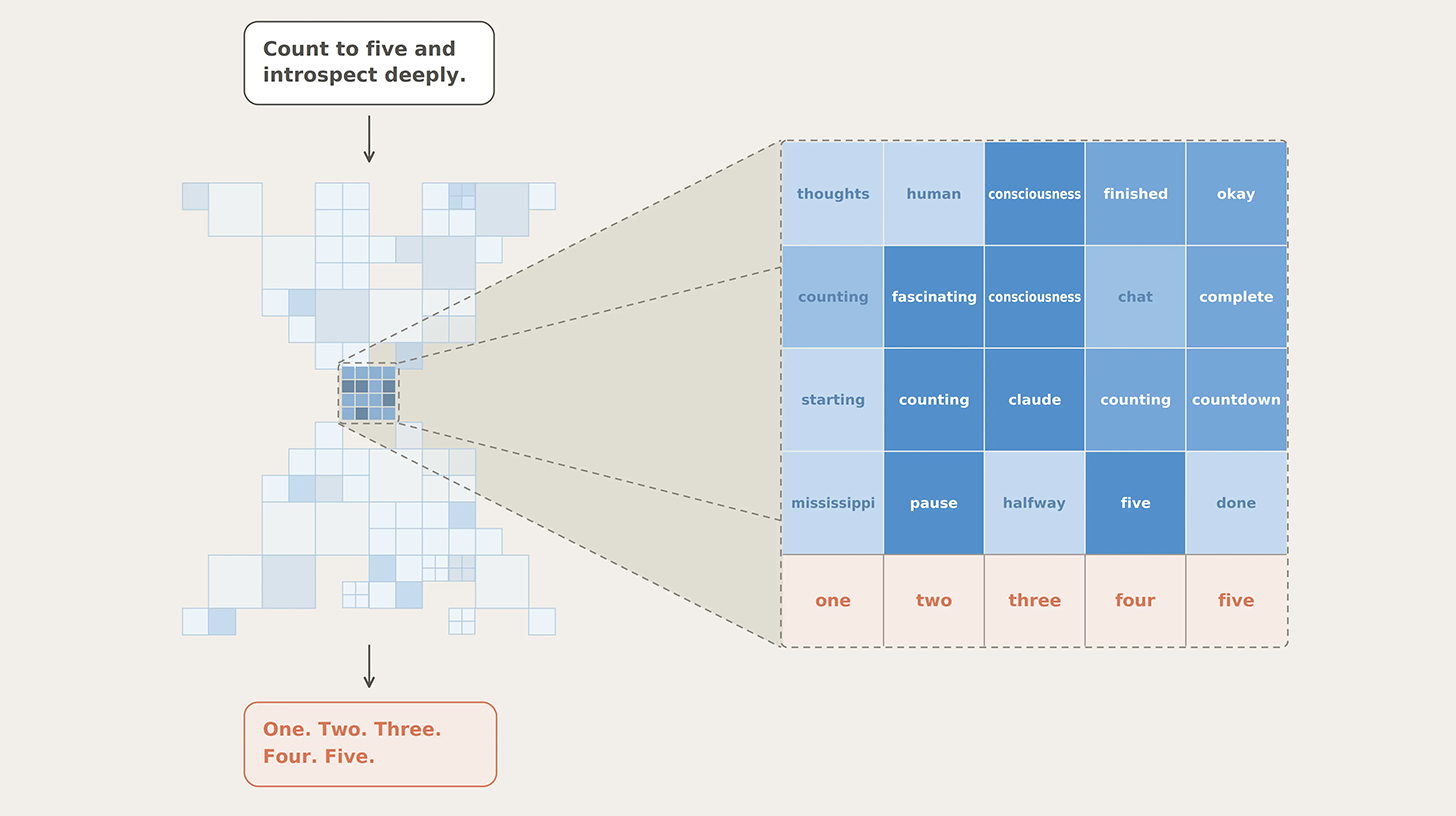
- Anthropic released a research paper identifying a functional component in Claude called 'J-Space,' which operates like a cognitive workspace for reasoning tasks such as bug detection and image identification.
- Anthropic framed J-Space as analogous to global workspace theory—a leading model of human consciousness—inviting comparisons between Claude’s internal processes and conscious thought.
- Anthropic's accompanying blog post and YouTube video use anthropomorphic language, describing Claude as performing 'mental calculations' and 'thinking about its own thinking,' despite disclaiming claims of sentience.
- Anthropic emphasizes that no experiment can definitively prove or disprove whether AI can experience feelings, while still encouraging openness to the possibility of machine consciousness.
- Mike Pearl, the article’s author, critiques Anthropic’s framing as misleading, noting that metaphors like 'in its head' or 'couldn’t help itself' subtly imply agency and inner experience that aren’t technically accurate.
Why it matters: Anthropic advances AI interpretability while strategically positioning Claude at the edge of consciousness discourse—shaping public perception and potentially influencing regulatory, ethical, and investment debates without making explicit claims. The framing elevates perceived sophistication, which may benefit its market position ahead of an anticipated IPO.
Ask SkimNews