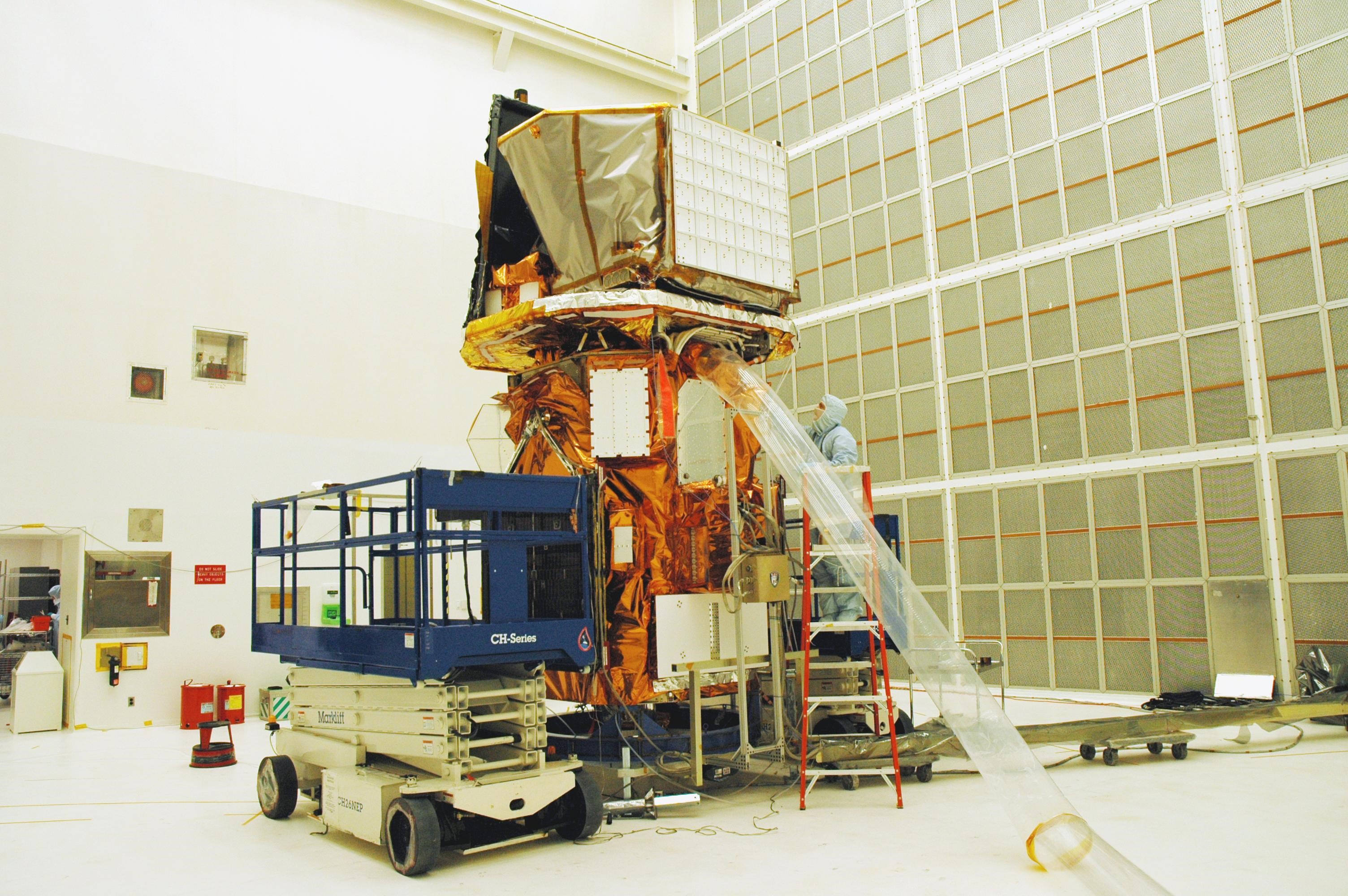
LINK Launches to Boost NASA's Falling Swift Observatory — SkimNews

SkimNews Take
Swift's two-decade decay shows that even high-orbit science missions eventually lose altitude, positioning LINK not as a one-off rescue but as a template for routine life-extension as more aging spacecraft face similar fates.
Get the Health newsletter
Daily health & science — research, biotech, public health, the studies worth knowing. Free.
- NASA's Neil Gehrels Swift Observatory has dropped from its original ~600 km altitude to ~375 km since launching in 2004, with the descent accelerating after powerful solar flares puffed up Earth's atmosphere and increased drag.
- Arizona startup Katalyst Space Technologies won NASA's contract to rescue Swift with a satellite called LINK, which stands under 2 metres tall — roughly one-third Swift's size — and uses three robotic arms to grapple the telescope.
- LINK launched on July 3 aboard a Northrop Grumman Pegasus XL rocket, a flight intended to be the final Pegasus XL launch before the air-launched vehicle is retired.
- LINK will undergo several weeks of in-space testing before grabbing Swift and slowly pushing it upward over about two months to its original 600 km orbit, potentially extending the telescope's life by up to a decade.
- Swift has detected roughly 1,800 gamma-ray bursts since 2004 and contributed to discoveries about comets, planets, supernovae, and black holes.
- Katalyst CEO Ghonhee Lee said the mission creates a "blueprint for servicing spacecraft that were never designed for on-orbit maintenance," with the Hubble Space Telescope cited as a candidate that could fall in the 2030s without a similar boost.
Why it matters: A successful LINK boost could keep Swift — a workhorse gamma-ray-burst detector — operational for up to a decade more, and per Katalyst CEO Ghonhee Lee, the technique would serve as a reusable blueprint for rescuing other spacecraft never built for servicing, including the Hubble Space Telescope, which the source notes is predicted to fall in the 2030s without intervention.
Ask SkimNews