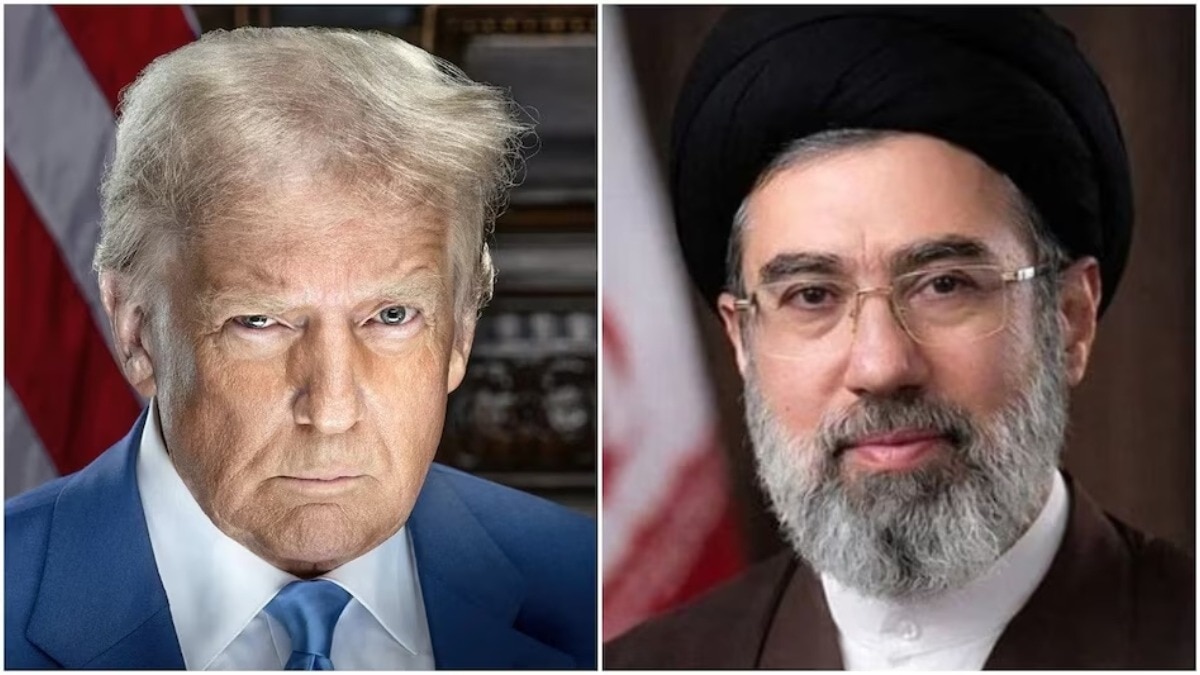
Trump Won't Commit to Iran Deal Signing

Get the Geopolitics newsletter
Daily geopolitics — wars, elections, sanctions, the diplomatic moves that move markets. Free.
- Trump told reporters in Évian-les-Bains, France, seated next to French President Emmanuel Macron, that 'it depends' whether he will sign the physical document in Geneva on Friday, noting that VP Vance was 'originally going to do it' and adding, 'I may be involved, I may not.'
- Trump and Vance electronically signed the memorandum of understanding with Iran on Sunday, alongside Iranian Parliament Speaker Mohammad Bagher Qalibaf; Vance and Jared Kushner are expected to be present at Friday's Geneva ceremony.
- The U.S.-Iran agreement will reopen the Strait of Hormuz, through which roughly 20% of the world's oil exports pass, and includes the release of frozen assets to Iran, though the regime has not yet received any.
- Trump called the deal 'a very powerful document,' comparing it favorably to the Obama-era JCPOA, and said the U.S. and Iran have agreed to a 60-day timeline to negotiate the future of Iran's nuclear program.
- The deal does not require Israel to withdraw from Lebanon, with Israeli National Security Minister Itamar Ben-Gvir declaring his nation is not 'subject to the United States.'
- Trump said agreement details will be released 'probably pretty soon, sometime after Friday,' contradicting senior U.S. officials who previously told The Hill the details would emerge within 24 to 48 hours.
Why it matters: Trump electronically signed the deal Sunday but won't commit to the Friday Geneva ceremony, leaving Vance and Kushner to represent the U.S. With 20% of global oil exports tied to the Strait of Hormuz reopening, frozen assets flowing to Iran, and Israel refusing to accept Lebanon withdrawal terms, the U.S. official physically present at the signing affects how much political weight Tehran and regional allies assign to the agreement.
Ask SkimNews