'A Statement': McCarthy Climate Film Ends in a Shrug — SkimNews

Get the Culture newsletter
Daily culture — film, music, books, the trends and ideas worth your attention. Free.
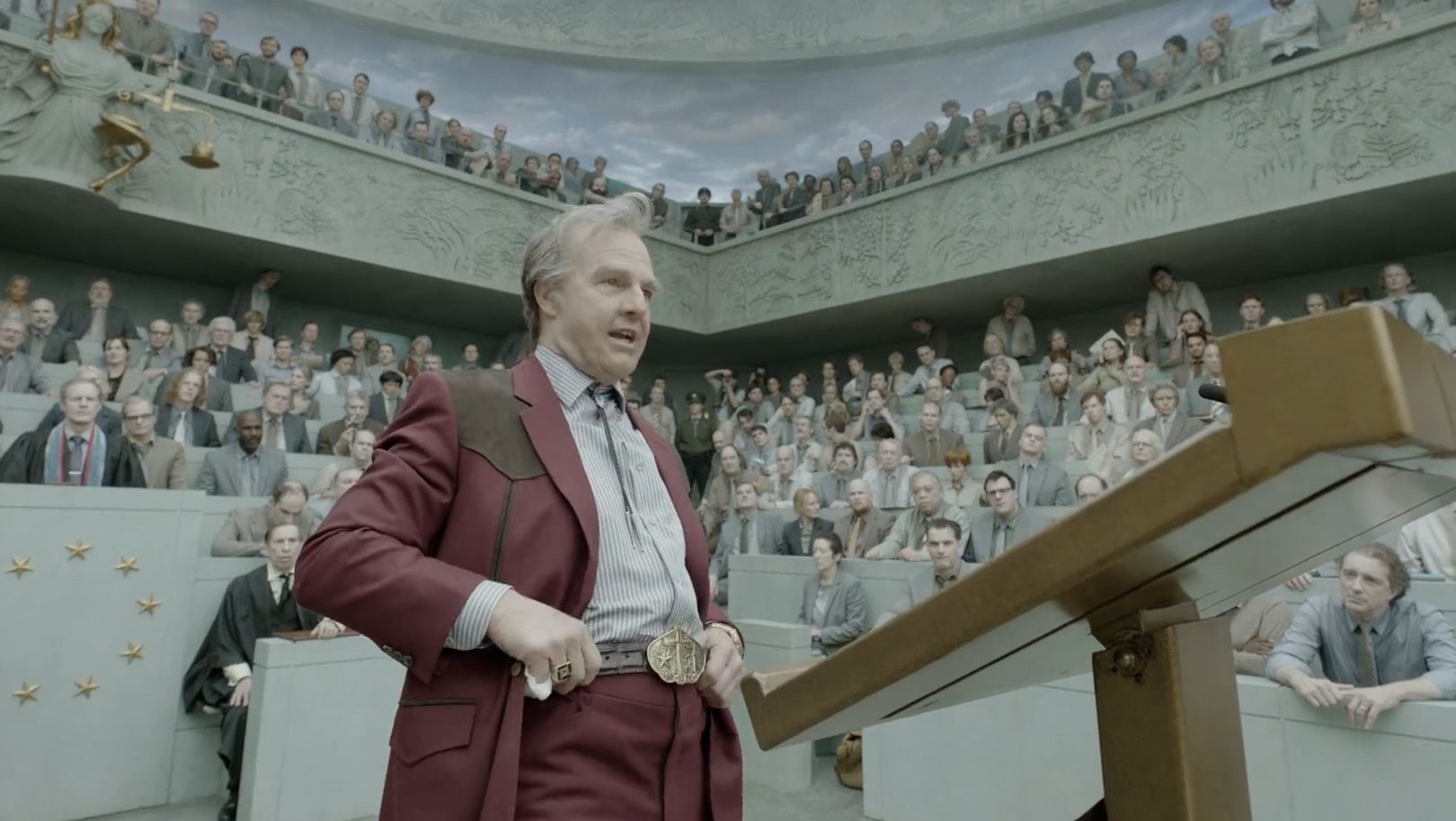
- "A Statement" is a film by Tom McCarthy based on Nathaniel Rich's nonfiction book "Losing Earth," depicting a real 1980 Congressional ad hoc commission meeting at the Don CeSar beachfront resort in St. Petersburg, Florida, to address CO2 emissions.
- McCarthy co-wrote the screenplay with Thomas Bidegain and Noé Debré, using the verbatim transcript from a Congressional stenographer as dialogue for the conference room scenes.
- "A Statement" stars Paul Rudd as moderator Thomas Jorling, Paul Giamatti as Energy Department director David Slade, John Turturro as M.I.T. nuclear engineer David Rose, Evan Peters as nonprofit director Rafe Pomerance, Amy Ryan as public health scholar Annemarie Crocetti, Tatiana Maslany as Georgetown professor Edith Brown Weiss, and Nina Arianda as the boozy stenographer.
- The commission of 20 professors, researchers, lawyers, physicists, and industry heads met October 30-31, 1980, and never produced a statement — a revelation delivered by a single title card at the film's end, rendering the movie's title itself a bitter irony.
- Sony Pictures Classics will release "A Statement" following its premiere at the 2026 New York Film Festival.
- Tatiana Maslany's character, Georgetown professor Edith Brown Weiss, is positioned as the movie's mouthpiece for women inside an "institutionally sexist boys' club," but the reviewer argues Amy Ryan's Crocetti and Maslany read as "poster people for big issues" rather than fully realized characters.
- Ronald Reagan defeated incumbent Jimmy Carter in the 1980 U.S. presidential election less than a week after the commission meeting; Reagan's environmental stewardship legacy proved "mixed," per the reviewer.
Why it matters: Sony Pictures Classics' pickup of McCarthy's cerebral, talk-heavy NYFF premiere signals studio confidence in a historically grounded climate drama, but the review argues the film lands as a Beckettian shrug — mirroring the real 1980 commission's failure to issue a statement — and offers audiences numbed by decades of climate inaction less a clarion call than a mirror of futility.
Ask SkimNews