AI Coding Still Demands Upfront Design Work — SkimNews

Get the Tech newsletter
Daily tech — startups, AI labs, chips, the launches that shape the next decade. Free.
- AI prompting involves three approaches — detailed instructions, high-level directives, or middle-ground explanations of difficult parts — and all three are time-consuming, the author writes
- Common patterns like user authentication are easy for LLMs to implement because they likely appear in training data, while novel problems require extensive hand-holding
- Context window limits prevent developers from feeding LLMs a 3000-word, 4-page detailed spec or large codebases and expecting full comprehension, also hampering analysis of vast datasets like historical stock data
- Compression needs emerge as developers integrate AI into larger applications — packing maximum useful information into agents — and the author expects either specialized companies or model builders themselves to solve this space
- Feedback loops via tests, purpose-built tooling, and codebase refinement become necessary as projects scale, alongside improving the signal-to-noise ratio in the codebase
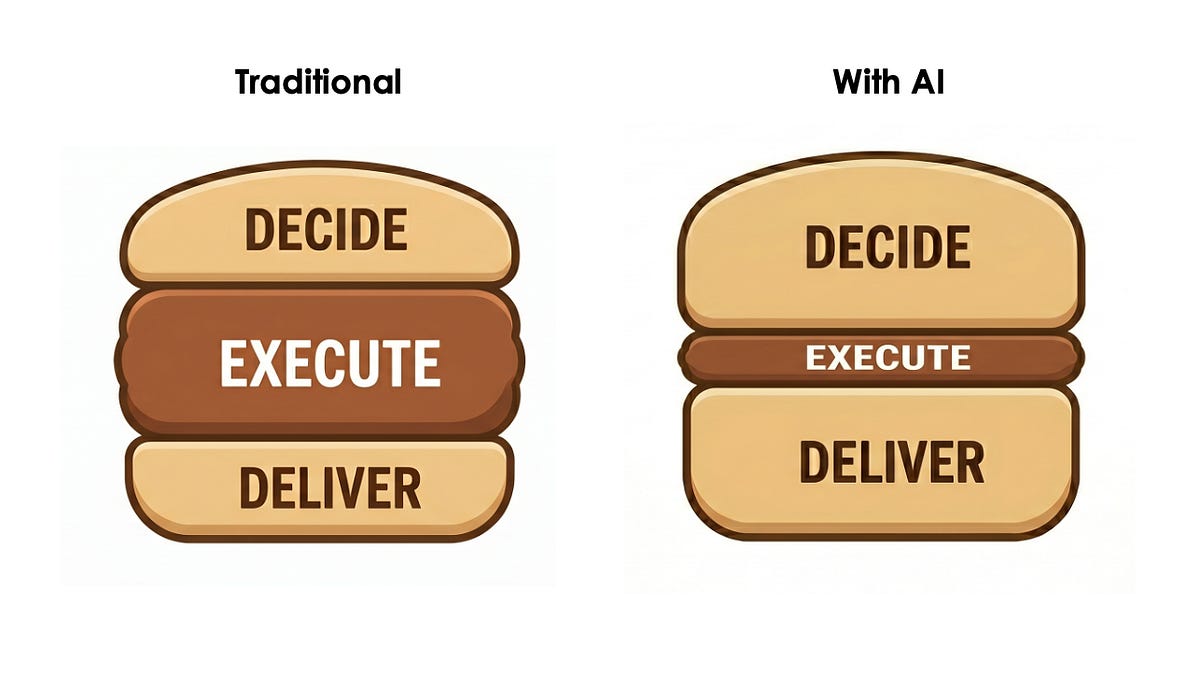
- The shift: the author concludes implementation time hasn't disappeared but moved to upfront system design and assumption-revision, summing it up as "I am still implementing in words instead of code."
Why it matters: Software teams and engineering managers gain nothing in raw hours — they must now budget for upfront design, prompt engineering, and context-compression work that replaces direct coding. Developers who treat AI as a labor-saver rather than a workflow-shifter will misprice projects and underinvest in architectural planning.
Ask SkimNews