30‑Year Treasury Yield Nears 5% Amid War‑Inflation — SkimNews
Get the Finance newsletter
Daily finance — markets, central banks, M&A, the prints that move money. Free.
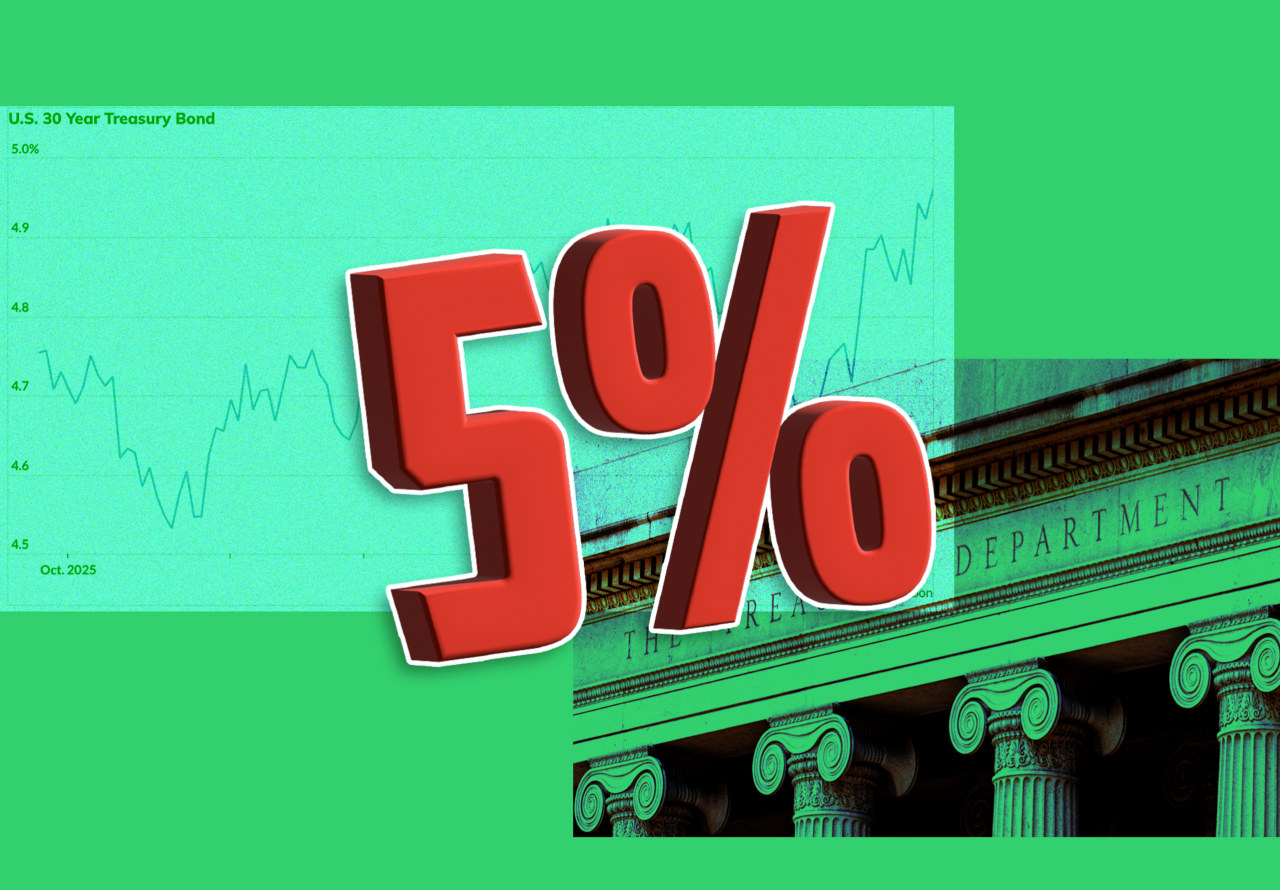
- 30-year Treasury yield rose to 5.026% on Tuesday, after an intraday high near 4.98% and an overnight approach to 5%, marking a near‑5% threshold for ultra‑long‑term borrowing.
- Vincent Ahn of Wisdom Fixed Income Management warned that the yield’s climb reflects stagflation—oil near $100, accelerating inflation and a 0.7% annual Q4 2025 GDP growth—signalling caution for stocks and consumers.
- U.S. GDP data revised on March 13 showed a 0.7% annual growth rate for Q4 2025, prompting 10‑year and 30‑year Treasury yields to sell off despite their typical safe‑haven demand.
- U.S. equity markets fell on Tuesday, with the Dow Jones down 1.87%, the S&P 500 down 1.62% and the Nasdaq down 1.98%, edging closer to a 10% correction from record highs.
- Brent crude briefly crossed $104 a barrel, reinforcing inflation worries that are feeding the long‑term bond yield rise.
- BMO Capital Markets strategists Ian Lyngen, Vail Hartman and Delaney Choi warned that even if the conflict eases, oil‑related costs for gasoline, natural gas, fertilizer and freight will stay elevated, creating a “new normal” for energy prices.
- Bond investors stepped in after the yield spike, pushing the long‑dated Treasury rates back down, illustrating the inverse relationship between bond prices and yields.
Why it matters: Investors in long‑dated bonds see yields rise as inflation risk outweighs growth, eroding returns for mortgage‑ and car‑loan borrowers, while equities face pressure from higher financing costs and a potential recession overall. energy‑sector players benefit from sustained high oil prices.
Ask SkimNews


