Our brains have their first thoughts surprisingly early in life — SkimNews

Get the Health newsletter
Daily health & science — research, biotech, public health, the studies worth knowing. Free.
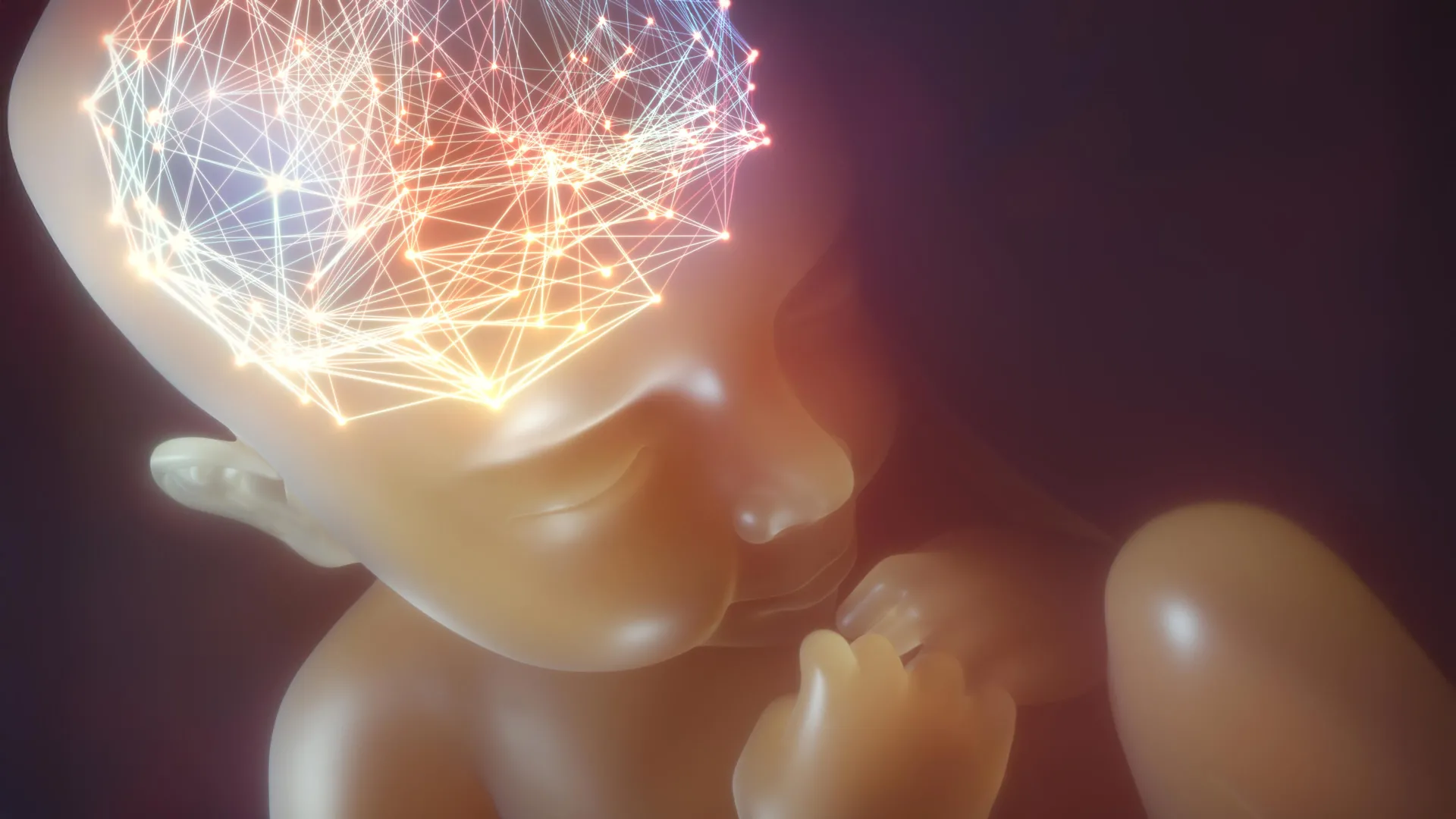
- Fetal brain shares 61% of the same functional organisation as an adult brain shortly before birth, according to developmental neuroscientist Moriah Thomason at New York University, who calls the figure 'really bananas' — but cautions it is not a 'mini-adult brain.'
- Monash University philosopher of mind Timothy Bayne argues the brain must remain 'unfinished' at birth so the environment can shape it, warning it 'would be really bad for evolution to finish the brain such that you had to speak Swahili, and you're born into a country which speaks Russian.'
- Post-birth pruning — myelin sheaths aggressively form after birth in response to gravity, temperature swings, and new visual input, 'locking in' increasingly specialised brain networks, per Thomason.
- Durham University philosopher of consciousness Philip Goff frames the unresolved puzzle: 'Can you have thought without consciousness? Can you have consciousness without thought?'
- University of Lisbon cognitive scientist Anna Ciaunica challenges the 'adult-centric' view, arguing sensory experiences integrated through actions in early pregnancy form a basic sense of self — and noting studies show newborns of bilingual mothers cry differently.
- Ciaunica posits the fetal proto-world 'constantly negotiates against the other presence' of the mother, and that the first thought may be: 'I'm not alone.'
- Bayne speculates the first meaningful thoughts emerge when babies discover they can act on the world — 'frustrated intentions, or pleasure in having achieved an intention,' such as making an overhead mobile move.
Why it matters: The 61% functional overlap between fetal and adult brains, combined with Ciaunica's argument that early sensory experience forms a proto-self in utero, reframes a question usually treated as settled — that meaningful thought only begins after birth. Researchers remain sharply divided on what the data means for the philosophical and ethical status of fetuses.
Ask SkimNews