Ukraine Gets Patriot License, Weapons Years Away — SkimNews
Get the Geopolitics newsletter
Daily geopolitics — wars, elections, sanctions, the diplomatic moves that move markets. Free.
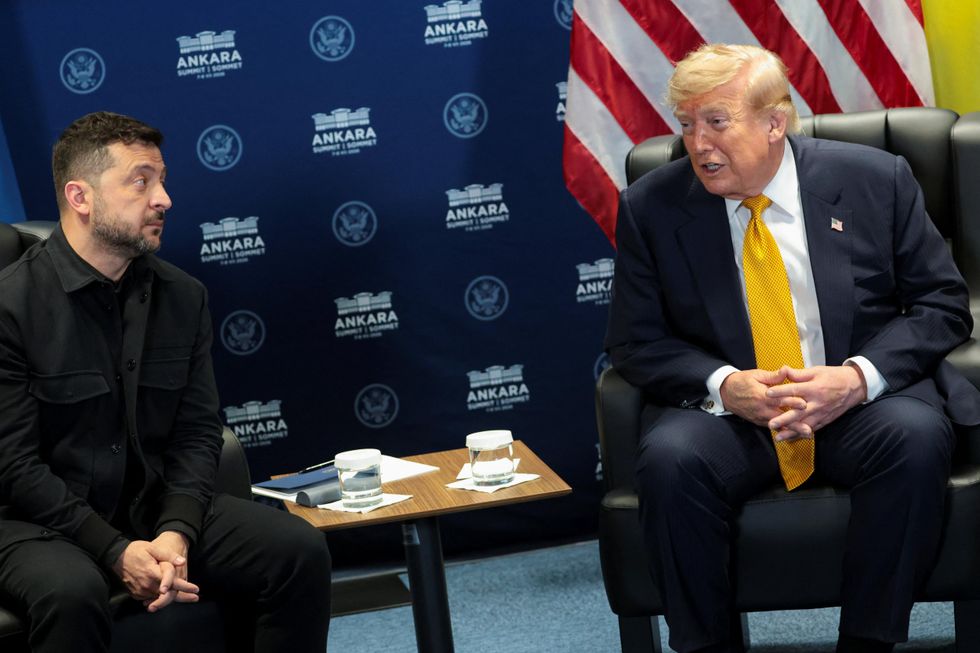
- Trump announced alongside Zelenskyy at a NATO summit in Ankara, Turkey, that the U.S. would grant Ukraine a license to produce Patriot air-defense systems, saying "We'll give them the right to make Patriots" and "I think they can produce them pretty quickly."
- Patriot interceptor missiles are produced by Lockheed Martin and Raytheon (part of RTX), with a supply chain spanning hundreds of companies making control surfaces, engines, guidance systems, and communications equipment — and a production license would not automatically allow Ukraine to manufacture complete batteries including launchers, radar, command posts, and missiles.
- Yehor Chernev, deputy chairman of Ukraine's parliamentary committee on national security, said the legal and bureaucratic process could launch within months but implementing production would take years: a pilot line needs at least 18-24 months, a PAC-3 MSE missile takes about 24 months to produce in the U.S., and its solid-fuel rocket motor requires around 30 months.
- Japan and Germany have produced Patriot components under license — Mitsubishi Heavy Industries has assembled PAC-3 missiles for decades, while Raytheon and MBDA Deutschland announced a 2022 plan for German GEM-T production followed by a 2024 NATO contract for up to 1,000 missiles.
- Ukraine faces a challenge Japan and Germany did not: any production facility would become a priority target for Russian strikes, requiring manufacturing to be placed in protected, potentially underground locations.
- Sensitive technology such as the PAC-3 missile's active radar seeker is so sensitive that Washington is unlikely to transfer full documentation, meaning Ukraine would likely import the most complex components and focus on assembly, integration, or less sensitive parts of the supply chain.
- The Trump administration is "significantly accelerating and expanding Patriot production" and forming industrial partnerships with allies globally, a senior official said, though the administration has not disclosed details on Ukraine's specific license.
Why it matters: The license is a long-term strategic foundation, not a battlefield fix. Even with imported component kits, Ukraine needs 18-24 months to launch a pilot line — and Washington's refusal to transfer the PAC-3's most sensitive technology means Ukraine would assemble rather than truly manufacture the hardest components, capping how much independence Kyiv gains from allies whose own stockpiles are strained.
Ask SkimNews