NASA launched an emergency mission to stop the Swift Observatory from crashing to Earth — SkimNews

SkimNews Take
Treating a $30 million tow as worthwhile insurance for a $500 million satellite quietly establishes orbital servicing as a standard cost of doing business, while exposing solar-driven atmospheric drag as an undermanaged threat to aging science assets.
Get the Health newsletter
Daily health & science — research, biotech, public health, the studies worth knowing. Free.
- Katalyst Space Technologies launched its Link spacecraft Friday to intercept the Swift Observatory, whose orbit has dropped to 224 miles after recent solar storms pushed it lower.
- The rescue mission came together in just nine months under a $30 million NASA contract — a deadline dictated by the fact that Swift would be unsavable by October at its current decay rate.
- Link, a three-armed spacecraft with no easy precedent, must physically grab the propulsion-less Swift and raise its altitude by roughly 150 miles back toward its original orbit.
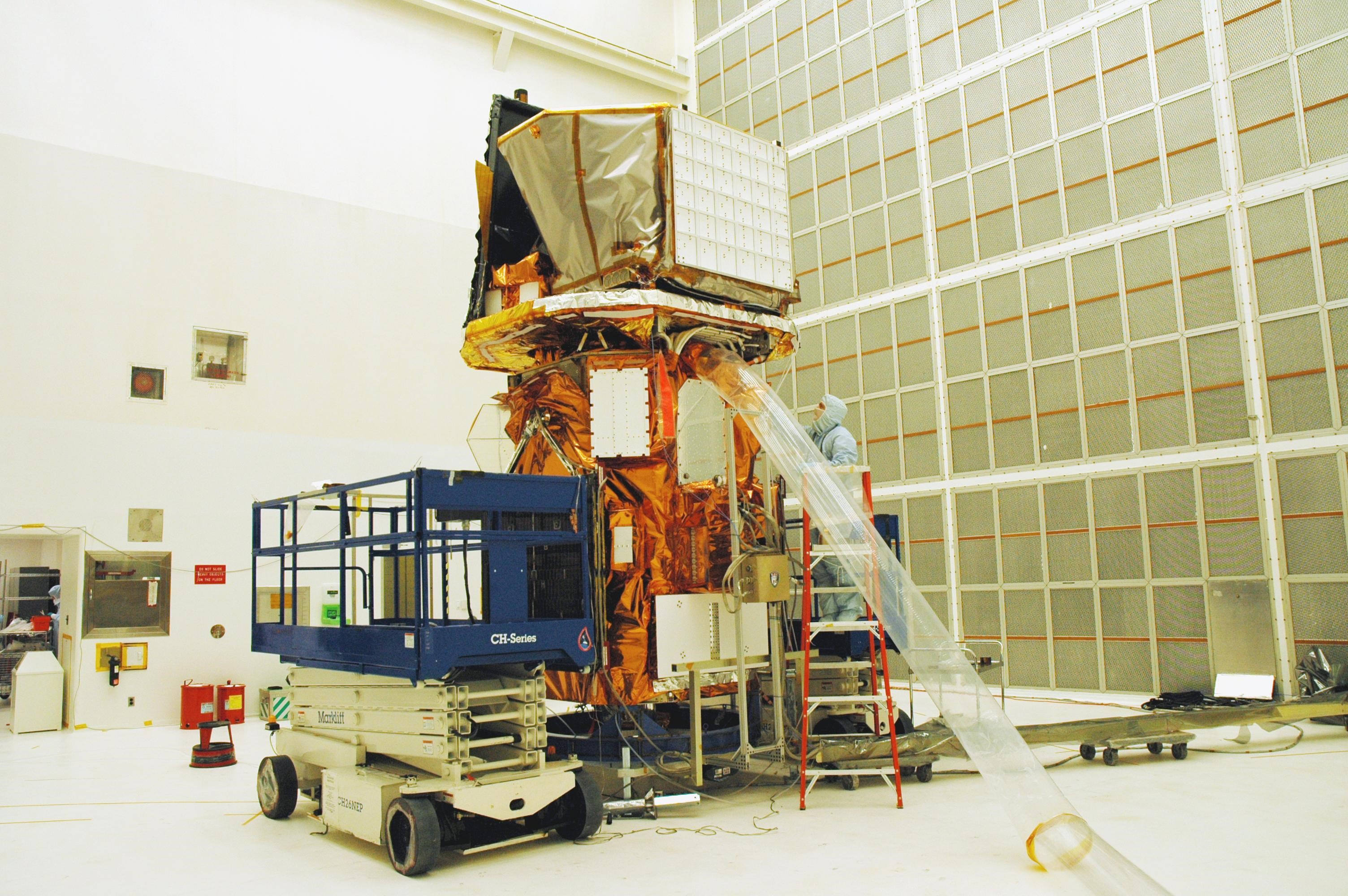
- The Neil Gehrels Swift Observatory, launched in 2004 and valued at $500 million, primarily studies gamma-ray bursts that have been key to understanding the early universe.
Why it matters: NASA is betting $30 million and a novel grab-style spacecraft on rescuing a $500 million gamma-ray observatory before an October deadline — if the maneuver works, Swift keeps operating and the technique validates a new way to service propulsion-less satellites; if it fails, a uniquely productive science asset burns up on schedule.
Ask SkimNews