War Turns Chernobyl Into a Military Frontier — SkimNews

Get the Geopolitics newsletter
Daily geopolitics — wars, elections, sanctions, the diplomatic moves that move markets. Free.
- Chernobyl exclusion zone has become "an army-controlled security belt" along the Belarus border, with soldiers from the 28th Regiment of the National Guard training among abandoned ghost towns to defend against a repeat of Russia's 2022 five-week occupation.
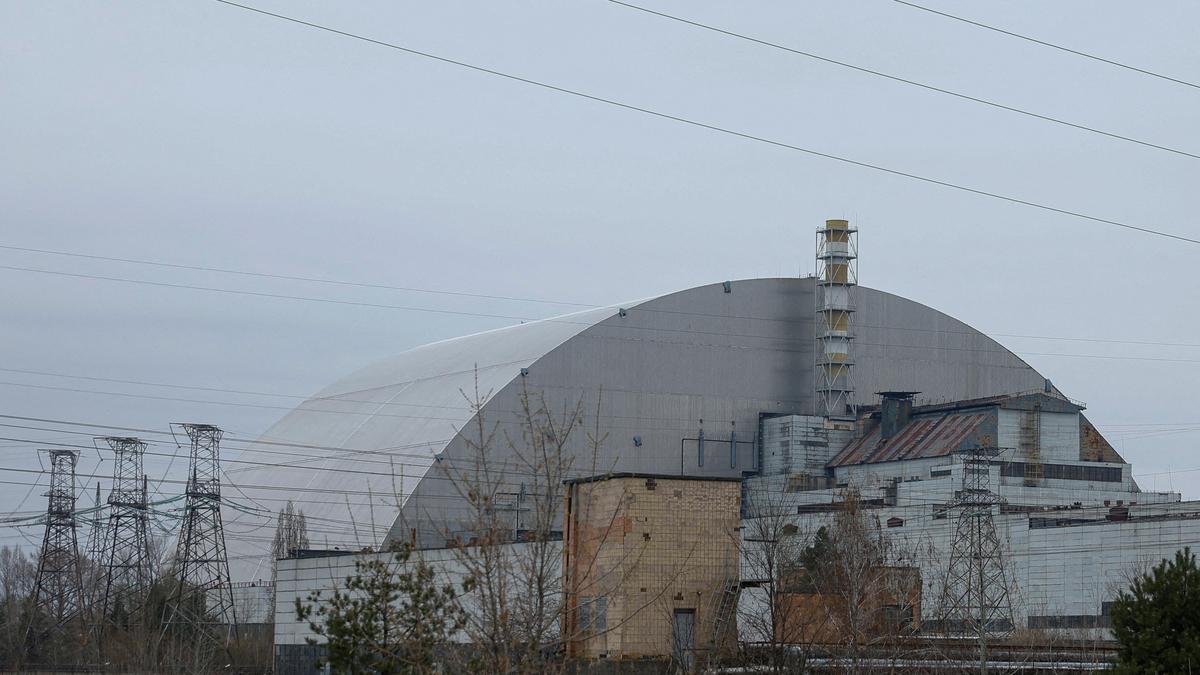
- A Russian drone strike in February 2025 punched a hole in the $2.5 billion New Safe Confinement steel shell, starting a fire that burned through material needed to maintain the airtight seal and "set back two decades of efforts" to isolate the worst of Chernobyl's radiation.
- Repair costs are estimated at $500 million by the European Bank for Reconstruction and Development, with work not expected to begin until 2028 and lasting four years, though IAEA chief Rafael Grossi said repairs should start "as soon as possible" because leaving the situation "as is now is problematic."
- The cost asymmetry is stark: the Iranian-designed Shahed drone that caused the damage cost an estimated $50,000, while foreign donors including France and Britain have so far pledged only €70 million (~$82 million) of the needed $500 million.
- War has crippled radiation monitoring: scientists cannot reach groundwater measurement wells due to land mines, firefighters cannot access areas to fight radiation-spreading wildfires, and foreign radiation researchers have fled the country.
- Ukrainian troops built aboveground sand bunkers resembling "large yellow anthills" rather than digging trenches, to avoid exposing soldiers to radiation in the contaminated soil.
- All economic development plans for the zone — nuclear waste storage, small modular reactor testing, disaster tourism — are on "indefinite hold," though two solar farms continue operating because panels are "largely impervious to missile and drone attacks."
Why it matters: The damaged New Safe Confinement will sit in precarious condition until repairs begin in 2028, with only $82 million of the $500 million repair cost pledged so far. A $50,000 drone inflicted damage requiring 10,000x more to fix, while IAEA chief Grossi warned the current situation is "problematic" — and scientists can no longer monitor groundwater radiation because of land mines.
Ask SkimNews