Mushroom Causes Tiny Human Hallucinations Without Psilocybin — SkimNews
Get the Health newsletter
Daily health & science — research, biotech, public health, the studies worth knowing. Free.
- University of Utah researchers used DNA sequencing to identify Lanmaoa asiatica as the mushroom responsible for Lilliputian hallucinations in Southwest China and the northern Philippines
- Colin Domnauer and Bryn Dentinger collected and analyzed fungal specimens from Yunnan and the Philippines, linking local mushrooms known as Jian shou qing and Sedesdem to the same species
- Lanmaoa asiatica produces no detectable psilocybin or other known psychoactive compounds, suggesting it contains an unidentified hallucinogenic substance
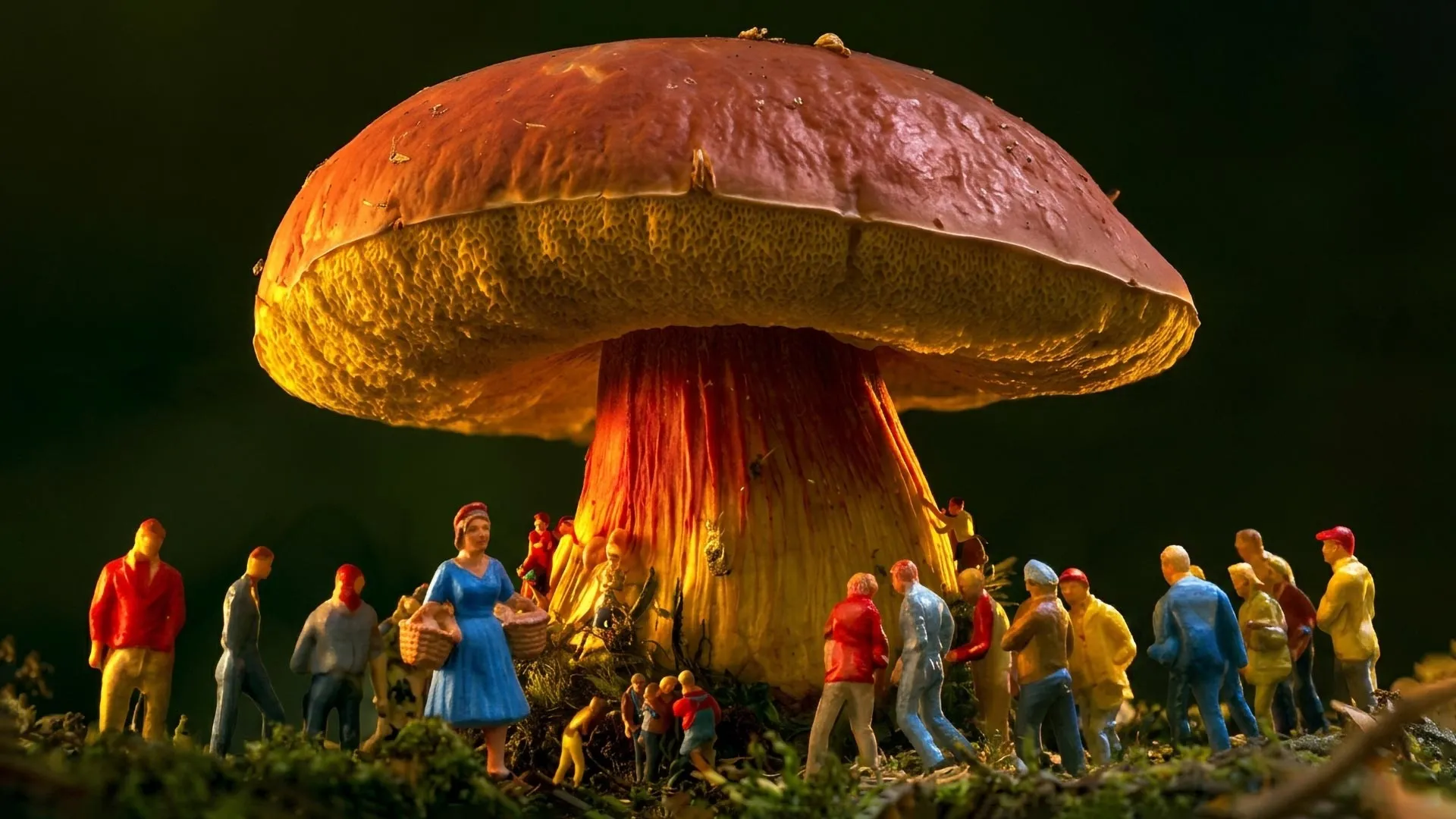
- Hallucination reports describe 3–30 cm tall figures resembling elves or clowns that interact realistically with physical environments, such as walking around objects or swimming in soup
- The research team discovered four previously unknown mushroom species during the first comprehensive genomic analysis of the Lanmaoa genus, based on 53 specimens
- Lilliputian hallucinations have been documented in Papua New Guinea, China, and the Philippines—three geographically distant cultures reporting nearly identical experiences after eating related mushrooms
Why it matters: The discovery of a psychoactive mushroom without known hallucinogens challenges assumptions about how psychedelics work and offers a potential tool for studying visual perception disorders. Isolating the compound could lead to new neuroscience insights with implications for treating neurological conditions where such hallucinations occur.
Ask SkimNews