Mercedes posts Tesla-like efficiency hauling 36 tons through a German winter — SkimNews
Get the Energy newsletter
Daily energy & climate — solar, EVs, oil, the policy fights and tech bets shaping the transition. Free.
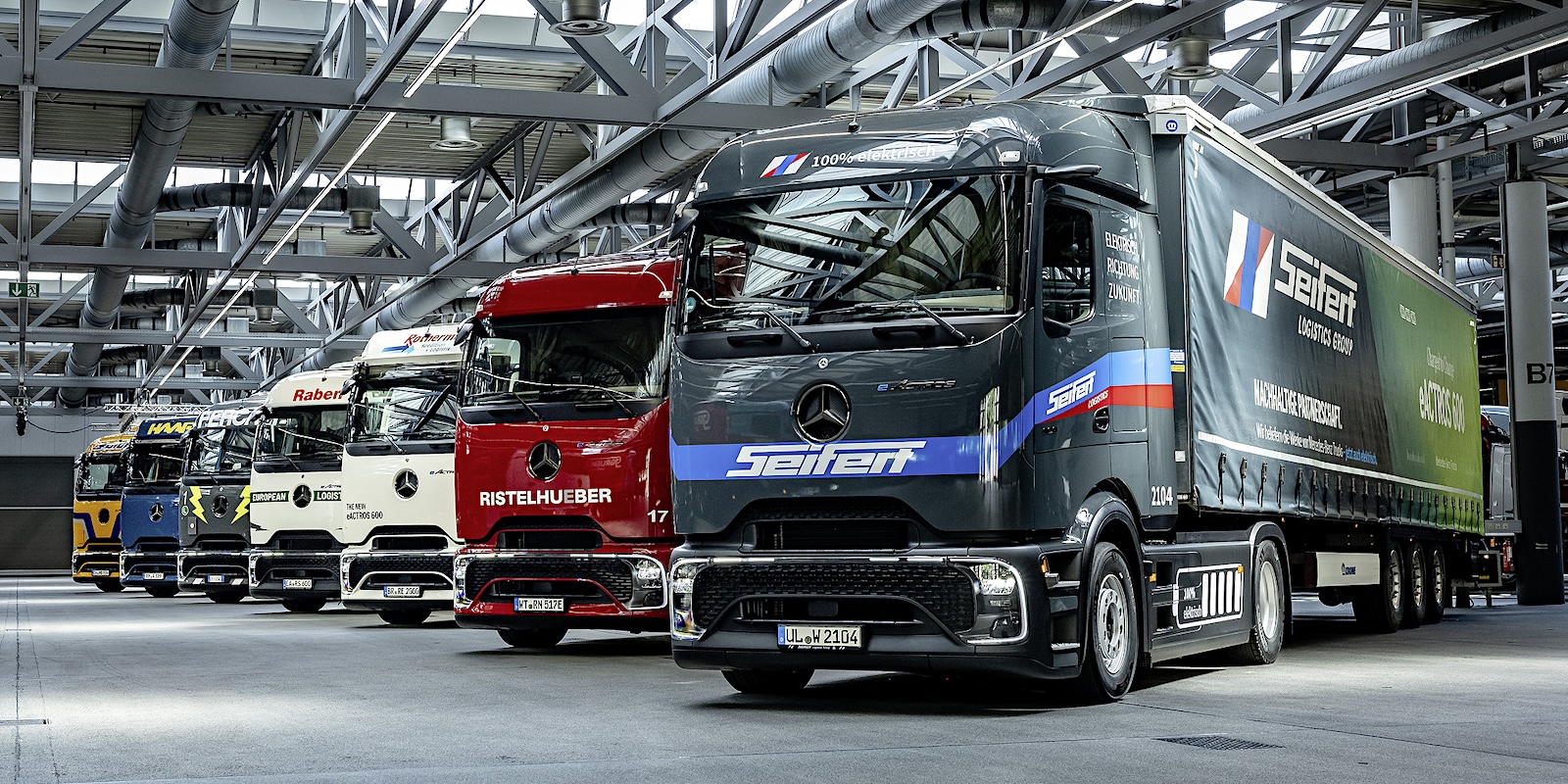
- Mercedes-Benz released operational data from 80 battery-electric heavy trucks in its own logistics fleet spanning thousands of trips, charging cycles, and millions of miles, concluding electric long-haul transport is viable today.
- Seifert's eActros 600 on the Wörth am Rhein–Bielefeld route runs at a 36-metric-ton gross combination weight, covering ~600 km daily with roughly half of charging events at public stations.
- That Wörth–Bielefeld route saves €4,000/month in tolls and 90 metric tons of CO2e annually, with November–February energy consumption averaging 100 kWh/100 km (~11 L of diesel equivalent).
- Mercedes' eActros posts 1.61 kWh/mile efficiency — nearly matching the Tesla Semi's claimed 1.55 kWh/mile — though ArcBest, which recorded Tesla's number, did not disclose its combined vehicle weight.
- Success depended less on vehicle capability than on operational alignment: predictable distances, centralized terminals, and controlled return schedules enabled efficiency, while route variability quickly exposed flaws.
- Findings align with prior NACFE and Transport Canada studies that followed Class 8 electric trucks across a year of North American operations.
Why it matters: For fleet operators still skeptical of electric long-haul, Mercedes' transparent cold-weather data — 600 km/day at 36 metric tons with €4,000/month in toll savings — reframes the question from whether EV trucks work to how to deploy them. The source's caveat: viability hinges on route predictability and centralized terminals, not just the truck itself.
Ask SkimNews