Zelensky stripped of Polish honor over UPA unit naming
Get the Geopolitics newsletter
Daily geopolitics — wars, elections, sanctions, the diplomatic moves that move markets. Free.
- Polish President Karol Nawrocki stripped Volodymyr Zelensky of Poland's highest honor after Kyiv named a military unit after the Ukrainian Insurgent Army (UPA), a partisan formation blamed for massacres that killed roughly 100,000 Poles
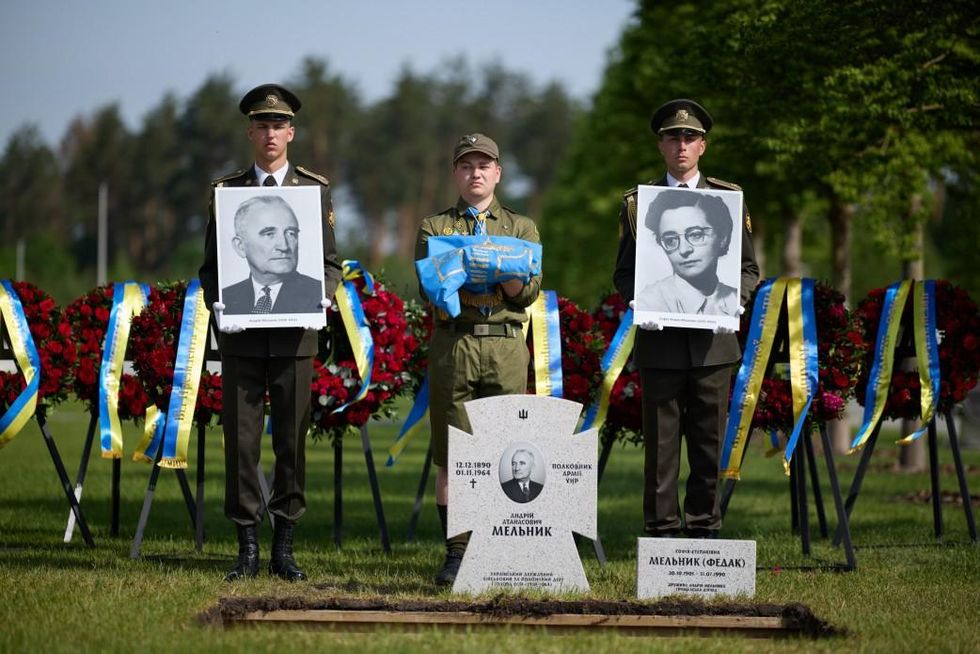
- Zelensky kneeled at the reinterment of Andriy Melnyk, described in the piece as a noted Nazi collaborator, shortly before the Polish honor-stripping
- The author argues the trend reflects Ukraine's wartime shift from civic nationalism to ethnolinguistic nationalism, placing Kyiv on a 'collision course with European norms on minority rights'
- Defenders of UPA glorification cite its anti-Soviet roots and compare it to Churchill, Napoleon, and the Polish Armia Krajowa; the author calls this a 'false equivalence' given the Holocaust's industrial scale
- Nazi Germany murdered roughly 2 million Jews in four months during Operation Reinhard (July–October 1942) and in mid-1944 diverted rail capacity to deport 430,000 Hungarian Jews to Auschwitz in under two months
- Ukrainian auxiliaries marched more than 33,000 Jews to their deaths at Babi Yar in two days, and a Waffen-SS division of Ukrainian volunteers later fought under direct Nazi command
- The author ties competing East–West historical memories to the deterioration of relations that 'helped to make war in Europe possible again,' and says a durable European security order must reflect all stakeholders' interests
Why it matters: Poland has escalated the dispute to the level of a head-of-state honor, a rare public break that signals Kyiv's wartime memory politics now carries concrete diplomatic costs inside the EU. The piece's underlying warning: if Ukraine wants EU accession, the tilt from civic to ethnolinguistic nationalism—visible in the UPA and Melnyk gestures—directly conflicts with the minority-rights standards Brussels enforces, while also blurring the Holocaust's unique character as 'genocide' gets applied more loosely to other conflicts.