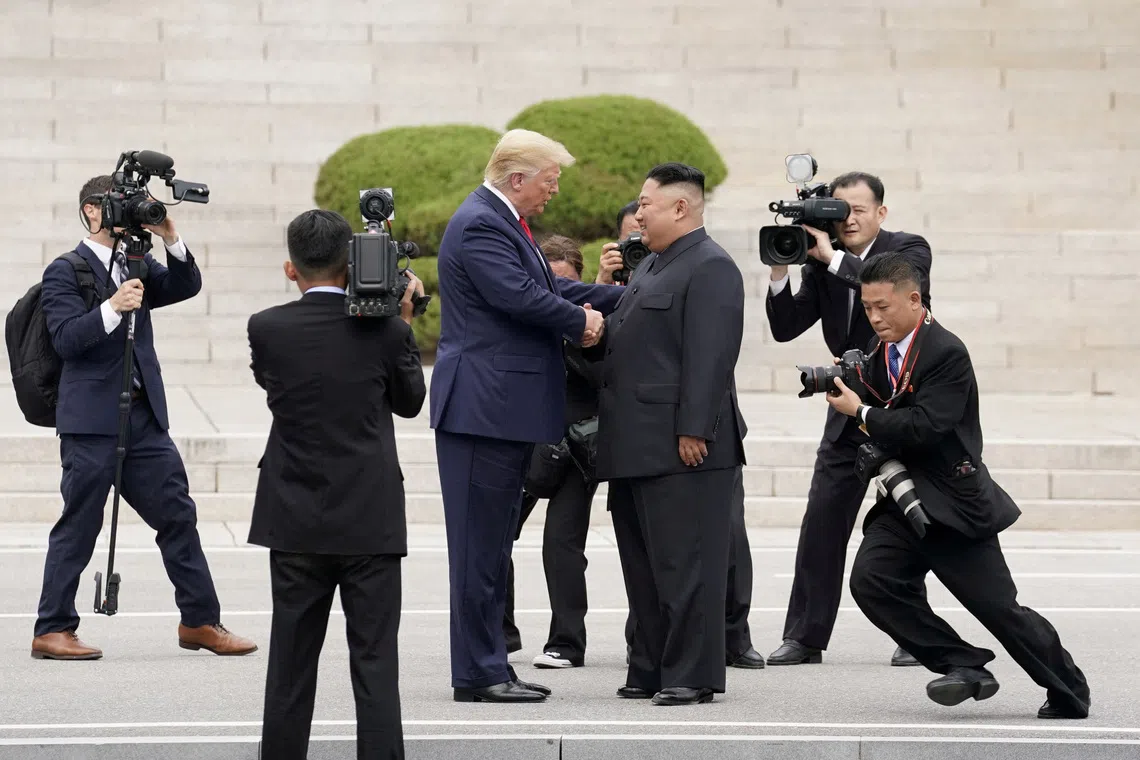
Kim Jong-un Rejects Trump's Diplomatic Overtures — SkimNews

Get the Geopolitics newsletter
Daily geopolitics — wars, elections, sanctions, the diplomatic moves that move markets. Free.
- Trump announced on August 16 via social media that he is ordering the US Department of Defense to "substantially reduce" joint US-South Korea military exercises, calling them "costly" and "hostile" toward North Korea—language that echoes long-standing DPRK talking points.
- Kim Yo-jong said on August 19 that she knows of no current communication between her brother and Trump, and Pyongyang has issued no official acknowledgment of the overtures.
- Trump publicly expressed resentment toward South Korean President Lee Jae-myung for refusing to send warships to support US efforts in the Strait of Hormuz, rhetorically asking "Why are we involved in helping you?" and undermining the alliance that would normally be an obstacle to accommodation with Pyongyang.
- Kim stands to gain from renewed talks through the lifting of US economic sanctions—which the president has legal authority to reduce or remove—potential US troop withdrawal from South Korea, and an opening with Japan that could unlock billions in economic assistance under the 2002 Pyongyang Declaration.
- Kim's hesitancy may trace to the trauma of the 2019 Hanoi Summit, where Trump refused to lift sanctions in exchange for closure of facilities at Yongbyon, leaving Kim empty-handed and reportedly suffering a public loss of face.
- The article argues Kim may be miscalculating: when Trump announced his first summit with Kim in 2018, Chinese leader Xi Jinping—who had kept his distance from Pyongyang for seven and a half years—instantly invited Kim to Beijing, demonstrating that US outreach historically compels China and Russia to court North Korea harder.
Why it matters: Trump's rare combination of conditions—dismissing the alliance's exercises as provocative, resenting Seoul as a defense free-rider, and seeking a foreign policy win—creates a diplomatic opening for Pyongyang that is unlikely to recur under any successor, meaning Kim's hesitation could cost North Korea concessions it will not see again, while the Trump-Kim dynamic itself accelerates the erosion of US-South Korea-Japan security coordination.
Ask SkimNews