Never-before-seen footage unearthed! How Ted Williams' hitting philosophy holds up in 2026 — SkimNews
Get the Sports newsletter
Daily sports — scores, transfers, the storylines from the leagues you actually follow. Free.
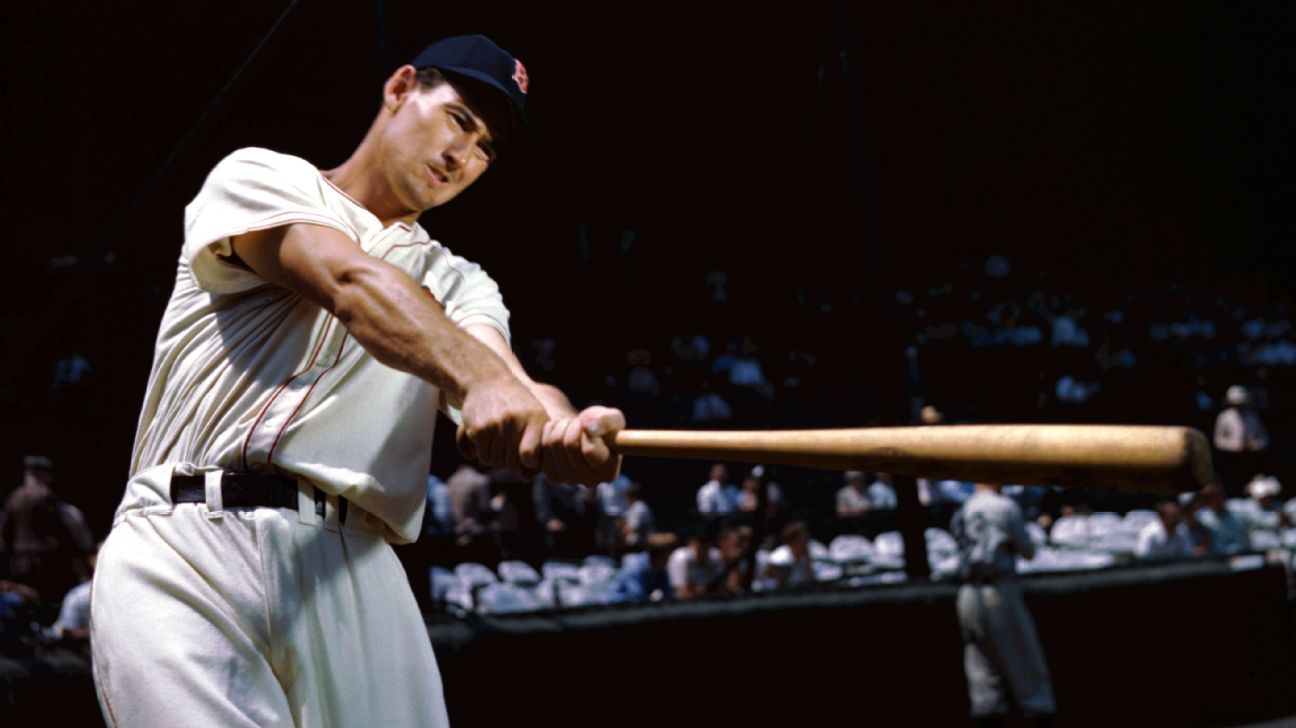
- Ted Williams and Bobby Doerr, who first met in 1936 when they were 17 and 18, formalized their long-running hitting disagreement during an Oct. 9, 1987 three-day fishing trip on Oregon's Rogue River, captured on video and recently discovered in the home of their late Red Sox teammate Dave 'Boo' Ferriss
- Six-time All-Star Joey Votto — described as the foremost modern devotee of Williams' hitting philosophy — assessed the footage and broke Williams' arguments into five points: quickness, hips ahead of hands, a slight upswing, maximum stroke length, and a preference for fly balls over ground balls
- Williams preached quickness and a longer stroke decades before modern bat-speed training and force-plate technology quantified swing mechanics, with Votto noting Williams 'didn't need a juiced ball' and 'could have homered with dead balls'
- Fly-ball rate in MLB rose from 33.8% of balls in play in 2015 to 39% in 2026, validating Williams' argument — articulated in 1987 — that hitters cannot drive the ball in the air by swinging down, the principle behind the launch-angle revolution
- Votto called 'The Science of Hitting' 'the holy book,' saying he carried it from his minor league career through his major league career and now views the 45-minute video as Williams distilling his ideas further
- The average MLB everyday player grew from roughly 6 feet, 180-185 pounds during Williams' era to 6-foot-1, 210 pounds today, a physical shift Votto cited when arguing Williams' fly-ball philosophy now plays even better than it did in Williams' time
Why it matters: Williams articulated five hitting principles in 1987 — quickness, hip-led sequencing, an upward swing path, longer stroke, and a preference for fly balls — that map directly onto the launch-angle revolution credited to 2010s hitters like J.D. Martinez and Justin Turner, meaning the modern game's central offensive shift was essentially foreseen nearly three decades earlier by a player who never had access to force plates or swing-decision data.
Ask SkimNews