Days of salted codfish and cabbage leaves are over: how climate crisis is shaping Tour de France’s future — SkimNews

SkimNews Take
A century-old event built around a stable July climate baseline is now adapting through brute inputs like 100kg of daily ice, revealing how cultural institutions absorb climate shifts through costly workarounds long before structural calendar changes arrive.
Get the Energy newsletter
Daily energy & climate — solar, EVs, oil, the policy fights and tech bets shaping the transition. Free.
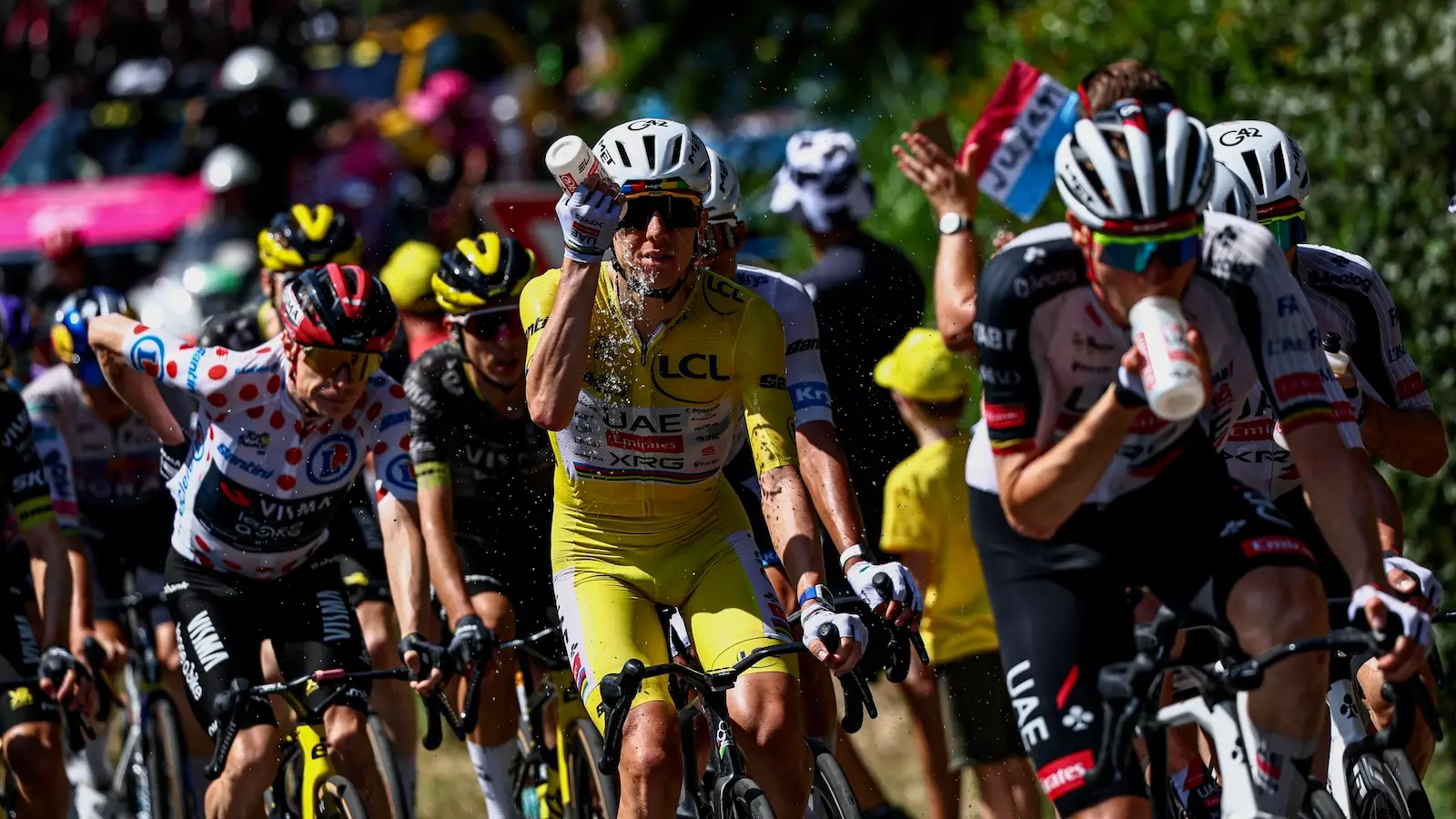
- The 2026 Tour de France is encountering 40°C temperatures this week, with one rider describing conditions as "riding into a hair dryer" and riders stuffing ice-filled stockings down their necks
- Geoffrey Nicholson's 1976 cycling book documented 25°C in the Vendée and 29°C on the road to Caen as a "serious worry" — temperatures that 2026 riders would now welcome as relief
- Tom Simpson died on Mont Ventoux in the 1960s while racing on amphetamines in extreme heat under race rules that restricted riders to just four bidons a day, prompting the eventual lifting of bans on team-car feeding
- A single 2026 Tour team now burns through 80 to 100kg of ice per day, plus custom-made ice lollies with personalised salt levels, replacing earlier practices like eating salted codfish to attune to dehydration and stuffing cabbage leaves under racing hats through the 1980s
- Team Sky began testing individual riders' mineral needs with Gatorade in 2010, following the British cycling team's 2004 introduction of chairs with built-in ice baths for hand immersion
- Tour organisers are weighing changes to the July calendar and late-afternoon finishes after spectator-free stages at Les Angles this week and Alpine mudslides on the Col de Sarenne reminiscent of the 2019 finale, while amateur races around France have been cancelled or amended
Why it matters: The 2026 Tour's 40°C heat has already forced spectator-free finishes at Les Angles, a problem because stage towns depend on tourist spending from hosting the race — putting direct economic pressure on organisers to revisit the July calendar and primetime scheduling that has defined the event for decades.
Ask SkimNews