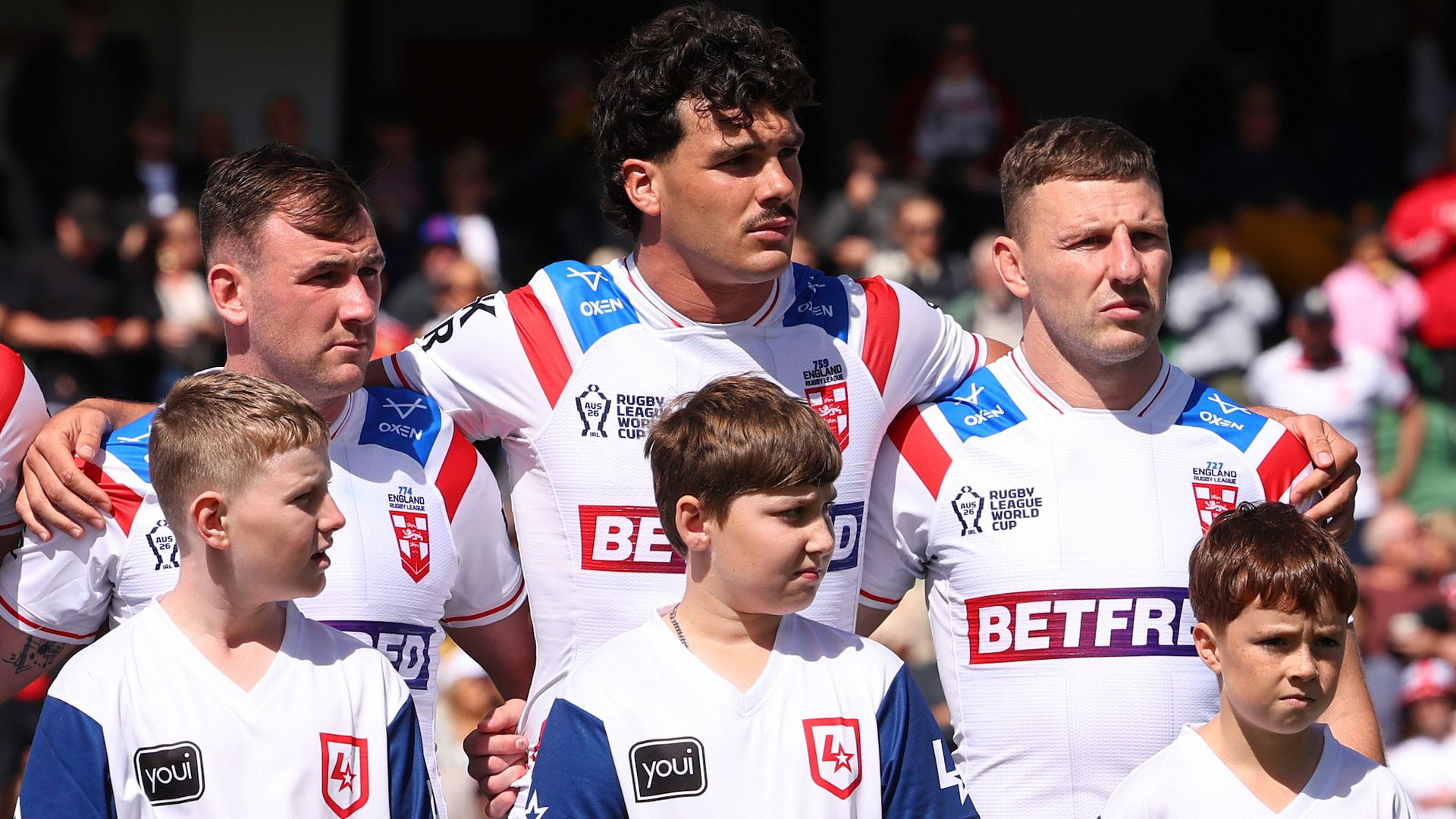
Set up to fail? Where England's World Cup campaign went wrong — SkimNews

Get the Sports newsletter
Daily sports — scores, transfers, the storylines from the leagues you actually follow. Free.
- Brian McDermott was appointed in April with six months to prepare, no mid-season international to plan around and virtual meetings from Australia, and only two of four planned on-field sessions in Australia were completed in full after UK-based players were put through a 48-hour journey to Perth.
- Papua New Guinea were beaten 34-12 by England's men, but not by the margin required, with elimination to be confirmed on Sunday unless Tonga beat Samoa by more than 46 points; the outcome would end a run of last-four appearances dating to Great Britain's 1954 debut, after England reached two finals and four semi-finals in the previous six tournaments.
- Samoa beat England 24-6 to end the women's semi-final hopes a day after world champions Australia won 78-0, with Staurt Barrow's squad containing 11 players aged 23 or under who mostly have full-time occupations away from rugby league.
- Staurt Barrow said England had played only six internationals since the previous World Cup — all against France and Wales, scoring 348 points and conceding four — apart from a record 90-4 defeat by Australia in Las Vegas, calling the women's calendar a problem of competitive level.
- Wakefield Trinity's late availability created a selection conundrum for McDermott: only three of the 14 England-based players in the squad, George Williams, Matty Ashton and Ben Currie, played in the Super League Grand Final on 3 October, and Wakefield's unavailability was not known before 5 October.
- Matty Lees' season-ending injury in May robbed England of a key forward enforcer, with Mike McMeeken and prop Caleb Hamlin-Uele unavailable, Morgan Smithies withdrawing injured and Morgan Knowles ruled out by a calf complaint, while Billy Smith, Jake Wardle, Ash Handley and Mikolaj Oledzki were also absent through injury.
- NRLW pays its players and is improving Pacific nations faster than the pace in England's women's game, Barrow said, as he called for genuine investment rather than a token gesture in the women's and girls game and a return to competitive internationals.
Why it matters: England's men are heading out of a run of World Cup last-four appearances unbroken since 1954, with the shortfall traced to six months' notice, two completed training sessions and an injury-hit pack. Barrow's funding call targets a parallel divide: England built a 348-point scoring record almost entirely against France and Wales, not NRLW-based opponents.
Ask SkimNews