Bitcoin Shows Near-Zero Correlation With Bond Yields — SkimNews
Get the Finance newsletter
Daily finance — markets, central banks, M&A, the prints that move money. Free.
- Bitcoin's 90-day correlation with U.S. 10-year yield daily moves is just −0.18, with the 180-day figure at −0.06 and the 1-year at −0.03 — essentially no relationship, per CoinDesk-analyzed data
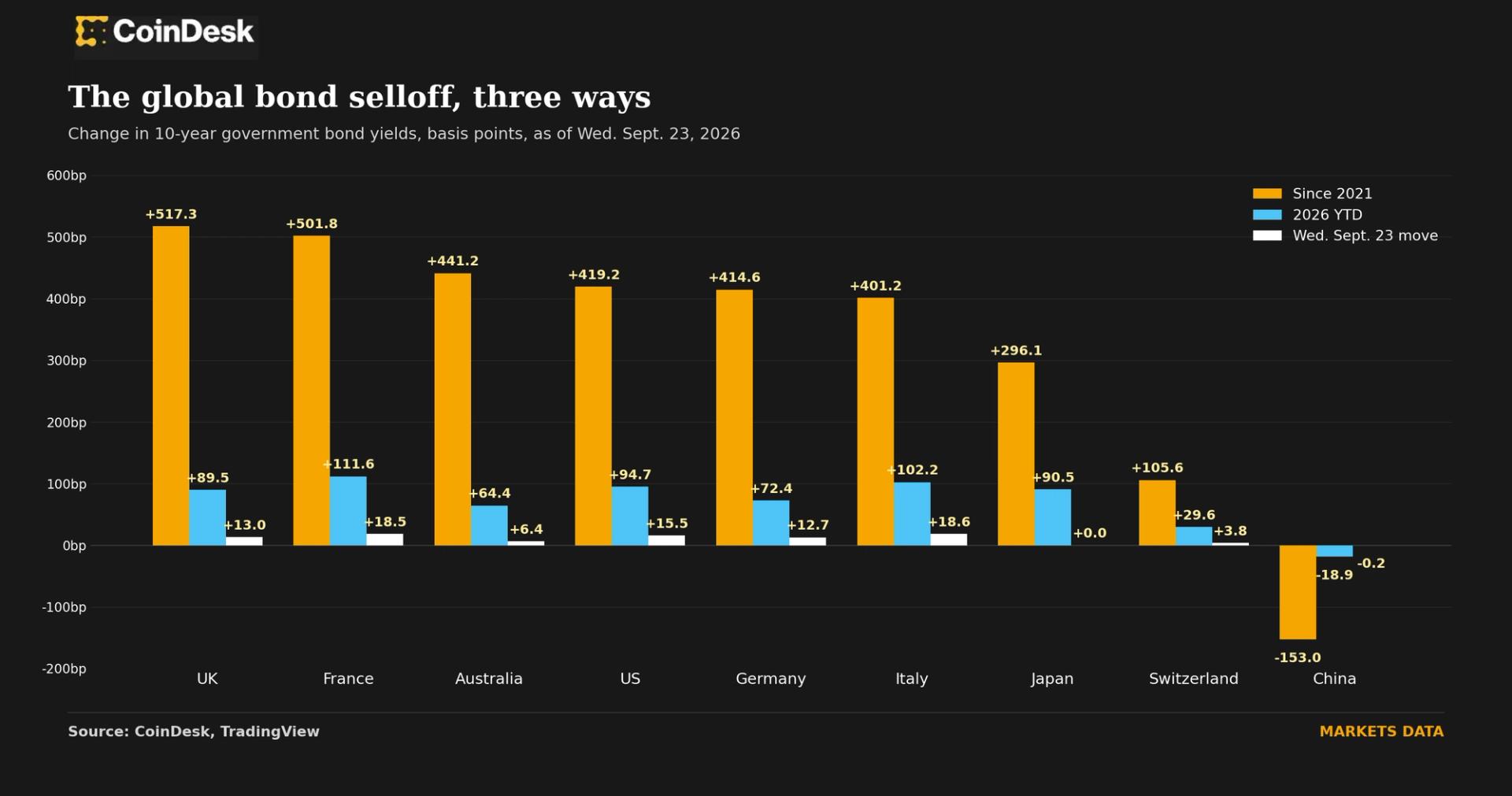
- The U.S. 10-year Treasury yield jumped 15 basis points to top 5.13% on Wednesday, its highest level since 2007, after S&P Global's flash U.S. Composite PMI rose to 58.4 — the strongest reading since that year — reinforcing expectations of further Fed hikes
- Bitcoin pulled back from $87,200 to $83,500 as the MOVE Index (Treasury volatility) surged 21% to 95 points, its highest since April 1, showing that bond volatility, not yield levels, can dent crypto
- Bitcoin is up 191% since 2021 and hit a record $126,000 last October, even as 10-year yields climbed over 400 basis points in the U.S., Australia, Germany, and Italy, and over 500 in the U.K. and France over the same stretch
- Bond markets are penalizing fiscally vulnerable countries — Japan at 200%+ debt-to-GDP, U.S. at 123.8%, France at 115%, U.K. at 102% — while Switzerland at just 16% debt-to-GDP has seen analysts call the Swiss franc a haven replacing the yen
- Lacie Zhang, research lead at Bitget Wallet, called Bitcoin's near-zero correlation with Treasury yields a "genuine portfolio advantage," arguing BTC is not simply trading as a duration or rates asset
Why it matters: For Bitcoin holders, rising yields alone are a poor sell signal given BTC's near-zero correlation across multiple windows, but a Treasury volatility spike like Wednesday's 21% MOVE Index surge can trigger short-term drawdowns — making the MOVE Index, not yield levels, the more actionable risk metric for crypto allocators.
Ask SkimNews