Butterfly that barely ages could help unlock longevity secrets — SkimNews
Get the Health newsletter
Daily health & science — research, biotech, public health, the studies worth knowing. Free.
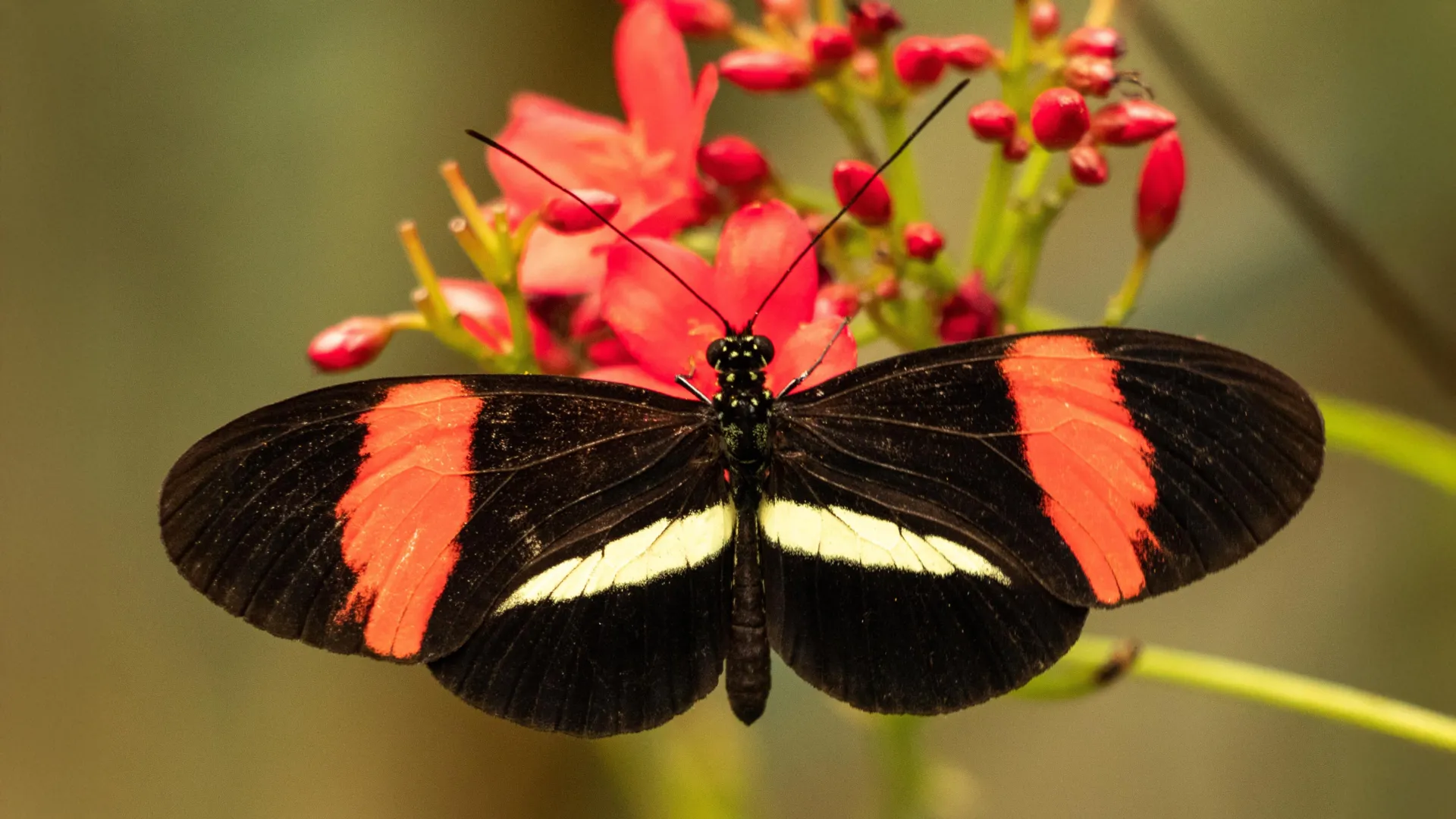
- Heliconius hewitsoni reached a maximum lifespan of 348 days, while its close relative Dione juno survived only 14 days — a 25-fold gap in maximum lifespan documented in the Bristol-led Nature Communications study.
- Heliconius hecale showed no measurable age-related decline in grip strength tests, while shorter-lived Dryas iulia experienced clear physical deterioration, according to experiments conducted with the Smithsonian Tropical Research Institute in Panama.
- Heliconius butterflies consistently exhibited longer average and maximum lifespans, lower baseline mortality, and slower aging rates than related non-pollen-feeding species across the Heliconiini tribe.
- Pollen feeding alone did not explain the longevity gap: H. hecale still lived substantially longer than D. iulia even when pollen was removed from its diet, pointing to deeper evolutionary adaptations.
- Dr. Jessica Foley of the University of Bristol's School of Biological Sciences said Heliconius represents a "natural evolutionary experiment," noting insect lifespans vary roughly 5,000-fold within the class compared to about 100-fold in mammals.
- The study combined data from butterfly houses, mark-release-recapture field work, and controlled insectary experiments to compare lifespan and aging patterns across the Heliconiini tribe.
Why it matters: The finding gives biologists a closely related species pair — long-lived Heliconius versus short-lived relatives like Dryas iulia — where the genetic differences driving slower aging can be isolated, potentially informing research into healthy aging in longer-lived animals including humans. The fact that pollen removal did not erase the longevity advantage shifts the scientific focus from diet alone to underlying evolutionary mechanisms.
Ask SkimNews