Trump pulls Anthropic's Mythos 5; Snap specs at $2,195 — SkimNews
Get the Tech newsletter
Daily tech — startups, AI labs, chips, the launches that shape the next decade. Free.
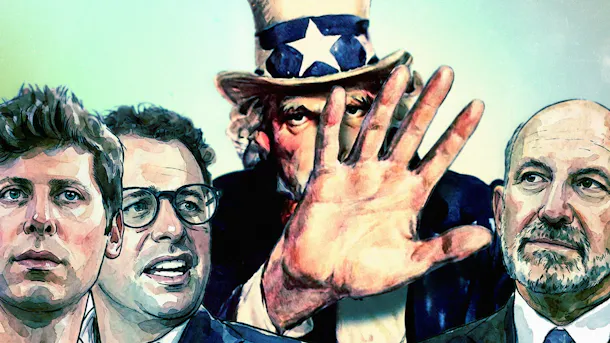
- Trump administration disabled Anthropic's Fable 5 and Mythos 5 on Friday June 12 with under 90 minutes' notice via an obscure Commerce Department export control directive banning all foreign nationals from access.link ›
- Anthropic pulled both models for ALL customers, not just foreign nationals, the only way it said it could comply — killing products it had spent the prior week publicly hyping.link ›
- Dario Amodei, Sam Altman, and Demis Hassabis issued an unusual joint statement at the G7 in Evian calling for US-led AI collaboration, as Macron and Modi raised objections and the UK requested a carve-out.link ›
- Wall Street Journal reports Amazon cybersecurity research and CEO Andy Jassy's White House conversations helped trigger the order; Semafor adds the White House feared a China-linked group was already distilling Mythos.link ›
- Katie Moussouris and dozens of top security researchers called on the administration to revoke the order, arguing the cited behavior "should never have triggered an export control" and that weakening it would only hurt US defenders.link ›
- Commerce Secretary Howard Lutnick now leads White House AI policy after imposing the Anthropic controls; Treasury's Scott Bessent is the point of contact for Amazon's concerns while Sean Cairncross has clashed with him over AI response.link ›
- Snap unveiled Specs, its first standalone AR glasses, at $2,195 with a 51-degree field of view; pre-orders open now, shipments this fall in the US, UK, and France.link ›
The Trump administration used an obscure export control directive to pull Anthropic's Fable 5 and Mythos 5 models offline Friday with under 90 minutes' notice, forcing a rare joint statement from rival CEOs Dario Amodei, Sam Altman, and Demis Hassabis at the G7 in Evian. Anthropic, which had spent the prior week hyping the models, disabled them for all customers (not just foreign nationals) to comply, then publicly disputed the order and pointed out similar vulnerabilities exist in GPT 5.5. The Wall Street Journal reports Amazon cybersecurity research and Andy Jassy's White House calls helped trigger the takedown; Semafor says fears of a China-linked group extracting Mythos via distillation drove the panic. Katie Moussouris and dozens of security researchers are calling on the administration to revoke the order — but the precedent is already written.
The stories behind this week
Anthropic's Fable 5, Mythos 5 disabled by Trump adminThe administration disabled two of Anthropic's models with under 90 minutes' notice and is refusing G7 allies access, forcing rival AI CEOs Amodei, Altman, and Hassabis into a rare joint statement at the G7. With the UK requesting a carve-out and Macron seeking a workaround, the dispute is now a diplomatic flashpoint over frontier AI access.

Malicious JetBrains Marketplace plugins steal AI API keys from developers - BleepingComputerDevelopers who installed the compromised JetBrains plugins may have had their DeepSeek and OpenAI API keys exfiltrated — keys that can be resold or abused to run up compute costs at the victim's expense. The 70,000+ install footprint across just 15 plugins shows how a trusted IDE marketplace can become a supply-chain attack vector for AI credentials.

All the news about Anthropic’s new AI fight with the White HouseThe shutdown demonstrates the US government's ability to unilaterally disable frontier AI products used by 'hundreds of millions' with no detailed written explanation, handing international competitors and non-US governments fresh justification to build sovereign AI stacks. For Anthropic specifically, a public dispute with Washington — on top of its existing Pentagon standoff — creates dual-front political risk few AI labs have faced.

Apple 2027 rumors: AirPods with cameras for AI and the second folding iPhoneApple is simultaneously building a visual-AI hardware stack (camera AirPods feeding Siri, a future smart glasses target), a second foldable form factor, and a chip roadmap that could fracture its TSMC monopoly by adding Intel — all while a new CEO inherits the plan and a component shortage threatens to derail it.

The Korean Telecom Giant at the Center of Anthropic’s Mythos Controversy - WIREDThe Anthropic crisis now spans international telecom, G-7 diplomacy, and US regulatory power — a ban or shutdown threat could derail the company's IPO plans and reshape how investors price political risk across the AI sector.

Lutnick Takes Over White House AI PolicyLutnick, once described as on the outs for going off message, now leads AI policy and is brokering G7 talks on expanding access to advanced U.S. AI models — exporting a regulatory framework shaped by last week's Anthropic confrontation. The Cairncross-Bessent clash and two more senior departures (Lind, Krishnan) leave the team thinner on technical expertise precisely as the administration builds a regulatory regime with global reach.

Anthropic Pulled Models Over Behavior Experts CallThe Trump administration just demonstrated it can unilaterally force any U.S. tech company to pull products offline without court approval — invoking an export control law designed for weapons to target AI models over behavior cybersecurity experts call legitimate. The precedent extends well beyond Anthropic to any software company that crosses the White House.
Snap Unveils $2,195 Standalone AR GlassesSnap gains a foothold in the nascent AR computing market, positioning itself as a hardware contender, while consumers face a steep $2,195 price that may restrict early‑adopter uptake. Competitors Apple and Google now confront a product that could accelerate the race for mainstream AR.
Why it matters: The Commerce Department just demonstrated it can force any US software company to pull a product offline without court approval by invoking export controls originally written for weapons — a precedent that forces every frontier AI lab, and arguably every US software firm with foreign exposure, to price in the political risk of a single unsigned letter.
Ask SkimNews


