Iran Hits US AWACS, Tankers at Saudi Base — SkimNews

Get the Geopolitics newsletter
Daily geopolitics — wars, elections, sanctions, the diplomatic moves that move markets. Free.
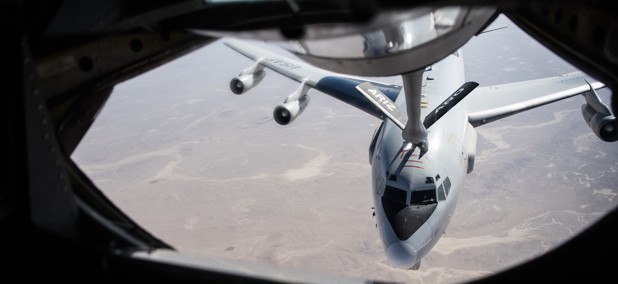
- Iran's military spokesperson Ebrahim Zolfaghari confirmed a Friday attack on Prince Sultan Air Base destroyed one KC-135 refuelling aircraft and damaged three others, with satellite images on Press TV showing multiple aircraft destroyed at the Saudi-run, US-used facility roughly 96km southeast of Riyadh.
- The E-3 Sentry AWACS hit carries strategic weight: retired US Air Force Col. John Venable told the WSJ it 'hurts the US ability to see what's happening in the Gulf,' while Stimson Center senior fellow Kelly Grieco called it 'a significant loss for the war in the short term' that will create 'coverage gaps.'
- At least 15 US soldiers were wounded in the Prince Sultan strike, five in serious condition, per the Associated Press citing unnamed sources — though neither the US military nor Saudi Arabia has officially commented on the incident.
- MQ-9 Reaper drones have been hit hard in Iran's broader campaign, with 12 lost in the past month alongside THAAD missile-defense radar systems and assets at US bases across Saudi Arabia, the UAE, Bahrain, Jordan, and Kuwait, with damage estimated at $800m per a BBC/CSIS report.
- US munitions are dwindling fast, with The Washington Post reporting 850 Tomahawk missiles already fired and stocks 'alarmingly low'; the Pentagon is seeking a $200bn supplemental budget to replace damaged systems, per the Wall Street Journal.
- Iran claimed its air defenses shot down a US F-35 stealth fighter on March 19 — a claim the US flatly denied, posting on X that 'No US fighter aircraft have been shot down by Iran' across more than 8,000 combat flights in Operation Epic Fury.
Why it matters: By hitting AWACS surveillance planes, refueling tankers, and drone fleets simultaneously, Iran is systematically degrading the force-enabling infrastructure the US air campaign depends on — and with Tomahawk stocks described as 'alarmingly low' and a $200bn supplemental request pending, Washington faces mounting pressure to escalate or negotiate from a position of increasing attrition, even as ground-operation planning reportedly accelerates.
Ask SkimNews