India faces 100% US tariff threat over Russian oil — SkimNews

Get the Geopolitics newsletter
Daily geopolitics — wars, elections, sanctions, the diplomatic moves that move markets. Free.
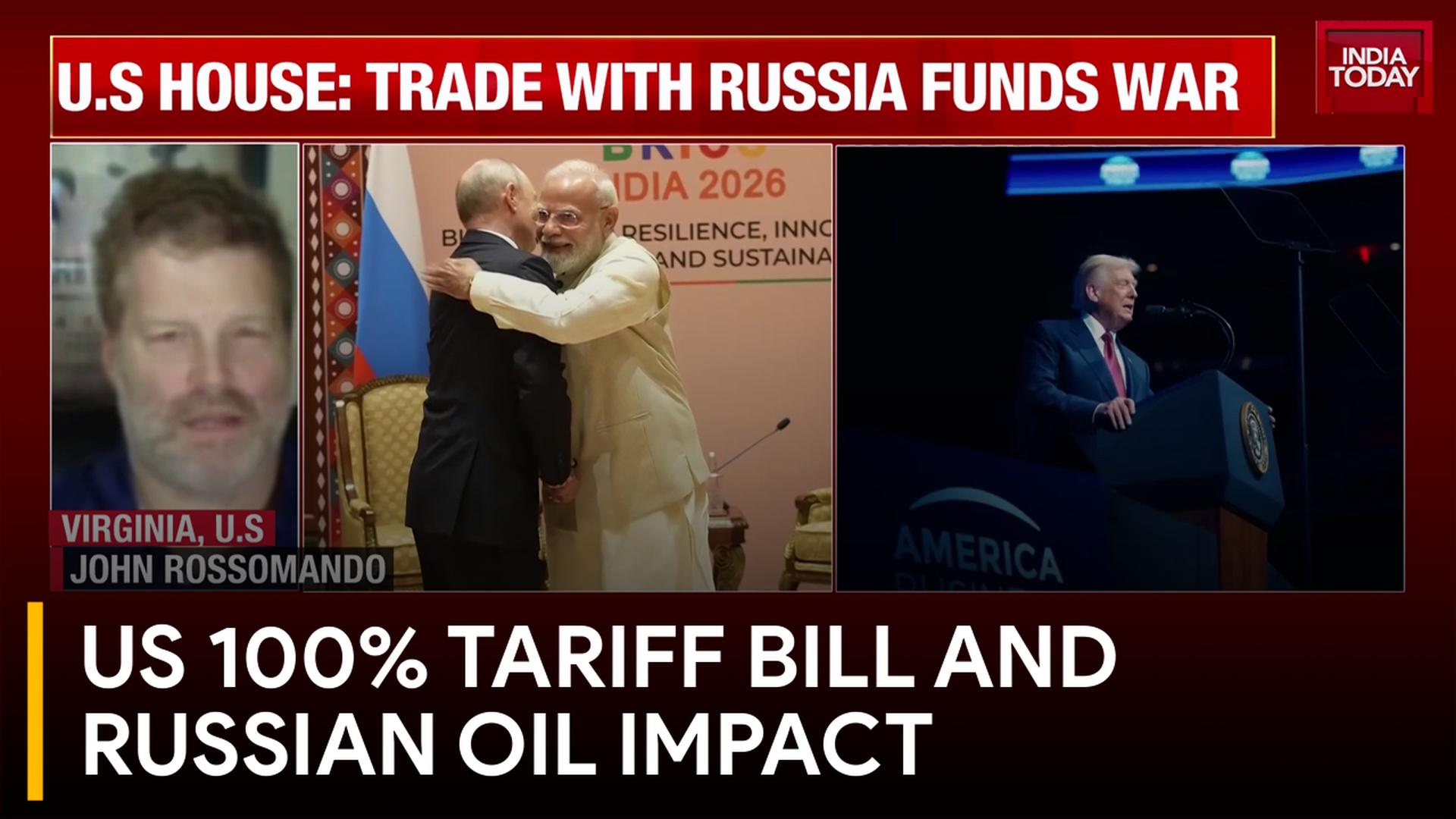
- US House of Representatives passed legislation on Wednesday granting Trump broad authority to impose sanctions on Russia and tariffs of up to 100% on countries buying Russian oil and gas, sending the bill to his desk.
- Russia supplied 30.3% of India's crude imports in fiscal 2026 ($40.8bn out of a $134.7bn total), and more than half of India's July imports alone — exceeding the combined share of the UAE, Saudi Arabia, Venezuela, Brazil, Oman and the US.
- India has saved approximately $12.6bn since 2022 through its shift to discounted Russian crude, per the Council on Energy, Environment and Water — savings the article says now risk being outweighed by tariff exposure.
- The US tariff mechanism targets Indian exports to America — $104bn in goods in 2025 — rather than Russian crude entering India, hitting electronics ($25.8bn), pharmaceuticals ($9.7bn) and machinery ($7.2bn).
- India's energy vulnerability runs deep: it imports over 88% of its crude, with more than 85% coming from just six countries in conflict-prone regions, and strategic petroleum reserves covering only 9-10 days versus roughly 200 in Japan.
- Indian refiners have become an unlikely fuel lifeline for Russia itself — supplying roughly 70% of Russia's record August fuel imports (~120,000 tonnes of petrol refined from Russian crude at a Gujarat facility).
- Atlantic Council's Michael Kugelman warned 100% tariffs would be 'real bad news' at 'the worst possible time, amid sensitive final-stage trade talks,' while GTRI's Ajay Srivastava called the bill 'a blunt and dangerous attempt to pressurise India' into a one-sided trade deal.
Why it matters: India must now weigh $12.6bn in cumulative savings from Russian crude against the risk of 100% tariffs on $104bn of annual exports to the US — a calculation complicated by India importing 88%+ of its oil, holding only 9-10 days of strategic reserves, and lacking the supply-chain leverage that makes China harder for Washington to pressure.
Ask SkimNews