Bee Tongue Movements Reveal 'Wanting' vs 'Liking' — SkimNews

Get the Health newsletter
Daily health & science — research, biotech, public health, the studies worth knowing. Free.
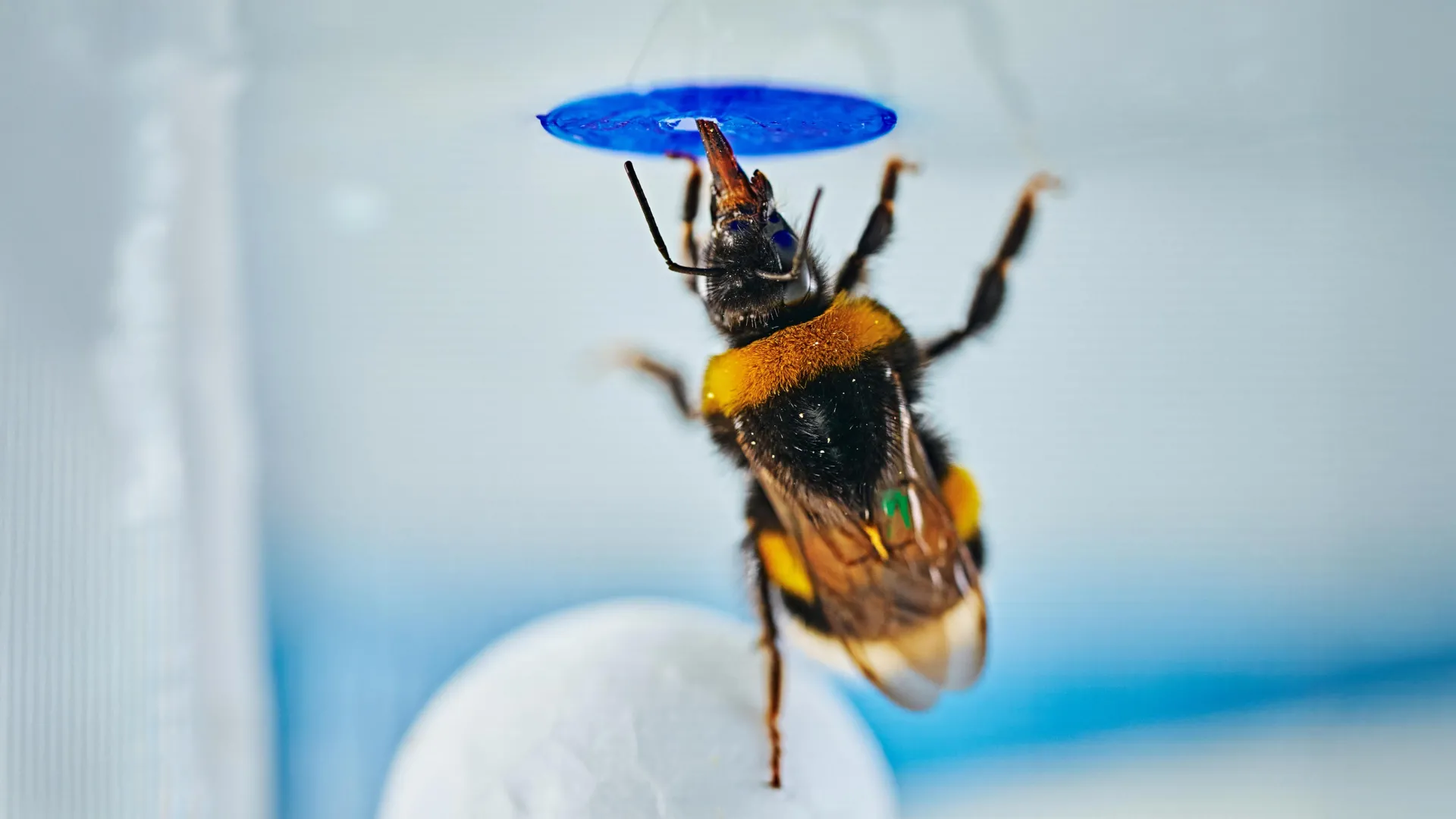
- Andrew Barron at Macquarie University and colleagues filmed buff-tailed bumblebees offered sweet, salty, and bitter droplets, finding the bees repeatedly extended their hairy glossa tongues after sweet tastes and wiped their mouths or shook their heads after unpleasant ones.
- Buff-tailed bumblebees offered sugar mixed with salt at reduced concentration showed a dramatic drop in tongue protrusions — but after being dehydrated at 40°C, the same salty droplets made them repeatedly stick out their glossa, mirroring how a parched person would suddenly welcome an electrolyte drink.
- Dopamine treatment, which in mammals drives food-seeking motivation, did not increase glossa protrusions in the bees, while endocannabinoid treatment (which boosts food enjoyment) did — the first time researchers say they have behaviorally separated 'wanting' from 'liking' in an insect.
- Ralph Adolphs at the California Institute of Technology called the study 'an important and innovative study on a difficult topic' but cautioned it is unclear whether the experiments demonstrate pleasure as humans know it, concluding 'we should conclude that bees have bee emotions, not mammal emotions.'
- Jonathan Birch at the London School of Economics said it was the first time he had seen 'wanting' and 'liking' disentangled in a bee, calling the field 'a golden age of very charming studies' using high-resolution video to reveal previously overlooked insect behaviors.
Why it matters: For insect cognition research, the study provides the first behavioral separation of 'wanting' (dopamine-driven motivation) from 'liking' (endocannabinoid-driven pleasure) in a bee — mirroring the neurochemical split documented in mammals. That parallel adds weight to the case, explicitly drawn by the researchers and outside commentators in the article, that insects possess some form of subjective inner experience.
Ask SkimNews