US slams Iran's NPT vice presidency amid nuclear row — SkimNews
SkimNews Take
By shifting focus to the Strait of Hormuz and deferring talks, Iran's delegation illustrates how agenda-substitution and procedural delay within multilateral forums can displace the meeting's original scope.
Get the Geopolitics newsletter
Daily geopolitics — wars, elections, sanctions, the diplomatic moves that move markets. Free.
- United States condemned Iran's election as a Vice-President of the NPT review conference, with Assistant Secretary Christopher Yeaw calling it 'beyond shameful' due to Tehran's noncompliance with treaty obligations
- Iran was elected one of 34 Vice-Presidents of the monthlong NPT review conference as a candidate of the 121-member 'nonaligned movement' despite U.S. objections
- International Atomic Energy Agency inspectors have been denied access to Iranian nuclear sites bombed by the U.S. in June 2025, a point cited by the U.S. to argue Iran is violating its NPT commitments
- Reza Najafi, Iran’s UN ambassador in Vienna, dismissed U.S. allegations as 'baseless and politically motivated' and accused the U.S. and Israel of attacking Iran’s 'peaceful nuclear facilities'
- Russia, through Ambassador Andrey Belousov, objected to singling out Iran and warned against 'politicisation' of the conference, echoing its broader stance of resisting Western-led criticism of Tehran
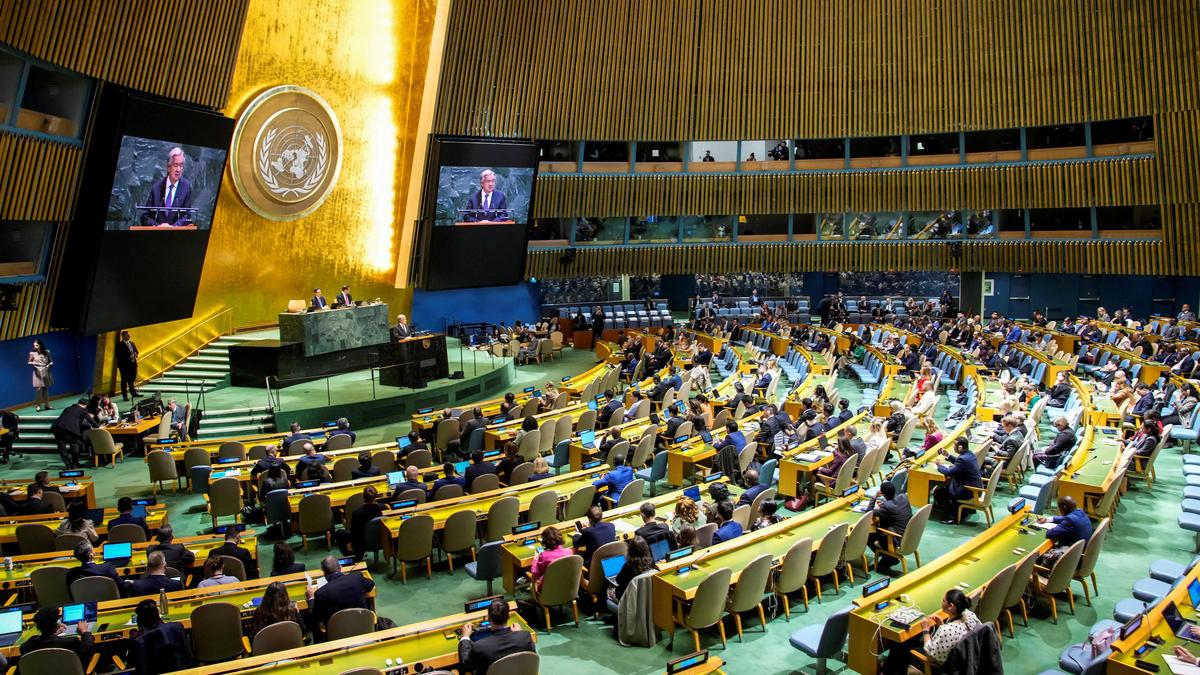
- UN Secretary-General Antonio Guterres opened the conference urging unity, warning that nuclear warhead numbers are rising for the first time in decades and calling for renewed disarmament commitments
Why it matters: Iran’s elevation to a leadership role in a treaty it is accused of violating undermines the credibility of the NPT review process, especially as the U.S. and allies lack consensus on how to respond. With Russia blocking prior agreements and now opposing scrutiny of Iran, prospects for a unified outcome are slim despite rising global nuclear risks.
Ask SkimNews