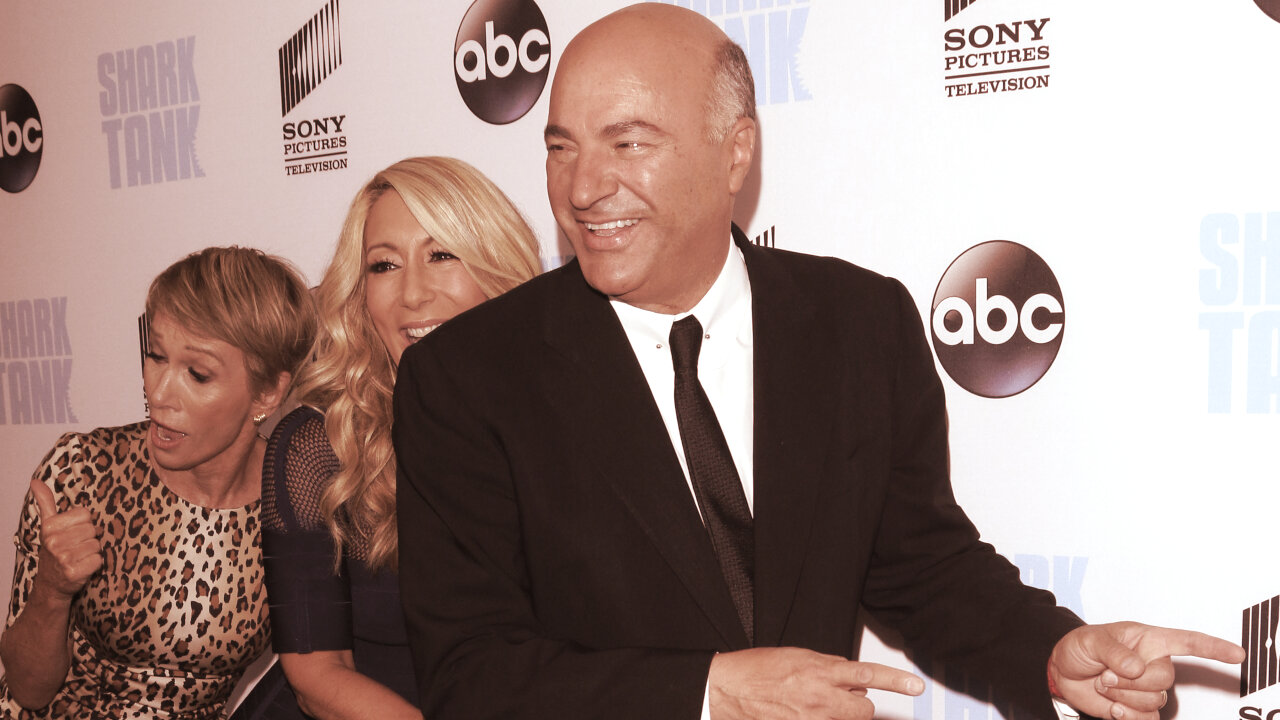
Bitcoin Will Hit $1 Million, Says Kevin O’Leary—But There’s a Quantum Catch — SkimNews
Get the Finance newsletter
Daily finance — markets, central banks, M&A, the prints that move money. Free.
- Kevin O'Leary said Bitcoin could hit $1 million if the industry resolves the "Q-Day" quantum computing threat to blockchain encryption, noting no such computer exists today and estimates for one range from the early 2030s to never.
- O'Leary reversed his 18-month-old thesis that Bitcoin and Ethereum alone capture 97% of crypto's volatility, now betting industries will each pick their own blockchain; he called Ethereum "not fast enough" and "not secure enough."
- O'Leary predicted tokenization will become the "12th sector of the S&P," arguing crypto services all other 11 sectors, with crypto reaching as much as 23% of his portfolio at peak over the past seven years.
- O'Leary is investing in AI power infrastructure rather than individual models, including BitZero—a Nasdaq-listed former Bitcoin miner turned power company with assets in Norway, Finland, Alberta, and Utah—and a first-ever uranium position tied to small modular reactors for data centers.
- The SEC issued an "Innovation Exemption" this week letting approved platforms trade tokenized stocks on blockchain, which O'Leary cited as direct validation of his thesis.
- O'Leary doesn't expect the Clarity Act to pass before midterm elections, predicting Congress won't deliver the current administration a partisan crypto win until after the midterms.
- O'Leary appeared at the summit wearing an $11 million Shohei Ohtani 1-of-1 baseball card in a Tiffany-made holder with 110 carats of diamonds and 2.2 pounds of white gold, using it as a prop to argue that "this asset class should be on-chain."
Why it matters: O'Leary publicly abandoning his Ethereum thesis matters because he was one of the loudest voices arguing BTC and ETH captured 97% of crypto's upside—now he's conceding that bet failed and spreading capital across chains. His pivot into uranium and power-grid plays signals that high-profile investors are hedging AI model bets with energy infrastructure, while his quantum caveat explains why institutions cap Bitcoin exposure around 3% of portfolios rather than treating it as core.
Ask SkimNews