Japan Downgrades Tsunami Alerts After M7.7 Quake

Get the Geopolitics newsletter
Daily geopolitics — wars, elections, sanctions, the diplomatic moves that move markets. Free.
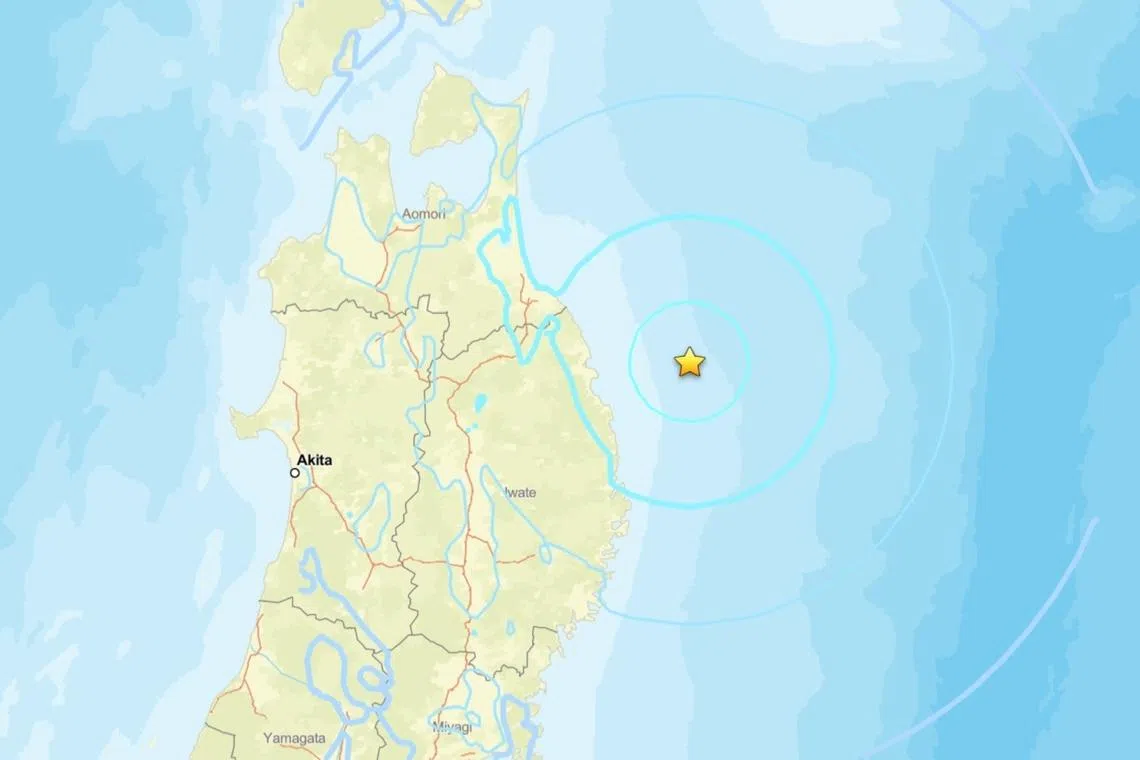
- A 7.7-magnitude earthquake struck off Japan's Sanriku coast at 4:53pm local time Monday at a depth of about 19km, later revised upward to 8.0 or stronger
- The Japan Meteorological Agency issued a special advisory flagging a 1% chance of a magnitude 8.0+ megaquake in the next week — ten times the 0.1% baseline
- An 80cm tsunami was detected at Kuji port in Iwate prefecture within an hour; the Pacific Tsunami Warning Center later declared the threat "has now passed"
- More than 170,000 people across five northern prefectures from Hokkaido to Fukushima were advised to seek higher ground under non-compulsory evacuation directives
- The Nuclear Regulation Authority and the IAEA both confirmed no abnormalities were observed at nuclear power plants and related facilities in the region
- Prime Minister Sanae Takaichi urged residents in 182 towns to confirm shelters, evacuation routes, and emergency supplies; this was the second such advisory in months, after a December 7.5-magnitude quake prompted a similar warning that came to nothing
Why it matters: For 170,000+ residents across five northern prefectures, evacuation orders were downgraded within hours, but the week-long elevated megaquake probability (1% vs. the 0.1% baseline) keeps preparedness heightened. Japan sits on the Pacific Ring of Fire and absorbs roughly 20% of the world's M6.0+ earthquakes, making each advisory a live test of evacuation logistics and nuclear facility resilience.
Ask SkimNews