M6.9 quake strikes northeast Japan, no tsunami — SkimNews

Get the Health newsletter
Daily health & science — research, biotech, public health, the studies worth knowing. Free.
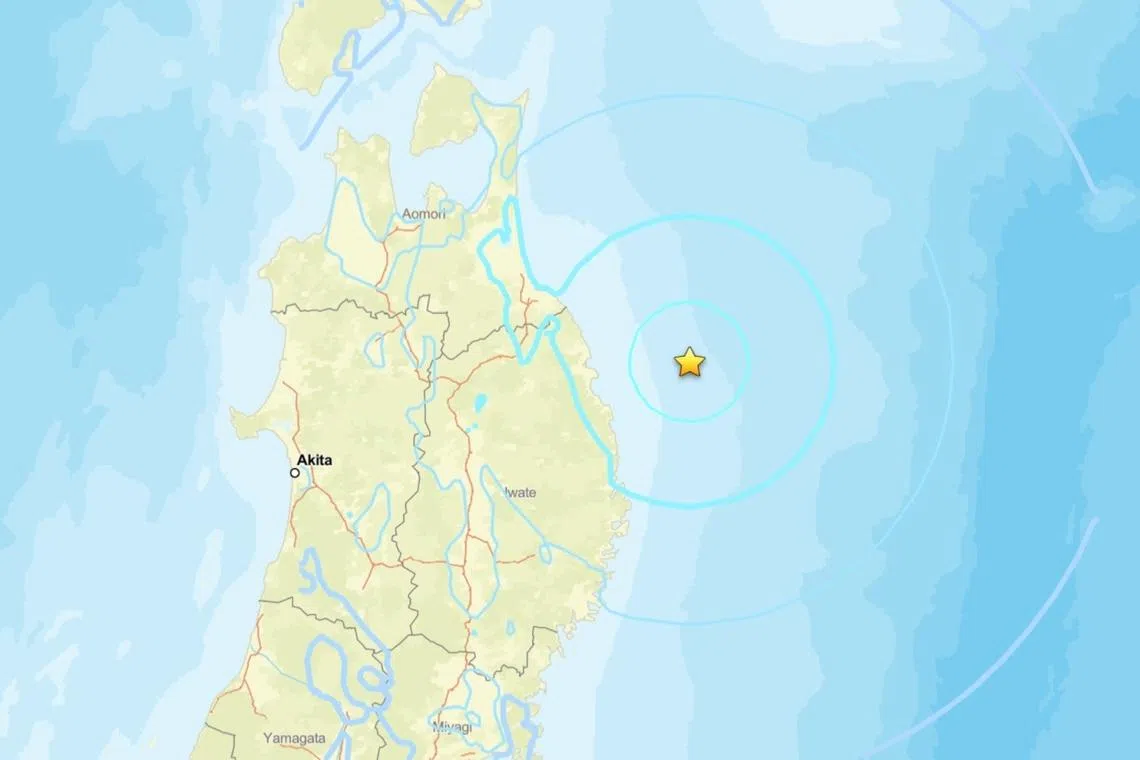
- The earthquake measured M6.9 and struck off the coast of Iwate prefecture at approximately 50 km depth on June 25, according to the Japan Meteorological Agency, with no tsunami warning issued
- Aomori prefecture registered the highest shaking on Japan's 0-7 intensity scale at 6-plus, a level the JMA defines as making it impossible to remain standing or move without crawling
- Chief Cabinet Secretary Minoru Kihara told reporters Japan's government has set up an emergency team in the Tohoku region and is ready for disaster relief operations
- Tohoku Electric Power and the Nuclear Regulation Authority reported no irregularities at the Onagawa and idled Higashidori nuclear plants, or at nearby Tokyo Electric Power and other company facilities
- East Japan Railway halted some trains including Tohoku Shinkansen high-speed rail services, and expressway routes in Aomori were shut for inspections following the quake
- Japan's seismic exposure is extreme — the source notes the country accounts for roughly one-fifth of the world's earthquakes of magnitude 6 or greater, and the northeast coast was the site of the March 2011 M9 quake and tsunami that triggered the Fukushima nuclear crisis
Why it matters: The M6.9 jolt hit the same Tohoku region devastated by the March 2011 M9 quake and tsunami, automatically triggering nuclear plant inspections, Shinkansen halts, and expressway closures — but Japan's post-Fukushima disaster protocols appear to have held, with no tsunami, injuries, or facility abnormalities reported.
Ask SkimNews