Waves reflecting off Earth's core shifted Japan after 2011 earthquake — SkimNews

Get the Health newsletter
Daily health & science — research, biotech, public health, the studies worth knowing. Free.
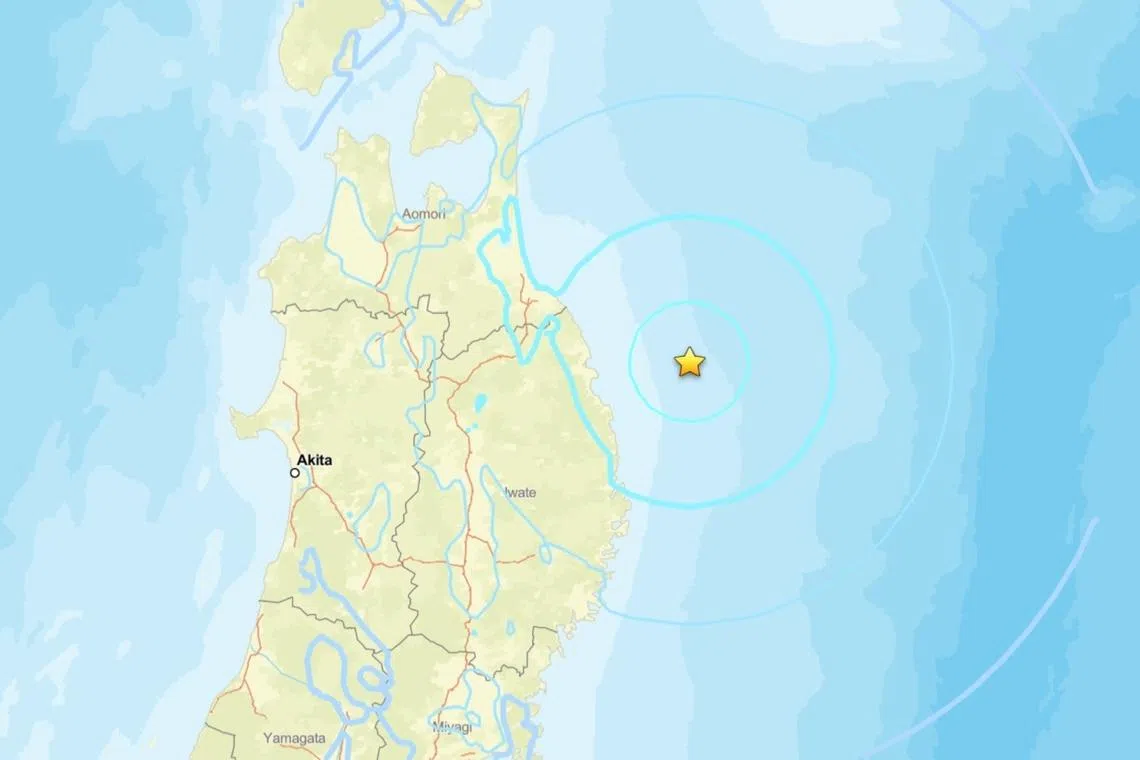
- The 2011 Tohoku earthquake generated a seismic wave that traveled 5,800 kilometers to Earth's core and reflected back to the surface, causing almost all of Japan to lurch roughly half a centimeter east about 15 minutes after the main shock
- The eastward shift extended across at least 3,000 kilometers — nearly seven times longer than the earthquake's main rupture line and longer than any slip ever recorded, according to Sunyoung Park at the University of Chicago
- Four adjoining tectonic plates moved in unison during the event, with Park's team theorizing the original quake's vigorous shaking may have already weakened plate boundaries, making them susceptible when the core-reflected wave returned
- Park said GPS stations show the shift occurred 'pretty much everywhere across Japan,' unlike typical narrow edge movements near a rupture zone; offshore extent is unknown due to lack of seafloor instruments
- Robin Lee at the University of Canterbury said the finding demonstrates that large earthquakes can trigger widespread, delayed fault motion minutes later and over much larger regions than previously expected, with implications for other fault zones worldwide
- The study is published in Science (DOI: 10.1126/science.aec4190), and Lee noted more research is needed to understand the implications for countries like New Zealand with similar fault systems
Why it matters: Seismic hazard planning has traditionally focused on near-field aftershocks after a major earthquake, but this study documents a mechanism — core-reflected waves — that can shift land across 3,000 kilometers minutes after the main shock, meaning agencies in fault-prone regions like Japan and New Zealand may need to account for delayed, large-scale ground motion triggered by deep-travelling waves.
Ask SkimNews