Almost the whole of Japan moved eastward after 2011 earthquake — SkimNews

Get the Health newsletter
Daily health & science — research, biotech, public health, the studies worth knowing. Free.
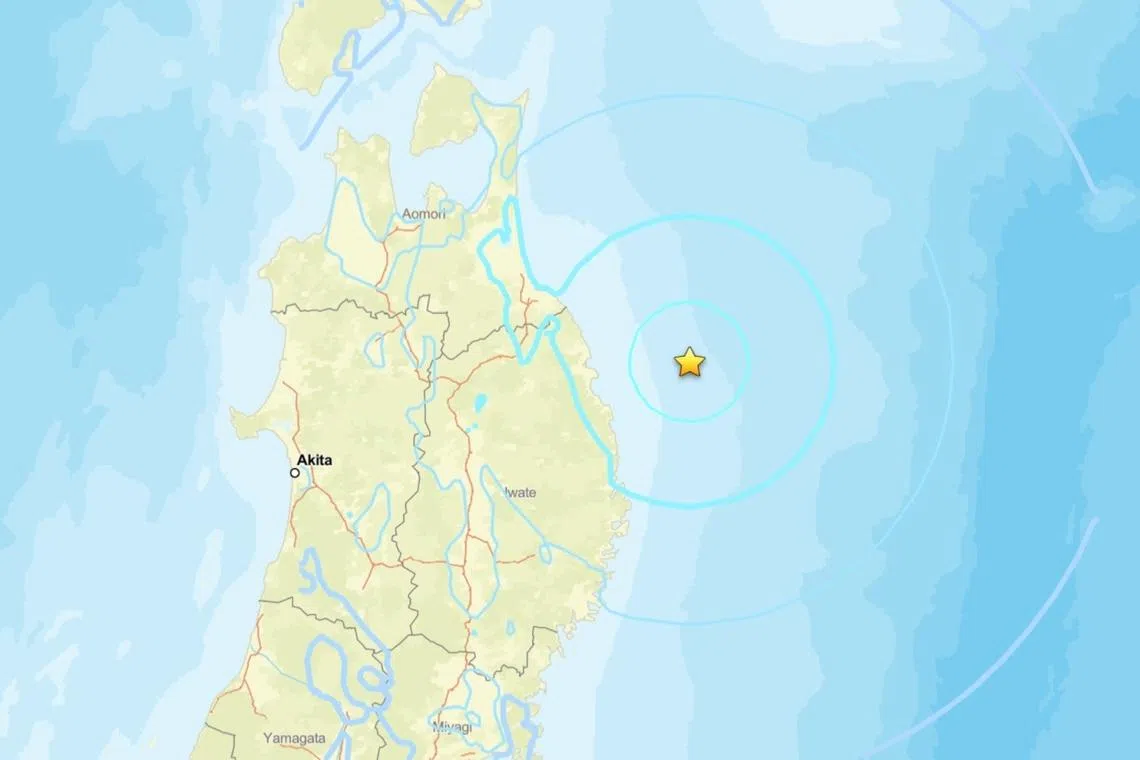
- Japan's landmass shifted approximately 5 millimetres eastward across a span of 3,000 kilometres roughly 15 minutes after the magnitude-9 Tohoku earthquake on 11 March 2011 — the longest slip ever recorded, nearly seven times the length of the main rupture line.
- Sunyoung Park at the University of Chicago and colleagues used extensive GPS and seismic data to trace the movement to a seismic wave that travelled 5,800 kilometres to the planet's core and bounced back to the surface still powerful enough to shift four adjoining tectonic plates simultaneously.
- The research suggests the original Tohoku shock had already weakened plate boundaries, making them susceptible to movement when the core-reflected wave arrived, producing a near-simultaneous 5-mm step observed 'pretty much everywhere across Japan' where GPS stations exist.
- Robin Lee at the University of Canterbury, New Zealand called the finding significant because it demonstrates that large earthquakes can trigger widespread, delayed fault motion minutes later and over much larger regions than previously expected.
- The study, published in Science (DOI: 10.1126/science.aec4190), identifies a previously unrecognised hazard mechanism: deep-travelling core-reflected waves arriving minutes after a major quake could potentially trigger additional seismic events at great distances.
- Park warned that after a big earthquake, communities may need to be aware of potential seismic hazards from such deep-travelling wave arrivals, with more research needed to assess implications for other regions with similar faults.
Why it matters: The finding, published in Science, reveals a delayed, long-range destruction pathway — core-reflected seismic waves — that current earthquake preparedness models do not account for. For seismically active regions built on similar fault geometries, emergency planners may need to extend their hazard windows beyond the initial shock by minutes and across hundreds or thousands of kilometres, not just tens.
Ask SkimNews