AI Decodes Key 'On Switch' in Human DNA
Get the Health newsletter
Daily health & science — research, biotech, public health, the studies worth knowing. Free.
- UC San Diego researchers led by graduate student Torrey E. Rhyne-Carrigg in Professor James T. Kadonaga's lab used high-throughput DNA sequencing to measure gene expression across approximately 500,000 versions of the initiator element.
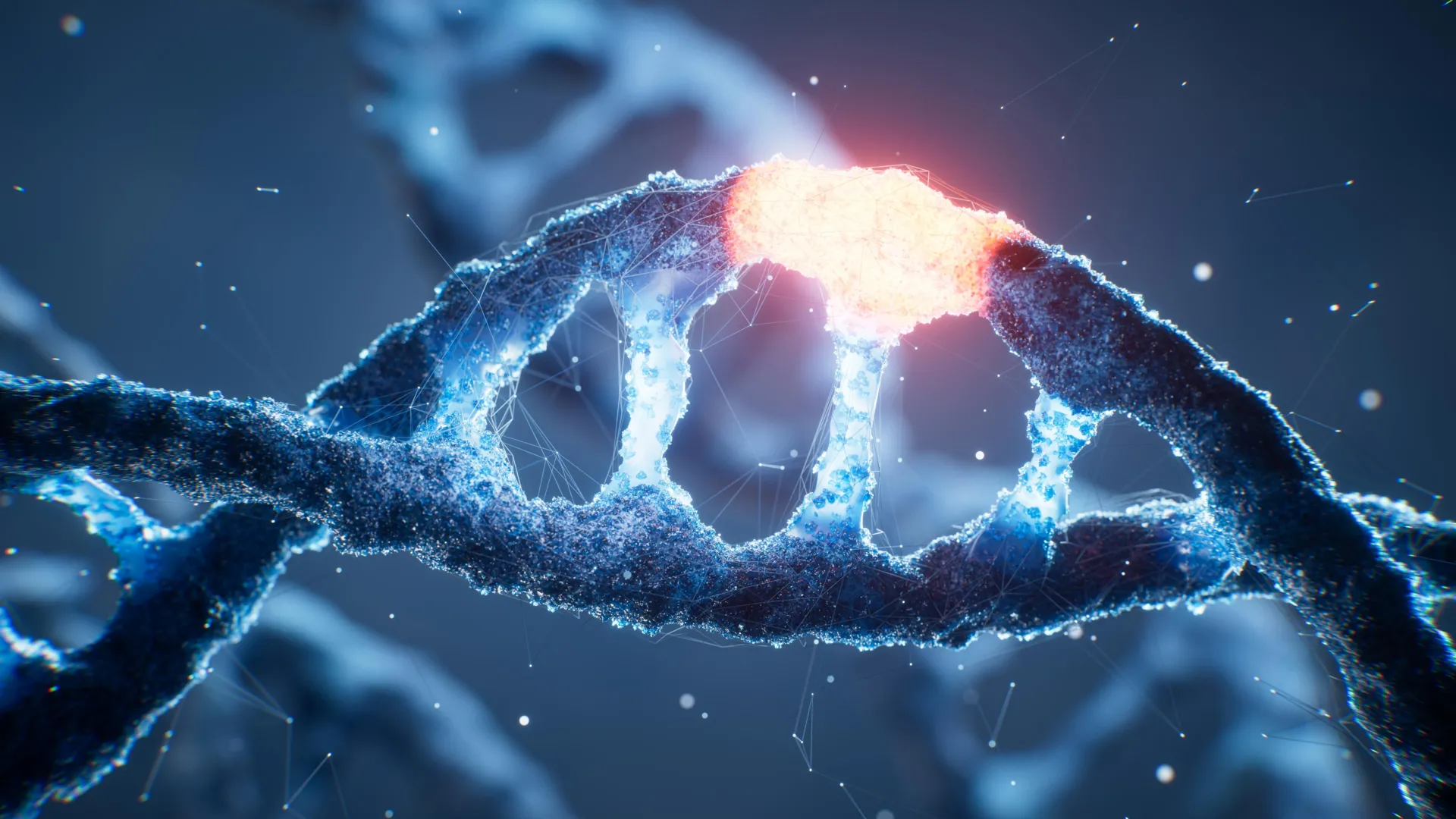
- A machine learning model trained on those results decoded the characteristic DNA base-sequence pattern of the initiator, which marks where a gene's information begins to be converted into a functional product.
- The AI model identified the initiator sequence in roughly 60% of human genes — the first time, per Kadonaga, that strong predictions of the initiator's presence or absence in human genes have been possible.
- The findings could help researchers anticipate how mutations affecting the initiator alter gene activity and contribute to disorders, with Kadonaga noting such mutations can cause cells to malfunction and contribute to diseases including cancer.
- The study's data and models may also support designing synthetic promoters — DNA sequences that switch genes on or off — with functions tailored for specific purposes.
- Kadonaga framed the result as a small but important part of a larger "gene expression code" across the six billion DNA bases in each human cell, and said he is optimistic the team will expand their AI models in the near future.
- The study was published in the journal Genes in 2026 with DOI 10.1101/gad.353623.125.
Why it matters: For geneticists and disease researchers, this gives the first reliable computational readout of a core gene-activation element present in roughly 60% of human genes, a concrete tool to predict how mutations in that region disturb gene activity and contribute to disorders such as cancer. It also opens a path to designing synthetic gene switches for tailored biotech applications.
Ask SkimNews