Greenland Sharks Keep Healthy Eyes for 400 Years
Get the Health newsletter
Daily health & science — research, biotech, public health, the studies worth knowing. Free.
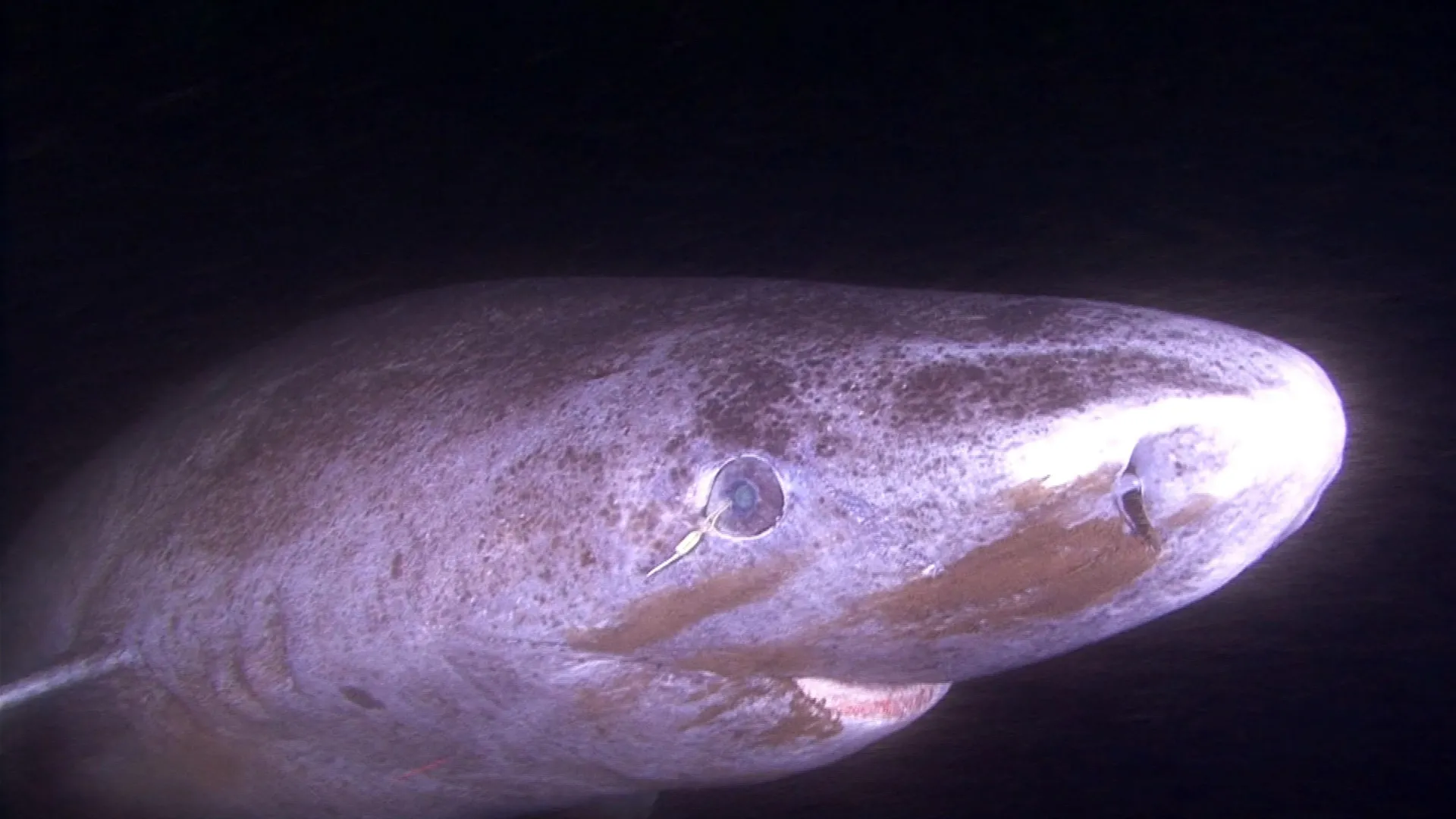
- UC Irvine researchers found no retinal cell death in Greenland sharks despite lifespans reaching 400 years, with rhodopsin proteins in the retina still active and specifically tuned to detect blue light in Arctic deep waters.
- The study, published in Nature Communications, was led by Dorota Skowronska-Krawczyk with evolutionary analysis co-authored by Lily G. Fogg and Walter Salzburger from the University of Basel.
- Emily Tom, a UC Irvine Ph.D. student and physician-scientist in training, performed histological and vision-specific analyses on baseball-sized shark eyeballs — a dramatic scale-up from the papaya-seed-sized mouse eyeballs her lab typically handles.
- The findings overturn the long-standing assumption that Greenland sharks may be functionally blind, a theory driven by the parasites commonly latched onto their eyeballs; Skowronska-Krawczyk noticed the sharks actively tracking light in video footage.
- Researchers hypothesize DNA repair mechanisms allow the sharks to preserve eyesight across centuries, raising implications for studying human age-related conditions including macular degeneration and glaucoma.
- The eye samples came from sharks caught between 2020 and 2024 near the University of Copenhagen's Arctic Station on Disko Island, collected through a collaboration with John Fleng Steffensen, Peter G. Bushnell, and Richard W. Brill.
Why it matters: For vision researchers studying age-related disease, the study offers a rare biological model — an animal that lives four centuries without retinal degeneration. The discovery could eventually guide new strategies for preventing macular degeneration and glaucoma in humans, though Skowronska-Krawczyk flagged uncertainty in federal research funding as a threat to this work continuing.
Ask SkimNews