There’s a history to what Trump’s up to regarding troops in Korea — SkimNews

Get the Geopolitics newsletter
Daily geopolitics — wars, elections, sanctions, the diplomatic moves that move markets. Free.
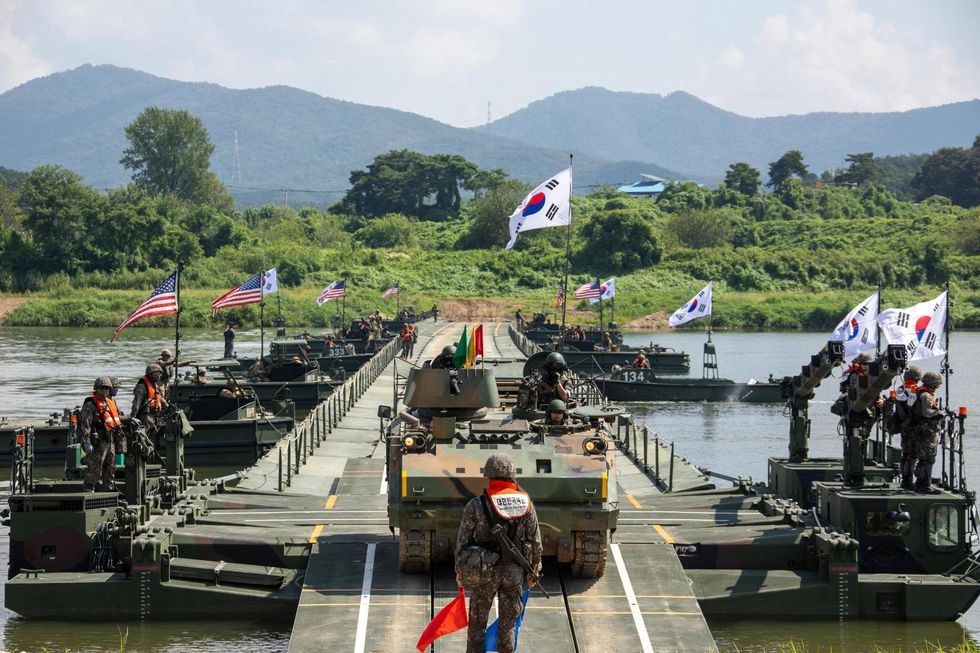
- Donald Trump's decision to scale back US military exercises with South Korea fits a recurring historical pattern of presidents seeking to reduce the US military footprint on the Korean Peninsula.
- President Jimmy Carter proposed withdrawing all US ground forces from South Korea in 1977, sparking fierce opposition from Congress and the military; only 3,600 troops were ultimately removed before the plan was scrapped in 1979.
- US troop levels in South Korea have fallen from approximately 41,000 in the late 1970s to between 23,000 and 28,500 today, potentially the lowest level since the Korean War's end.
- President Dwight D. Eisenhower ordered a phased reduction to 55,000 troops, while President Richard Nixon withdrew another 20,000 under the 1971 "Nixon Doctrine," both with at least grudging South Korean acquiescence.
- Congress mandated a troop reduction from 43,000 to 36,000 in 1989, reflecting a late-Cold War fiscal consensus, and President George W. Bush withdrew another brigade to fight in Iraq in 2003.
- Major General John K. Singlaub publicly declared Carter's withdrawal plan "would lead to war" and was reassigned to a US post for what Carter viewed as insubordination.
- Trump claimed 39,000 US soldiers are "guarding" South Korea from "your next-door neighbor," but the article notes actual figures are between 23,000 and 28,500.
Why it matters: Trump's stated figure of 39,000 US troops in South Korea is factually wrong — actual levels are 23,000-28,500 — meaning the drawdown he treats as a grievance is already well underway. Unlike Carter, who faced bipartisan fury and saw his plan collapse, Trump commands a Republican Congressional majority with little appetite for a fight over scaled-back exercises, making this the latest chapter in a 70-year trend rather than a radical break.
Ask SkimNews