Lawmakers Face AI Cyberattacks in Taiwan War Game — SkimNews
Get the Tech newsletter
Daily tech — startups, AI labs, chips, the launches that shape the next decade. Free.
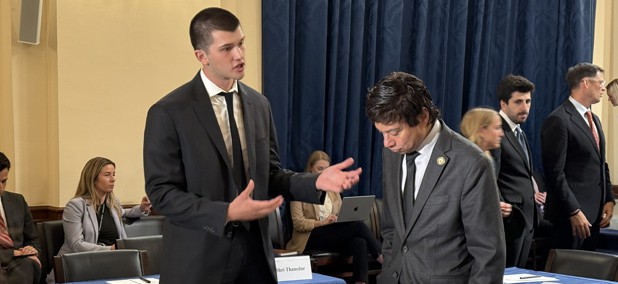
- CSIS hosted a tabletop exercise for the House Homeland Security Committee and House China Select Committee simulating a summer 2027 Taiwan crisis where Chinese hackers target U.S. ports, freight rail, airports, and other transportation networks needed to deploy American forces.
- Rep. Michael McCaul (R-TX) told participants the committee was briefed on Anthropic's Mythos cyber-focused AI model and warned that China is "three to five months behind us" in such capabilities.
- The scenario included attacks using stolen credentials, interference with logistics and routing systems, an AI-driven misinformation campaign, and a prompt injection attack designed to trick an AI system into following malicious instructions.
- The exercise mirrors longstanding concerns about Volt Typhoon, a Chinese government-backed hacking group that U.S. officials say has spent years burrowing into communications, energy, transportation, and water systems.
- Participants — Reps. Eli Crane (R-AZ), Michael Guest (R-MS), Shri Thanedar (D-MI), and Resident Commissioner Pablo José Hernández — had to decide which networks to defend first and how closely to coordinate with private-sector critical infrastructure operators.
- Lawmakers faced an explicit trade-off on whether moving U.S. forces would deter China or further escalate the crisis, with McCaul telling participants cyber "is always going to be a leader in any kinetic war."
- U.S. spy agencies assessed earlier this year that China is not planning to invade Taiwan in 2027, though Beijing has refused to rule out using force.
Why it matters: U.S. intelligence currently assesses China is NOT planning to invade Taiwan in 2027, yet the war game puts a concrete timeline on that exact scenario — and McCaul's explicit reference to Anthropic's Mythos model makes a commercial AI product the named benchmark for measuring adversary cyber capability gaps.
Ask SkimNews