‘I couldn’t breathe’: the deadly health burden of wildfire smoke
Get the Energy newsletter
Daily energy & climate — solar, EVs, oil, the policy fights and tech bets shaping the transition. Free.
- Wildfire smoke kills 1.5 million people per year, more than floods, flames, storms, and heat combined, per a 2024 Lancet study; Canada's 2023 fires alone caused 82,000 early deaths, with a third of the toll in the US and a quarter in Europe
- North American smoke exposure on 16 July hit at least 36 million people with PM2.5 above 125.5 μg/m³ and at least 10 million above 250 μg/m³, per preliminary Guardian analysis, with west Duluth, MN recording the continent's highest average at 541 μg/m³
- PM2.5 from wildfire smoke is up to 10 times more harmful in the short term than factory or car pollution, per a 2021 Nature Communications study, because it carries more inflammation-triggering organic compounds and ultra-fine particles that penetrate deeper into the lungs
- Climate breakdown doubled the likelihood of last month's fire weather in Canada and France and made it 20 times more likely in Spain, per rapid attribution analyses, and scientists warned peak exposure may overwhelm the body's defences in ways everyday pollution does not
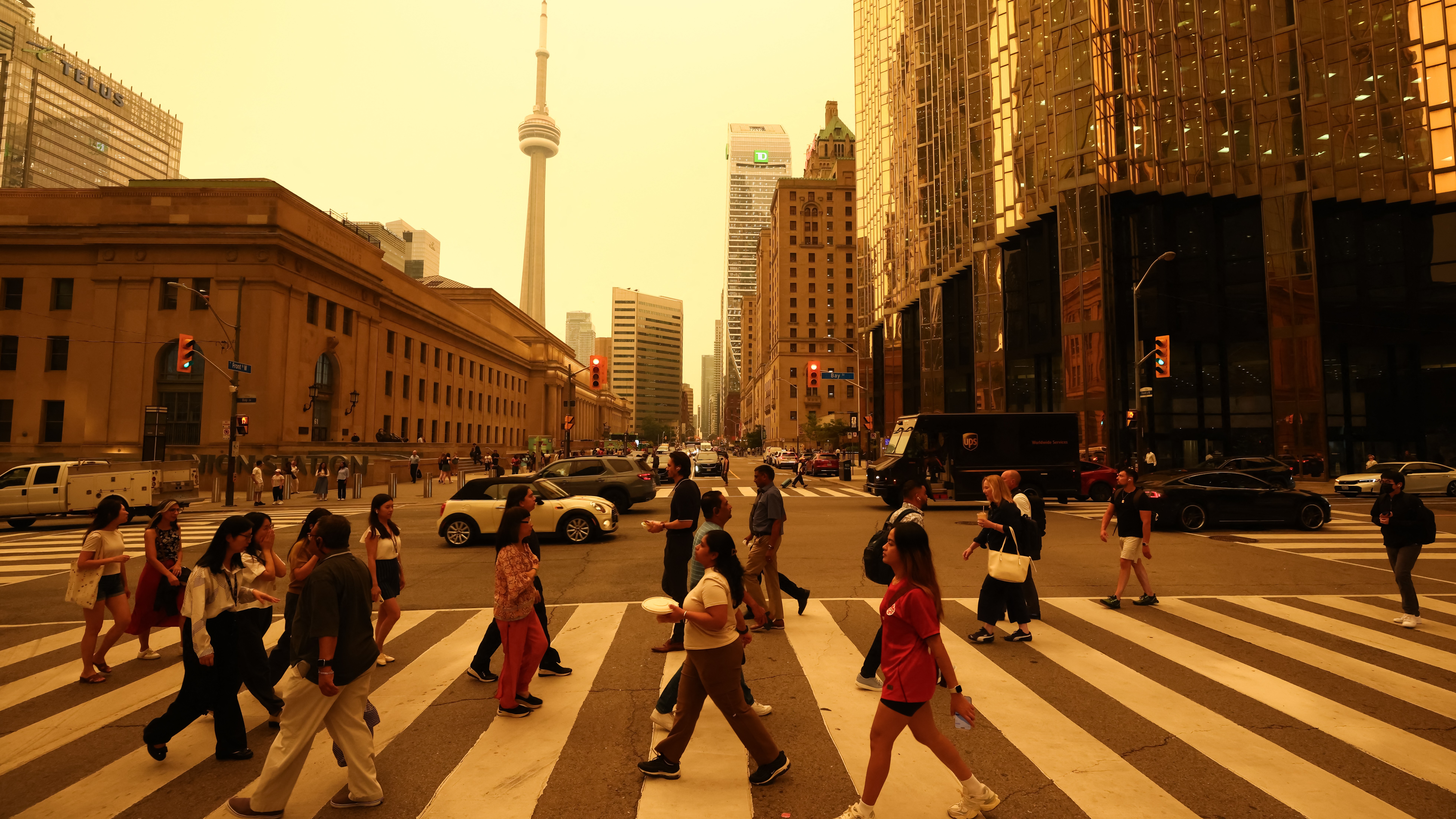
- Toronto briefly held the title of worst air quality of any major city in the world last month; emergency department chief Erin O'Connor said she'd never seen the midday sky turn orange, and patients flooded in with allergies and shortness of breath
- France set records in the first half of the year, with Bordeaux hitting 342 μg/m³ of PM2.5 on 24 July and Limoges reaching 486 μg/m³ the following day, though Spanish infernos were mostly blown away from populated areas
- Trump demanded Canadian PM Mark Carney 'stop these fires from coming in and poisoning our air' at the FIFA World Cup final, accompanied by sanctions threats; scientists countered that most of what has burned is unpopulated boreal forest, not mismanaged land
Why it matters: For vulnerable populations—particularly elderly people with chronic disease who live alone—wildfire smoke now poses an annual public-health threat that healthcare systems and air-quality guidance aren't built to handle, especially as climate-driven North American megafire seasons recur with only a three-year gap between events.
Ask SkimNews