Woman finds rare pink grasshopper babies in garden — SkimNews
Get the Health newsletter
Daily health & science — research, biotech, public health, the studies worth knowing. Free.
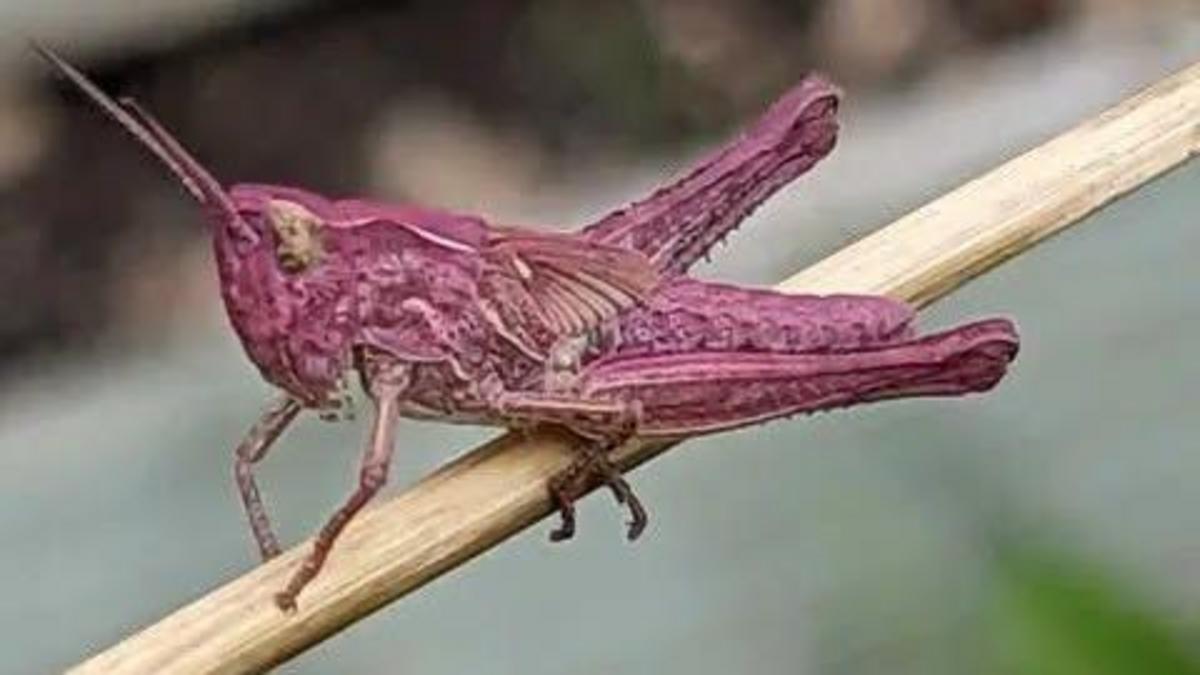
- Natasha Welch of Shepton Mallet photographed rare pink grasshopper babies in her garden and sent the images to Somerset Wildlife Trust, which identified the unusual coloring as a genetic mutation.
- Somerset Wildlife Trust said the pink grasshoppers are a "once-in-a-lifetime find" because their bright color prevents camouflage, leaving them vulnerable to being eaten by birds before most people ever spot one.
- Welch first spotted a pink grasshopper in her garden in 2025 and this year noticed an entire brood of baby pink grasshoppers, which she attributes to four cats keeping birds away and her habit of not cutting the grass often.
- Anne Halpin of Somerset Wildlife Trust clarified that the mutation itself is not that rare — grasshoppers are simply a "cryptic species" that normally hides effectively, so people rarely encounter the unusually colored ones.
- Halpin suggested homeowners create favorable grasshopper habitat by maintaining a mixture of high and short grass, noting "the more variety you have in your grass and garden, the more different types of plants, trees, shrubs, will be most beneficial to most species."
Why it matters: Welch's four cats and unmowed lawn effectively created a predator-free refuge where an otherwise conspicuous genetic variant could survive past infancy — a small case study in how ordinary domestic garden conditions can shelter rare wildlife that predators would normally eliminate. Halpin's mixed-height grass advice gives other residents a replicable method for supporting the insects.
Ask SkimNews


