Russia’s war is connecting Europe and the Indo-Pacific — SkimNews
Get the Geopolitics newsletter
Daily geopolitics — wars, elections, sanctions, the diplomatic moves that move markets. Free.
- South Korea demanded an apology from Ukraine over Kyiv's public disclosure of the planned transfer of two North Korean POWs who had expressed a wish to resettle in the South, with President Lee Jae Myung warning that further measures could follow.
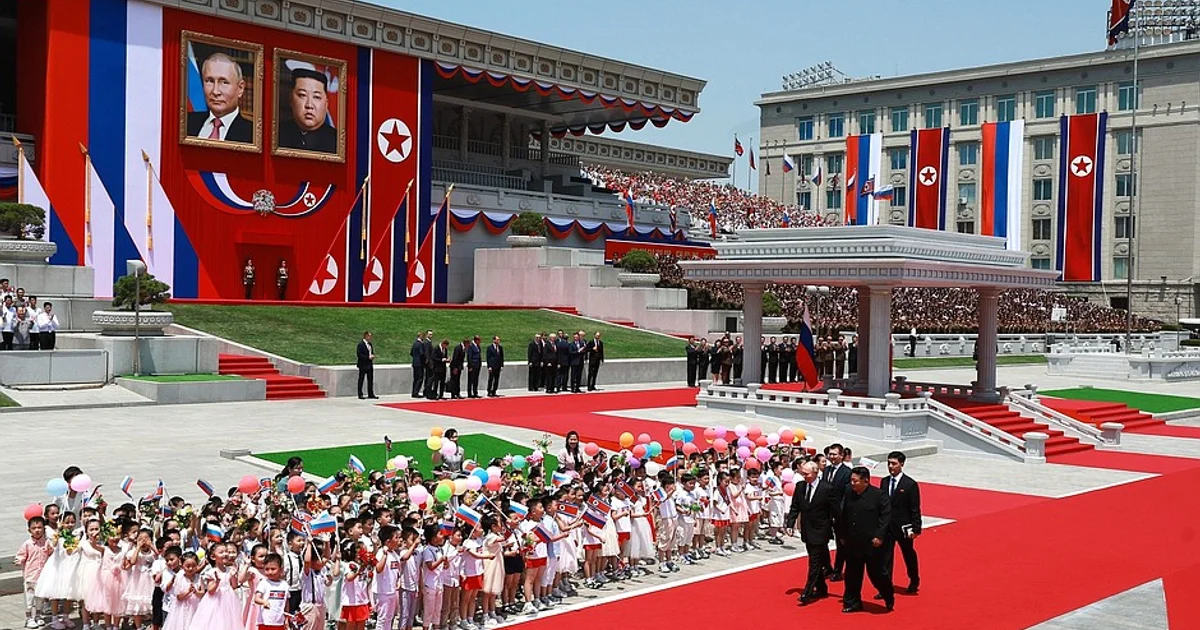
- North Korea has sent an estimated 14,000–15,000 troops to support Russia's war since 2024, along with millions of artillery and mortar rounds, ballistic missiles, long-range artillery systems, and multiple-launch rocket systems — combat testing that provides Pyongyang with data to refine its weapons.
- In 2024, Russia vetoed the renewal of the UN Panel of Experts that monitored North Korea sanctions, while China abstained rather than joining the veto, ending 14 years of continuous monitoring — a contrast with May 2022, when both countries jointly vetoed a US-sponsored Security Council sanctions resolution.
- Putin visited Beijing in May 2026 with a China–Russia joint statement opposing sanctions on North Korea; Xi Jinping then traveled to Pyongyang in June for his first visit since 2019, where Chinese state media reported calls for closer diplomatic, law enforcement, and military cooperation.
- China has accommodated rather than obstructed the deepening Russia–North Korea military relationship, though Beijing is uneasy where deeper cooperation reduces Chinese influence over Pyongyang — a tension the article links to Xi's renewed 2025–2026 engagement with Kim Jong-un as a reassertion of Beijing's own leverage.
Why it matters: South Korean and allied planners can no longer treat the Korean Peninsula and Ukraine as separate theaters: 14,000–15,000 North Korean troops gaining large-scale modern warfare experience in Ukraine, plus weapons refined under live combat, directly alter the military balance Seoul and its allies must plan against at home.
Ask SkimNews