North Korean POWs trigger South Korea-Ukraine diplomatic row — SkimNews
Get the Geopolitics newsletter
Daily geopolitics — wars, elections, sanctions, the diplomatic moves that move markets. Free.
- South Korea is demanding an apology from Ukraine after Kyiv publicly disclosed the planned transfer of two North Korean soldiers captured fighting for Russia, both of whom had expressed a wish to resettle in the South; President Lee Jae Myung has warned further measures could follow.
- North Korea has sent an estimated 14,000–15,000 troops to support Russia's war since 2024, along with millions of artillery and mortar rounds, ballistic missiles, long-range artillery systems, and multiple-launch rocket systems, giving Pyongyang's forces combat experience and weapons-testing data.
- Russia vetoed the 2024 renewal of the UN Panel of Experts that monitored sanctions against North Korea, ending 14 years of continuous monitoring; China abstained rather than joining the veto, a shift from the 2022 joint veto that the article reads as selective alignment rather than a bloc.
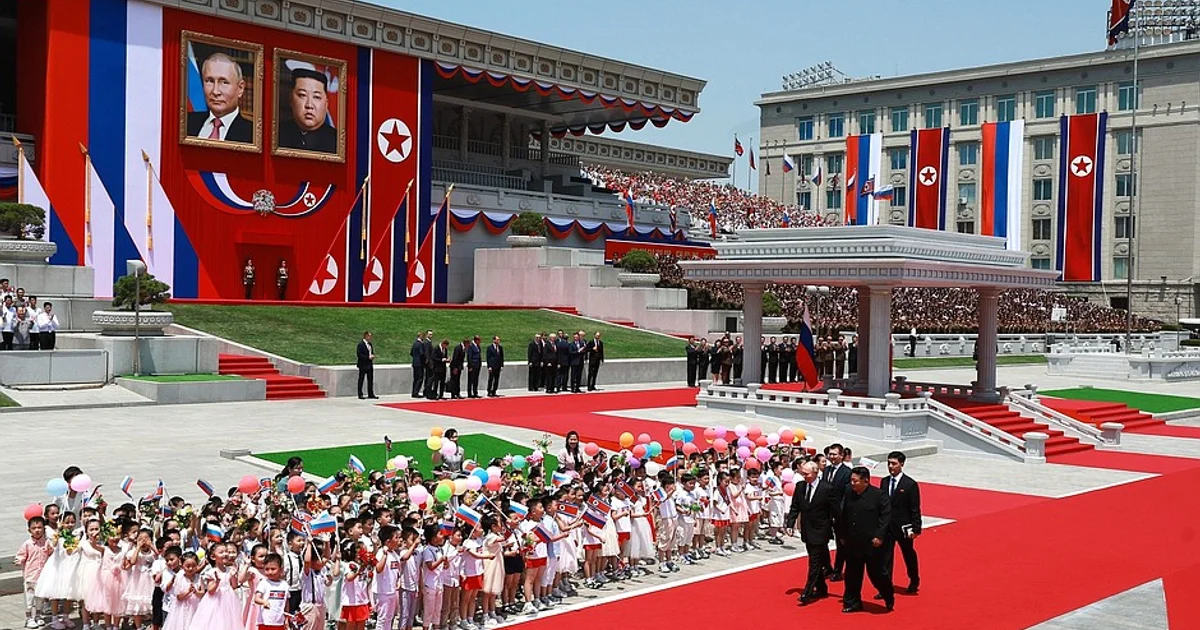
- China hosted a 2025 military parade placing Kim Jong-un, Xi Jinping, and Vladimir Putin on the same stage; Xi then travelled to Pyongyang in June 2026 for his first visit since 2019, with state media reporting calls for closer diplomatic, law enforcement, and military cooperation.
- The Multilateral Sanctions Monitoring Team, established in 2024 by 11 countries, has assumed some of the UN panel's former monitoring functions and is identified in the article as the practical venue for tracking sanctions violations and North Korea's battlefield capability gains.
- China's renewed engagement with Kim is framed as an effort to reassert leverage over Pyongyang rather than simple endorsement of Russia's deepening ties, with Beijing 'accommodating' the relationship while uneasy about erosion of its own influence on the Korean Peninsula.
- North Korea's better-tested missiles and artillery, plus combat-experienced troops, will need to be factored into South Korean and allied deterrence planning on the Korean Peninsula, the article argues, because the Ukraine war now feeds directly into that military balance.
Why it matters: Fourteen thousand to 15,000 North Korean troops fighting in Ukraine gives Pyongyang real combat data on its weapons while creating a direct causal chain between the European war and the Korean Peninsula's military balance — meaning Seoul, Tokyo, and European NATO capitals now face security problems that cannot be solved in isolation. South Korea and Ukraine are already squabbling over the human evidence (two captured soldiers), and the defunct UN Panel of Experts has left an 11-country monitoring team as the main institutional tracker of sanctions violations tied to the war.
Ask SkimNews