This Canadian team has raced solar cars since 1992, and they’re bringing their best yet to the 2026 Electrek American Solar Challenge — SkimNews
Get the Energy newsletter
Daily energy & climate — solar, EVs, oil, the policy fights and tech bets shaping the transition. Free.
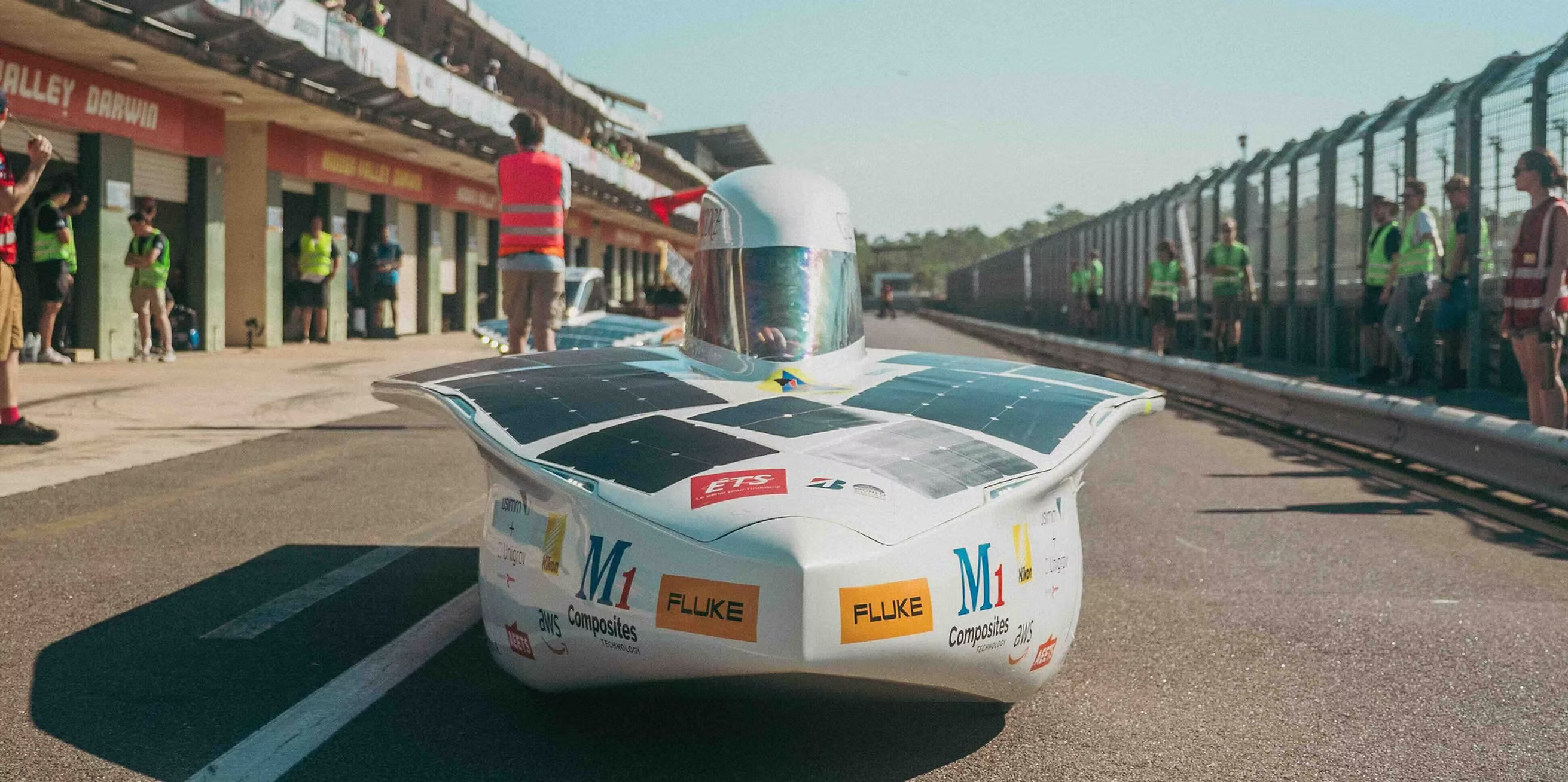
- Éclipse, a student team at École de technologie supérieure in Montreal, has been building and racing solar cars since 1992 and is bringing its new Éclipse 12 to the 2026 Electrek American Solar Challenge in Minnesota.
- Éclipse 12 shifts from a four-wheel catamaran to a three-wheel tadpole layout with the driver centered and a single driven rear wheel, a change team captain Yohann Gourmelen says cuts the weight of a full suspension assembly and lets the team mirror one side of a symmetrical chassis.
- Éclipse 12 comes in about 45 kg lighter than Éclipse 11, carries half the solar array, and runs slightly more efficient panels while holding the same top speed; the team also thinned the array and added more cutouts to address heat buildup visible on thermal cameras in 2024.
- Éclipse builds nearly everything in-house — printed circuit boards, battery packs, and fabrication — and is developing in-house solar cell encapsulation with a local partner that treats the team as an R&D arm, a capability only a handful of teams worldwide attempt.
- Race organizers raised the solar array cap from 4 to 6 square meters and switched the battery limit from weight to energy after the World Solar Challenge moved from October to August; the American Solar Challenge kept packs at 5.25 kWh, so Éclipse will swap in a larger battery for July.
- Éclipse finished 9th at the 2025 World Solar Challenge in Australia, while Éclipse 11 won its class at the 2024 FSGP and took second at the 2024 ASC; the team also won the Eberle-Selwood Championship Arrow Cup for the 2024-2025 season.
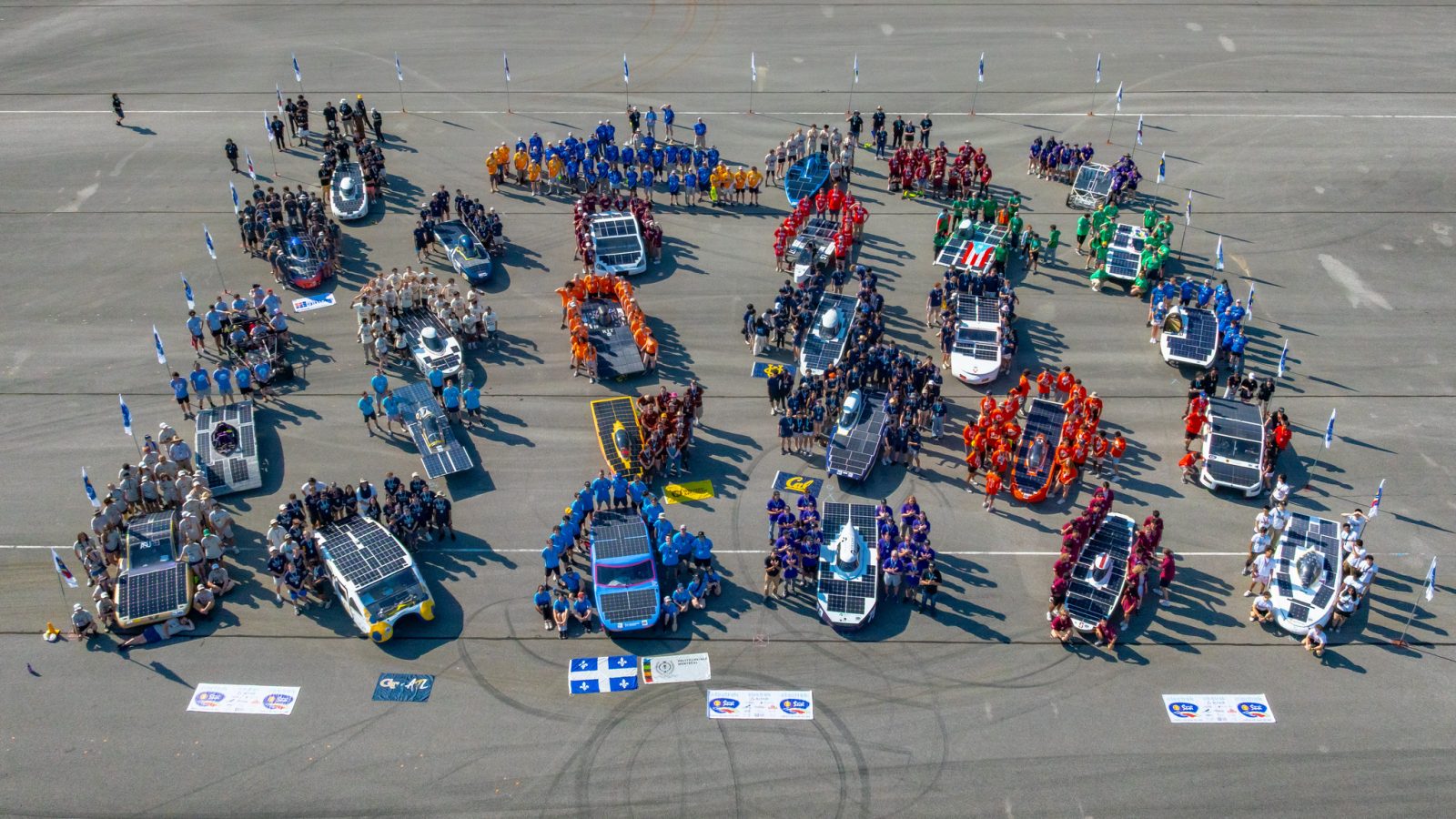
- The 2026 Electrek FSGP runs July 21-23 at Brainerd International Raceway with 46 teams, followed by the cross-country American Solar Challenge starting July 25 from the Twin Cities; both events are free and open to the public.
Why it matters: For the 46 teams competing, a 50% bump in allowed solar array area — from 4 to 6 square meters — translates to roughly 1,000 watts to 1,500 watts of harvest under clean noon sun, fundamentally reshaping car design and race strategy; Éclipse's bet on an in-house, symmetric three-wheel build positions the long-running Montreal squad to challenge perennial powerhouses on U.S. roads in July.
Ask SkimNews

![GoSun built a practical electric tractor that charges itself with solar panels [video]](https://electrek.co/wp-content/uploads/sites/3/2026/09/gosun_electric-farm-tractor.jpg?quality=82&strip=all&w=1400)