Rice Study: Defects Boost Organic Light Emission — SkimNews

Get the Health newsletter
Daily health & science — research, biotech, public health, the studies worth knowing. Free.
- Rice University chemists identified the cause of BPEA's two unexplained absorption and emission signals, solving what doctoral student Colette Sullivan called "a long-standing puzzle in the field," published in the Journal of the American Chemical Society (2026)
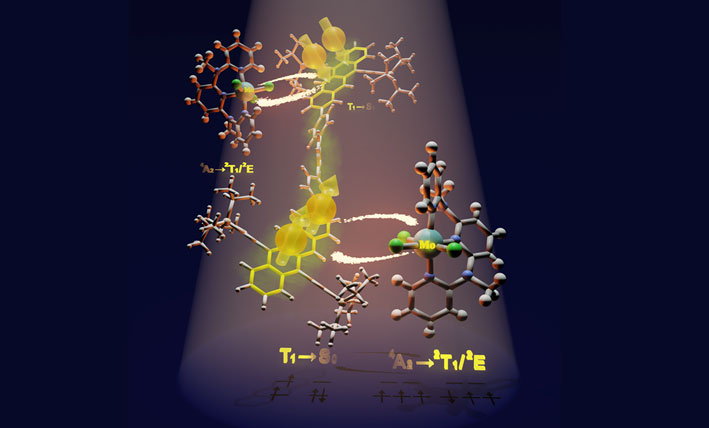
- The lower-energy emission was traced to tiny structural defects where molecules form X-shaped pairs, acting as trap states that localize energy and create new pathways for energy flow
- Postdoctoral scientist Jakub Sowa's theoretical studies showed these defect sites enhance triplet–triplet annihilation — converting lower-energy light into higher-energy light — while suppressing competing pathways that would reduce efficiency
- Associate professor Lea Nienhaus of the Rice Advanced Materials Institute said the defects "aren't just imperfections, they actually create new pathways for energy flow, essentially turning apparent flaws into desirable features"
- The findings invert a core materials-science assumption that defects are inherently detrimental, suggesting they could become a deliberate design target rather than something to eliminate
- Researchers Peter J. Rossky, Nienhaus, Sullivan, and Sowa said the insight could guide design of more efficient materials for solar energy, optoelectronics, and light-based sensing by tuning molecular packing to control where defect sites form
Why it matters: For materials scientists designing solar cells, LEDs, and light-based sensors, this result reframes defects as engineering targets rather than flaws to eliminate. If researchers can learn to position X-shaped molecular pairs deliberately, they could build organic devices whose energy conversion is boosted by — not despite — the structural imperfections baked into the crystal.
Ask SkimNews