OpenAI's Dot Agent Stumbles on Errands, Shines at Work — SkimNews

Get the Tech newsletter
Daily tech — startups, AI labs, chips, the launches that shape the next decade. Free.
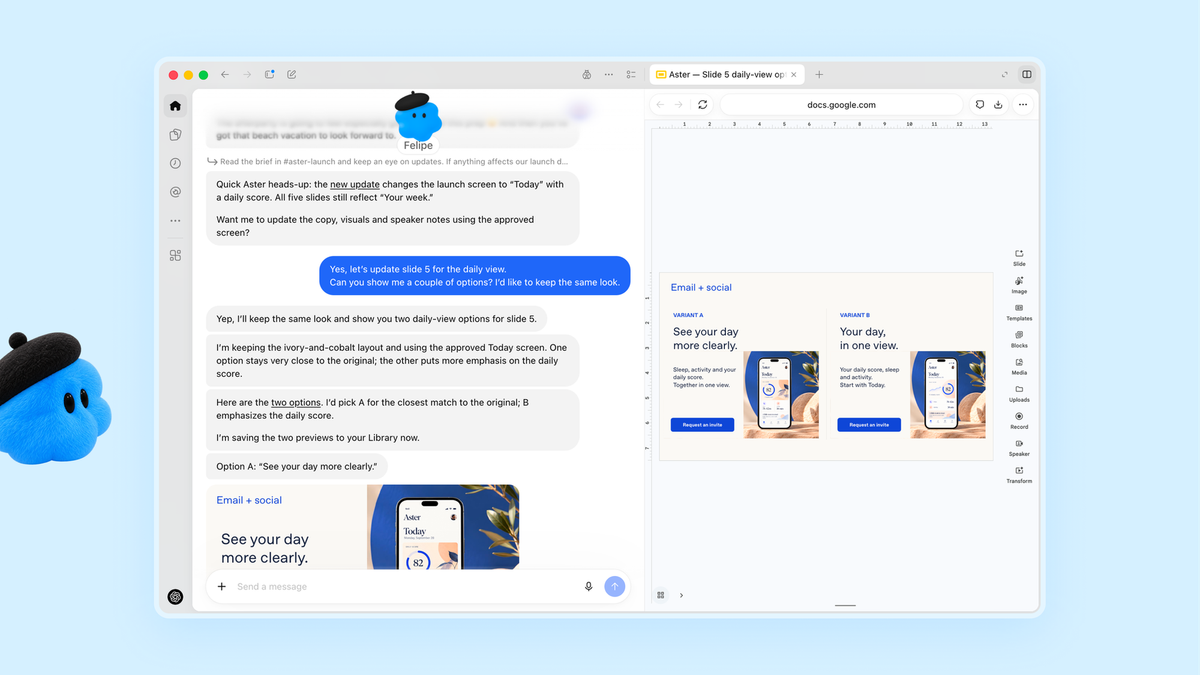
- OpenAI announced Dots this week, an agent platform with customizable blobby avatars, initially gating it to highest-tier subscribers on the $100-per-month Pro plan
- Dots run a visible virtual machine, come pre-loaded with apps like Blender and GIMP, and can access the user's computer via the desktop ChatGPT app or take phone calls
- In hands-on testing, Dots repeatedly stumbled on consumer tasks: it couldn't complete a sustained mouse-hold verification for ISP signup, got stuck in a looping security check on an Ikea account, and was blocked from a neighborhood teriyaki restaurant's ordering page
- Dots lacks a Stripe-style payment integration, forcing the user to manually enter bank details — a gap the article contrasts with Meta's Muse, which uses virtual card checkout
- Dots shined once given access to the user's own computer: redesigning a personal website through 10-minute voice calls and consolidating video clips for social media
- The article frames Dots as 'Codex, but for regular people' — enterprise software that can occasionally handle personal tasks, distinct from personal-shopper agents like Meta's Muse and a competitor called Instinct
Why it matters: By gating Dots to its $100-per-month Pro tier, OpenAI sidesteps the ad-monetization pressure facing free competitors like Meta's Muse, since enterprise users won't tolerate ad-supported nagging. But testing revealed a real capability gap on consumer errands, meaning Dot's value depends almost entirely on how much of your work happens on your own computer rather than the open web.
Ask SkimNews