Russia's ruling pro-Putin party on track for easy win in wartime elections — SkimNews
Get the Geopolitics newsletter
Daily geopolitics — wars, elections, sanctions, the diplomatic moves that move markets. Free.
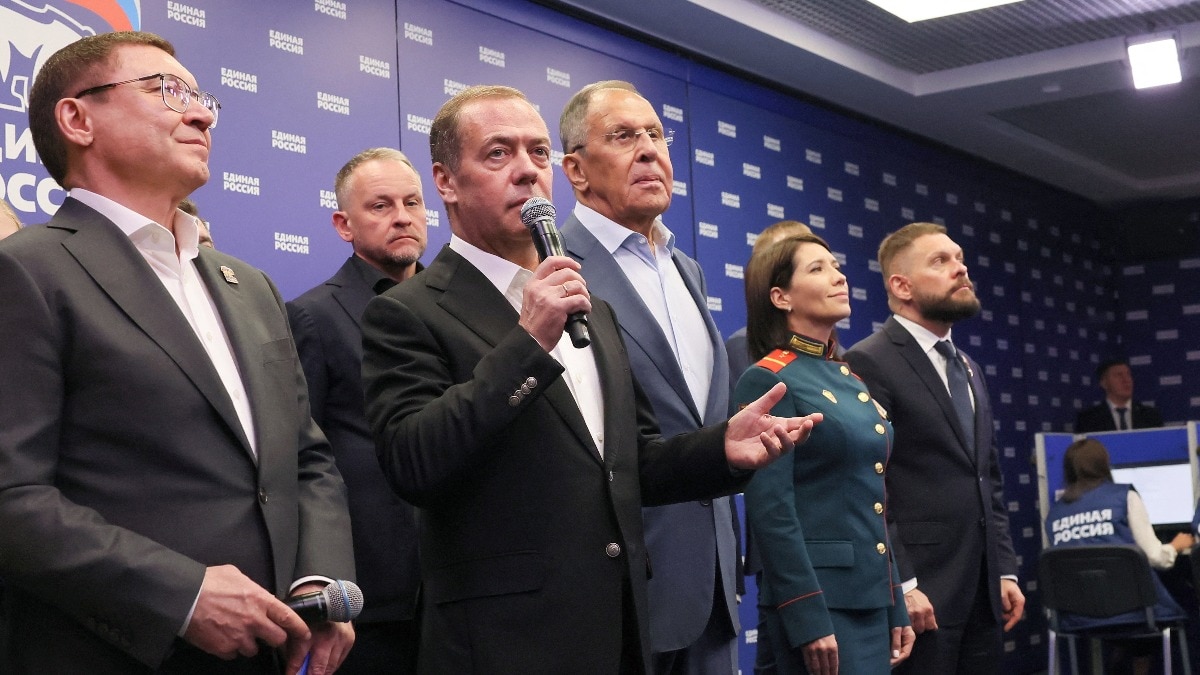
- United Russia led Russia's parliamentary election with 57.5% of the vote in partial official results — the first such vote since Russia's February 2022 full-scale invasion of Ukraine — while turnout reached nearly 57% by early evening.
- Ukraine launched a large-scale drone attack on Moscow and other Russian regions during voting, killing three people in the Moscow region and two in the Russian-held part of Kherson, including an election official; Russia's Defence Ministry said it had shot down nearly 2,000 Ukrainian drones and eight cruise missiles in the preceding 24 hours.
- Russia's electoral systems were hit by waves of cyberattacks during the vote, though Russian authorities maintained the process remained largely smooth, and Moscow Mayor Sergei Sobyanin claimed the drone attack had failed to disrupt the election.
- Most anti-war candidates were barred from the ballot, with courts handing lengthy prison terms to senior Yabloko party figures; Yabloko leader Nikolai Rybakov spoiled his ballot by writing the party's name alongside the slogan "For peace."
- Russia's exiled opposition called a "Noon against Putin" protest urging supporters to gather at polling stations, producing long queues at some locations, though the impact on the overall result remained unclear.
- The Communist Party and New People could attract votes from Russians concerned about the war's economic impact, potentially costing United Russia a more dominant margin and complicating the Kremlin's narrative of unqualified public backing.
- Russia vowed to intensify strikes against Ukrainian military targets in response to the drone barrage, while Ukraine — which has suspended its own elections under martial law — dismissed the Russian vote as a "pseudo election."
Why it matters: With United Russia at 57.5% and anti-war candidates barred, the Kremlin secures a pre-packaged mandate to present as backing for the war, but the Communist and New People parties could shave that margin by absorbing votes from war-fatigued Russians facing economic pressure. Ukraine's deliberate drone strikes on election day — including the killing of an election official in Kherson — were aimed at denying Moscow any clean "referendum on the war" narrative, and Russia's promise of intensified retaliation raises the stakes ahead of any near-term de-escalation.
Ask SkimNews