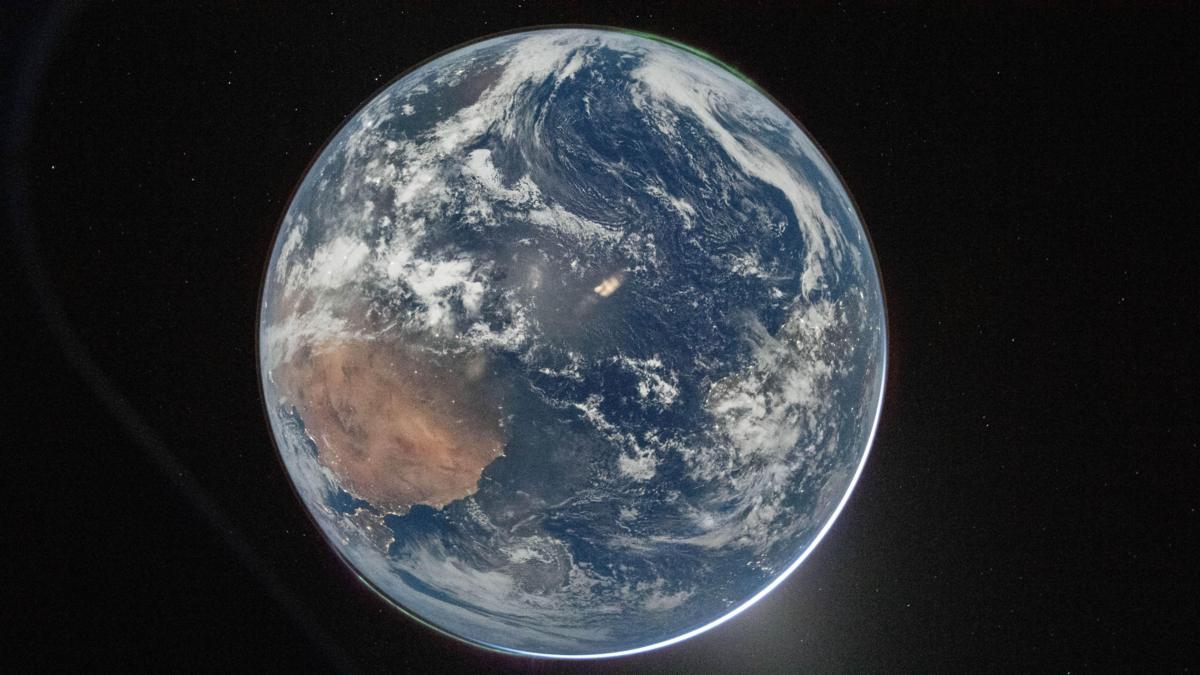
Scientists hope to shed light on young universe by using far side of the moon — SkimNews
Get the Health newsletter
Daily health & science — research, biotech, public health, the studies worth knowing. Free.
- CosmoCube is a suitcase-sized satellite planned for orbit around the moon's far side to detect the 21cm line signal from neutral hydrogen atoms in the early universe, shielding observations from human-made radio interference.
- Prof Eloy de Lera Acedo of the University of Cambridge's Cavendish Laboratory, lead author on the Nature Astronomy paper, said the mission could track gas temperature from the "dark ages" (~380,000 years after the big bang) through the cosmic dawn to the epoch of reionization (~1bn years after the big bang).
- The 21cm signal's amplitude and shape is expected to be influenced by dark matter, giving researchers a way to probe the nature of this mysterious component of the universe.
- Earth-based attempts to detect the 21cm line have struggled against FM radio interference, plane communication, and ionosphere disturbances; the Edges experiment in Australia claimed a detection but questions have been raised over those results.
- The UK Space Agency has granted more than £2m toward the two-year CosmoCube mission, estimated at just under £50m total, with a launch expected about five years from now.
- Phil Bull of the Jodrell Bank Centre for Astrophysics, who is not involved in the project, warned it's a "race against time" because other planned lunar missions could bring the very radio noise CosmoCube is trying to escape.
Why it matters: CosmoCube's window depends on the moon's far side staying radio-quiet — a clean environment that rival planned lunar missions could compromise before this satellite even launches in roughly five years. With £2m already secured toward a £50m budget, the UK is betting it can beat competitors to a clean read of the universe's oldest signals.
Ask SkimNews